




The Zero-Gravity Problem
The single biggest challenge in a spacecraft is microgravity. On Earth, gravity keeps your food on your plate and the crumbs on the floor. In space, every loose particle floats. A single crumb from a paratha or a stray drop of curry can become a serious
hazard, capable of floating into an astronaut's eye or clogging critical ventilation and electronic equipment. This is why space food must be designed for low fragmentation. Liquids are equally tricky; they don't pour, they coalesce into floating blobs. That's why drinks are packaged as powders to be rehydrated in contained pouches, and why everyday seasonings like salt and pepper are replaced with liquid versions to prevent them from becoming a cloud of irritants.
A Recipe for Survival
Beyond gravity, space food faces another formidable enemy: time. With no refrigerators on board for long-term storage, meals must have a shelf life of months, or even years, without spoiling. This requires advanced preservation techniques. The Mysuru-based Defence Food Research Laboratory (DFRL), which has been pioneering Indian space food since Rakesh Sharma's flight in 1984, uses methods like thermostabilization (heating to kill microbes) and irradiation. Furthermore, space food must be lightweight, compact, and incredibly nutrient-dense to fuel astronauts while minimizing cargo weight. Every meal is carefully calibrated to provide around 2,500 calories per day, packed with the right balance of proteins, vitamins, and minerals to counteract the physiological stresses of spaceflight, like muscle and bone density loss.
Keeping the 'Indian' in the Food
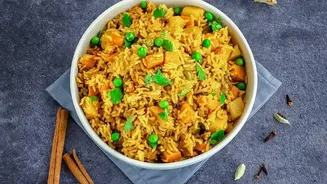
The team at DRDO's DFRL has the unique task of making this highly technical food feel like home. The menu developed for missions like Gaganyaan reads like a beloved restaurant's offerings: Chicken Biryani, Moong Dal Halwa, Shahi Paneer, and Aloo Paratha. But adapting these dishes is a delicate balancing act. Oily and overly spicy foods are a no-go. Scientists work to reduce fat and spice levels while retaining the authentic taste that makes these dishes distinctly Indian. The goal is to create ready-to-eat meals in special retort pouches that can be simply heated and consumed. For astronaut Shubhanshu Shukla's 2025 mission, DFRL prepared several dishes, but the stringent and time-consuming qualification process meant only three—Gajar Ka Halwa, Moong Dal Ka Halwa, and Amras—were certified in time to fly, highlighting the immense difficulty in getting a recipe space-ready.
More Than Just a Meal
For an astronaut thousands of miles from home, food is a powerful psychological anchor. The taste and aroma of familiar dishes can boost morale, reduce stress, and combat the 'menu fatigue' that can set in on long missions. Providing culturally significant food like Idli Sambar or Chicken Korma is not a luxury; it's a critical part of maintaining the crew's well-being and performance. After weeks in orbit, even simple snacks can taste like a feast. Shubhanshu Shukla recounted how, upon returning to Earth, his flight surgeon greeted him with banana chips and bhakarwadi, fulfilling a craving for something salty and familiar. This connection to home is why space agencies globally, including ISRO, invest so much effort into making their astronauts' menus diverse and comforting.