




The Fibre Face-Off: By the Numbers
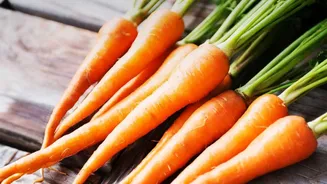
When you compare them gram for gram, carrots and spinach are quite close in their dietary fibre content. According to data from the USDA, 100 grams of raw carrot contains about 2.8 grams of fibre. In the same measure, 100 grams of raw spinach offers roughly
2.2 grams of fibre. Based on these numbers alone, carrots seem to have a slight edge. This difference is marginal for most people, but it's the starting point for a much more interesting story. The real nutritional impact isn't just about what's in 100 grams, but what's in a typical serving on your plate.
The Serving Size Twist
Here's where the comparison gets tricky. A 'cup' of carrots and a 'cup' of spinach are vastly different. A cup of chopped raw carrots is dense and might weigh around 128 grams. A cup of raw spinach, however, is mostly air and leaves, weighing only about 30 grams. Therefore, a cup of carrots has significantly more fibre simply because you're eating more of the vegetable. But when you cook spinach, the game changes entirely. Those leafy greens wilt dramatically. A single cup of cooked spinach can contain what was once five or six cups of raw leaves, packing it with concentrated nutrients. One cup of cooked spinach weighs around 180 grams, delivering far more fibre, iron, and calcium than a cup of raw spinach. This means a side dish of cooked spinach will almost always beat a side dish of carrots in fibre content, simply due to the density of the serving.
Beyond Fibre: A Nutrient Showdown
While fibre is important, it's not the whole story. Each vegetable brings its own unique strengths to the table. Carrots are famous for their high beta-carotene content, which the body converts into Vitamin A. This vitamin is crucial for vision, immune function, and skin health. Cooked carrots actually make this beta-carotene more available for your body to absorb. Spinach, on the other hand, is a champion of other nutrients. It is an excellent source of Vitamin K, which is vital for blood clotting and bone health. It also boasts significantly more iron, folate, calcium, and magnesium than carrots per 100g serving. So, if your goal is to boost your iron levels, spinach is the clear winner. If you're focusing on Vitamin A, carrots take the lead.
Raw Versus Cooked: The Bioavailability Factor
How you prepare these vegetables matters just as much as which one you choose. Cooking breaks down the tough cell walls in vegetables, which can release nutrients and make them easier for your body to absorb. For carrots, cooking substantially increases the amount of beta-carotene your body can use. For spinach, heat has a dual effect. It reduces levels of heat sensitive vitamins like Vitamin C. However, it also breaks down oxalic acid, a compound that can block the absorption of iron and calcium. This means you'll absorb more of the available iron and calcium from cooked spinach than from raw spinach. Steaming is often considered one of the best cooking methods as it helps retain nutrients that can be lost in boiling water.