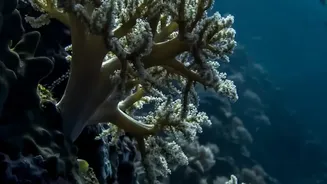







The Ocean's Silent Emergency
Beneath the waves, a silent and devastating crisis is unfolding. Coral reefs, the bustling metropolises of the sea, are under assault. The primary culprit is rising ocean temperatures driven by climate change. Corals have a symbiotic relationship with
microscopic algae called zooxanthellae, which live in their tissues. These algae not only give corals their spectacular colours but also provide them with up to 90% of their food. When water temperatures rise even slightly, stressed corals expel these algae. Without their algal partners, the corals lose their primary food source and their colour, exposing their white skeletons. This process, known as coral bleaching, leaves them vulnerable to starvation and disease. While corals can recover from bleaching if temperatures cool down, prolonged heat leads to mass mortality, with devastating consequences for marine life.
Nature's Hidden Survivors
However, even in the most severely bleached areas, scientists have observed a remarkable phenomenon: some corals survive. Side-by-side with their bleached neighbours, these resilient individuals remain healthy and colourful, withstanding heat that proves lethal to others. These are what scientists call 'super corals' or heat-resilient corals. Their survival suggests they possess unique biological advantages. This resilience might be due to a variety of factors, including genetic adaptations that have been passed down through generations or a partnership with more heat-tolerant strains of algae. Understanding the secrets of these survivors has become a top priority for marine biologists and conservationists around the world.
The Hunt for Super Corals
Identifying these climate-ready corals is a painstaking but essential mission. Scientists use a combination of high-tech and low-tech methods to find them. This can involve large-scale surveys of reefs after a marine heatwave to see which corals naturally withstood the stress. In other cases, researchers collect small coral fragments and subject them to 'stress tests' in labs. By placing the fragments in aquariums with gradually increasing temperatures, they can precisely measure their bleaching threshold. Advanced genetic sequencing is also a critical tool, allowing scientists to pinpoint the specific genes responsible for heat tolerance. This 'hunt' is not just about finding individual tough corals; it's about identifying entire 'super reefs'—areas where oceanographic conditions or genetic makeup have created natural strongholds of resilience.
From Lab to Reef Restoration
The knowledge gained from this mission is not purely academic; it is intensely practical. The goal is to use these heat-resilient corals to actively restore degraded reefs and give them a fighting chance in a warming world. One key strategy is selective breeding. By cross-breeding naturally resilient corals in nurseries, scientists can raise new generations of 'super coral' offspring that inherit these heat-tolerant traits. These lab-grown corals can then be 'outplanted' onto damaged reefs, helping to kickstart recovery and build more robust ecosystems for the future. Identifying naturally resilient reefs also allows conservation efforts to be prioritized, ensuring that these vital sources of coral larvae are protected from other threats like pollution and overfishing.
A Race Against Warming Waters
This mission is incredibly urgent because the stakes could not be higher. Coral reefs cover less than 1% of the ocean floor but support an estimated 25% of all marine life. They are crucial nursery and feeding grounds for countless species. For humans, they are just as vital. Reefs provide coastal protection from storms, support fisheries that feed hundreds of millions of people, and generate billions in tourism revenue. The loss of coral reefs represents not just an ecological catastrophe, but a socioeconomic one. According to the IPCC, over 90% of coral reefs could disappear by 2050 if ocean warming continues unabated. The search for heat-resilient corals is therefore a critical intervention, buying precious time while the world works to address the root cause of the problem: climate change.