



What is Functional Core Strength?
Before diving into the exercises, it’s important to understand what 'functional' really means. It refers to training your muscles in a way that directly translates to everyday activities. Think about lifting groceries, twisting to grab something, or simply
maintaining good posture while sitting. A functional core involves a complex system of deep muscles—including the transverse abdominis, obliques, and pelvic floor—that work together to stabilize your spine and pelvis. Unlike exercises that only target the surface 'six-pack' muscle (the rectus abdominis), functional moves train your entire core to work as an integrated unit, improving balance, power, and stability.
The Plank: Your Foundation
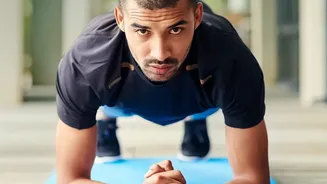
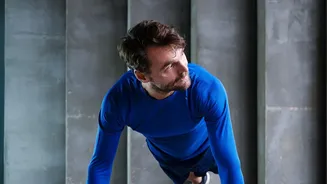
The plank is a fundamental isometric exercise that builds foundational core endurance. It teaches you to brace your entire midsection, which is crucial for protecting your spine. To perform a forearm plank, start by lying on your stomach. Place your forearms on the floor with your elbows directly under your shoulders. Lift your body, forming a straight line from your head to your heels. Engage your core by drawing your belly button towards your spine and squeeze your glutes. Avoid letting your hips sag or rise too high. Hold the position for as long as you can maintain proper form, starting with 20-30 seconds and gradually increasing the time. Remember to breathe steadily throughout the hold.
The Dead Bug: For Spinal Stability
The Dead Bug is a surprisingly challenging exercise that excels at teaching your core to resist extension and rotation without putting stress on your spine. Lie on your back with your arms extended toward the ceiling and your knees bent at a 90-degree angle directly over your hips. Press your lower back gently into the floor; there should be no arch. Slowly lower your right arm and left leg toward the floor simultaneously, moving only as far as you can without your lower back lifting. Return to the start with control and repeat on the opposite side. The key is slow, deliberate movement, which forces the deep stabilising muscles of your core to work hard.
The Bird-Dog: Balance and Control
The Bird-Dog exercise improves stability by challenging your core to prevent rotation. It also strengthens your back muscles and glutes. Start on all fours in a tabletop position, with your hands under your shoulders and knees under your hips. Engage your core to keep your back flat. Simultaneously extend your right arm straight forward and your left leg straight back, keeping your hips and shoulders square to the floor. Imagine balancing a cup of water on your lower back. Hold for a moment before returning to the starting position with control. Alternate sides for a set number of repetitions. This move enhances coordination and is excellent for improving posture.
The Hollow Body Hold: A Gymnastic Staple
Borrowed from gymnastics, the Hollow Body Hold is an advanced move that creates immense full-body tension, targeting the deep core muscles. Lie on your back with your legs together and arms overhead. Press your lower back firmly into the floor by tilting your pelvis. From there, lift your arms, shoulders, and legs off the floor, creating a slight 'banana' or dish shape with your body. The lower your legs and arms are to the ground, the more difficult it is. The most important rule is to keep your lower back in contact with the floor at all times. If it starts to arch, bring your limbs higher or bend your knees until you build more strength. Hold for 10-20 seconds, focusing on quality over duration.
The Glute Bridge: Connecting the Chain
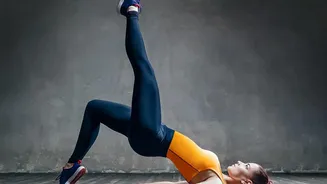
While often seen as a glute exercise, the bridge is fantastic for the posterior part of your core. It strengthens the link between your lower back, glutes, and hamstrings. Lie on your back with your knees bent, feet flat on the floor hip-width apart, and your arms at your sides. Tighten your stomach muscles and squeeze your glutes to lift your hips off the floor until your body forms a straight line from your shoulders to your knees. Hold the position for a few seconds at the top, ensuring you're not arching your back. Lower your hips back down with control. This move helps stabilize the pelvis and can alleviate strain on the lower back.