








The Silence of No Atmosphere
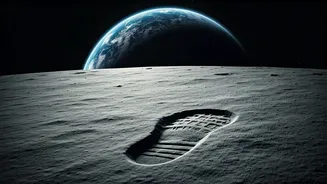
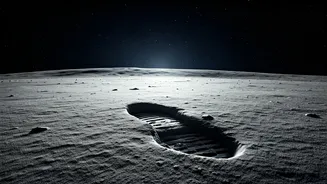
The primary reason the Apollo footprints remain is beautifully simple: the Moon has virtually no atmosphere. On Earth, our footprints are erased by two main forces: wind and water. A gust of wind can blow sand over a print, and a drop of rain can wash
it away in seconds. The Moon has neither. There is no air to create wind, no weather systems, and no liquid water on the surface to disturb the dust. The lunar surface is a vacuum, a perfectly still environment where things stay exactly as they are left. This lack of an atmosphere means the primary agents of erosion that we experience every day on our planet are completely absent. The boot prints left by Neil Armstrong and Buzz Aldrin in 1969, and by ten other astronauts in subsequent missions, are not subject to the blowing gales or sudden downpours that would have erased them back home.
A Soil Unlike Any on Earth
The “soil” on the Moon is not like the soil or sand we have on Earth. It’s called regolith, a fine, grey powder that covers the entire lunar surface. This material wasn’t formed by the erosion of rocks by water and wind. Instead, it’s the product of billions of years of constant bombardment by micrometeorites—tiny specks of space rock hitting the surface at incredible speeds. These impacts pulverised the lunar rock into a blanket of fine, sharp, and abrasive particles. When the astronauts stepped on this regolith, its jagged, angular grains locked together, much like powdered sugar compacts under pressure. Unlike Earth's rounded sand grains, which easily slide past one another, the lunar dust holds the detailed impression of the astronauts' boot treads perfectly. There is also no organic material or moisture in the regolith to facilitate decomposition or shifting, making it an excellent medium for preserving impressions.
The Slowest Eraser: Micrometeorites
While there's no wind or rain, the lunar surface isn't entirely static. The same force that created the regolith is also the only thing that will eventually erase the footprints: the continuous rain of micrometeorites. This process is often called “space weathering” or “gardening.” Over vast timescales, these tiny impacts slowly churn the top layer of the lunar surface. It’s like a very, very slow stirring of the soil. However, the key word here is ‘slow.’ Scientists estimate that the lunar surface erodes at a rate of only about 1 to 2 millimetres every million years. Since the footprints are a few centimetres deep, they are expected to remain clearly visible for millions of years before this gentle, cosmic sand-blasting finally smooths them over. It's a process so gradual that for all of human history, and for countless generations to come, the prints will remain as crisp as the day they were made.
An Enduring Monument to Humanity
The footprints are more than just a scientific curiosity; they are a profound cultural artifact. Along with the American flags, lunar rovers, scientific equipment, and even golf balls left behind, the Apollo landing sites represent humanity’s first off-world archaeological sites. They are a physical testament to a singular moment in history when humans first walked on another celestial body. The preservation of these footprints makes the Moon a unique museum of human achievement. Organizations like For All Moonkind, Inc. are working to have these sites recognised and protected under international law, ensuring that future missions to the Moon—whether by national space agencies or private companies—do not disturb these historic locations. They serve as a quiet, powerful reminder of what we can achieve, preserved in the silent dust of another world.