





Why Your View is Unique
The night sky is not a static backdrop; it's a dynamic, moving panorama, and your view is determined by two key factors: your location on Earth and the specific time you're looking up. Think of the sky as a massive sphere surrounding our planet. Your
latitude dictates which slice of that sphere is visible above your horizon. Someone in Mumbai sees a different set of stars than someone in Delhi, and both will see a different sky from someone in London. The further north or south you go, the more the available constellations change. Meanwhile, Earth's rotation means the stars appear to march across the sky throughout the night. The view at 9 PM is completely different from the view at 2 AM. This is why a one-size-fits-all star map is often a recipe for confusion.
The Classic Tool: A Planisphere
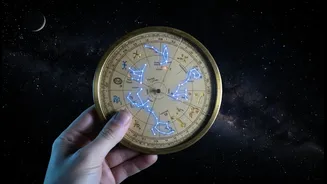
Before smartphones, the planisphere was the go-to tool for amateur astronomers, and it's still an excellent, battery-free option. A planisphere, or star wheel, consists of two rotating discs. The bottom disc has a star chart, and the top disc has a transparent oval window representing your horizon. To use it, you simply rotate the top disc to align the current date with the current time. The map visible within the window then shows you which constellations are in the sky. The key is to buy a planisphere designed for your specific latitude range. To orient it, you face a cardinal direction (say, north) and hold the chart so that the 'North' marking is at the bottom. The stars at the bottom of the chart's window will match the stars near the real horizon in front of you.
Digital Sky Maps: Your Pocket Planetarium
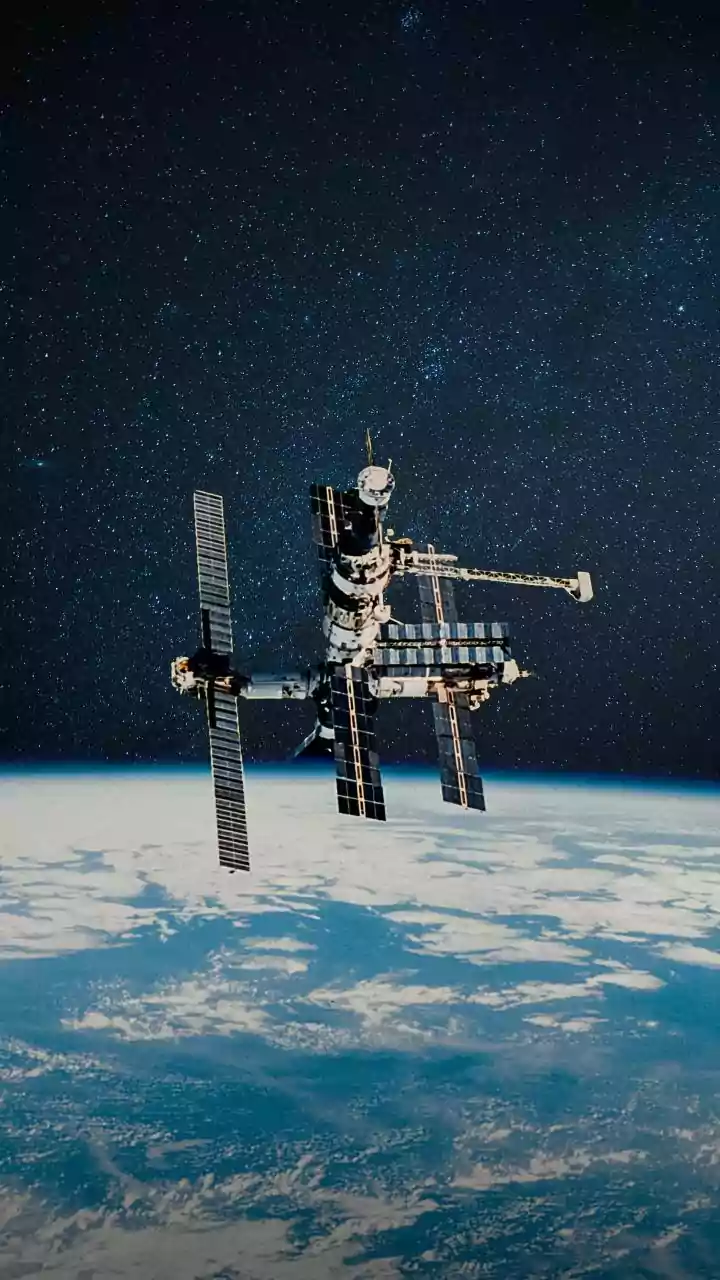
Today, the easiest way to get an accurate sky map is to use a stargazing app on your smartphone. These apps use your phone's GPS and internal clock to generate a perfect, real-time map of the sky exactly where you are. Many apps use augmented reality; you just point your phone at a bright object in the sky, and the app will identify it for you, whether it's a star, a planet, or the International Space Station. Popular and highly-rated apps like Stellarium Mobile, Star Walk 2, and SkyView offer free versions that are more than powerful enough for beginners. They remove all the guesswork and let you instantly connect with the cosmos above.
Printing Your Own Custom Chart
If you prefer a physical map but want the precision of a digital tool, you can use a website to generate a printable star chart. Websites like Skymaps.com offer free, downloadable monthly sky maps that are easy to print and use. Other interactive planetarium websites, such as Fourmilab's Your Sky, allow you to enter your precise location, date, and time to create a completely custom PDF chart. This gives you the best of both worlds: a highly accurate map tailored to your specific observing session that you can take outside without worrying about a phone battery dying.
Tips for Your Night of Stargazing
Once you have the right map, a few extra tips will make your experience even better. First, give your eyes time to adjust to the darkness—it can take 20-30 minutes for them to become fully dark-adapted. If you need to consult your map, use a red-light torch, as red light doesn't spoil your night vision the way white light does. Don't get overwhelmed trying to find everything at once. Start by locating one or two bright, easily recognizable constellations, like the Big Dipper (Saptarishi) or Orion, and use them as anchor points to navigate to other celestial sights. Most importantly, be patient and have fun exploring the universe from your own backyard.