




The Dawn of Commercial Orbit
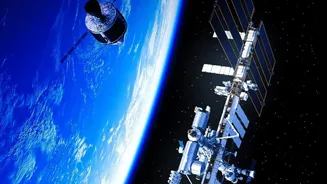
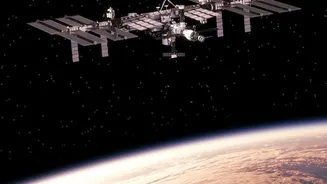
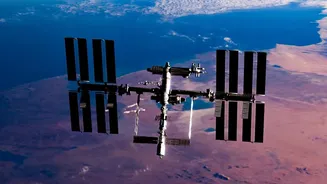
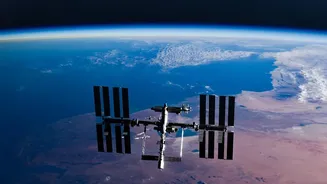
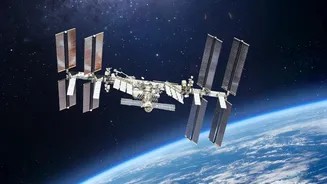
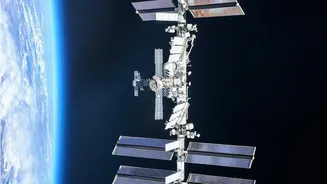
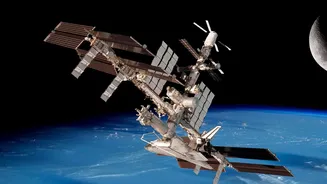
The International Space Station, a triumph of global collaboration, is slated for decommissioning around 2030. Instead of building a single, government-funded successor, NASA is fostering a new approach: helping private industry build a fleet of commercial
space stations. Through its Commercial Low-Earth Orbit Destinations (CLD) program, NASA is providing funding and technical expertise to several companies, aiming to become just one of many customers in a bustling orbital marketplace. This strategic shift is designed to lower costs, stimulate innovation, and ensure the United States maintains a continuous human presence in space for research and development. The goal is to transition smoothly from the ISS to these new commercial outposts, preventing a gap in America's access to microgravity.
Meet the New Neighbourhood
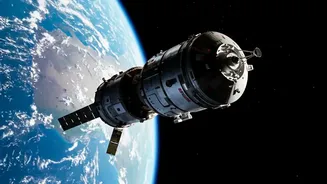
Several key players are racing to build this orbital real estate. Axiom Space is building a station that will initially attach to the ISS before becoming a free-flying platform. Another major project is Orbital Reef, a self-described "mixed-use business park" in space led by Blue Origin and Sierra Space. Orbital Reef plans to use Sierra Space's innovative Large Integrated Flexible Environment (LIFE) habitats, which are inflatable modules that launch in a compact form and expand to a large volume in orbit. Other significant ventures include Starlab, from a joint venture of Voyager Space and Airbus, and Vast's Haven-1, all competing to offer services in low-Earth orbit. Each is developing unique habitats designed to host astronauts, researchers, and commercial clients.
The Factory in the Sky
One of the most compelling business cases for these new stations is in-space manufacturing. The microgravity environment offers unique advantages that are impossible to replicate on Earth. Without gravity, sedimentation and buoyancy disappear, allowing for the creation of materials with superior properties. Companies are looking to produce flawless ZBLAN optical fibers that could revolutionize data transmission, purer semiconductors, and superior metal alloys. Another groundbreaking field is biotechnology. In space, it may be possible to 3D-print complex human tissues or even organs, a process hindered by gravity on the ground. These habitats will feature dedicated research and manufacturing facilities to develop products that could create entirely new markets on Earth.
A Staging Post for Deep Space
Beyond manufacturing, commercial habitats will be critical for the future of human exploration. They will serve as a vital proving ground for the technologies and systems needed for long-duration missions to the Moon and Mars. Astronauts can train for deep space voyages, and new life support, propulsion, and habitation systems can be tested in a relatively safe, close-to-home environment. These stations can also act as logistical hubs or staging posts, potentially re-supplying spacecraft on their way to more distant destinations. By providing a platform for this essential research and development, commercial stations will play a direct role in enabling humanity's expansion into the solar system, supporting programs like NASA's Artemis missions.
Building a True Space Economy
The vision for these commercial habitats extends beyond science and manufacturing. Operators like Blue Origin and Axiom Space envision a thriving ecosystem that includes space tourism, media production, and marketing activities. By offering end-to-end services—including transportation, logistics, and crew support—they aim to open space to a wide range of customers, not just government space agencies. Axiom Space is even planning for in-orbit data centers to support the growing number of satellites with cloud computing and AI services. This model transforms low-Earth orbit from a place of pure exploration into a vibrant economic zone, a platform where diverse industries can innovate and grow, creating a self-sustaining economy beyond Earth.