



A Sweet Discovery in Deep Space
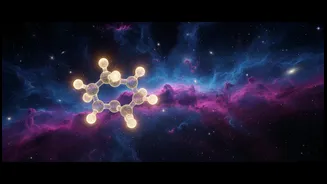
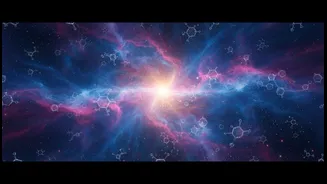
In a remarkable finding, astronomers have identified a sugar molecule called erythrulose lurking in the interstellar medium — the vast, thin clouds of gas and dust that exist between stars. Using powerful radio telescopes in Spain, a team of researchers
scanned a large gas cloud near the center of our Milky Way galaxy. By matching the faint signals from space with the unique chemical fingerprint of the molecule in the laboratory, they confirmed the presence of this complex organic compound thousands of light-years from Earth. This discovery is the latest in a series of finds that show the vacuum of space is sprinkled with the very ingredients needed to form life.
What Exactly is Erythrulose?
On Earth, you might find a compound related to erythrulose in raspberries. It's a specific type of four-carbon sugar. While erythrulose itself isn't considered an essential component for life as we know it, its significance lies in its chemical potential. Scientists note that it can easily be converted into other, more biologically crucial sugars. These other sugars are thought to be critical for kick-starting the pre-biotic chemistry that ultimately leads to things like RNA and DNA. Finding a molecule this complex suggests that the chemical factories of space are capable of producing surprisingly sophisticated materials, even in the cold, harsh environment between stars.
The Cosmic Recipe for Life
This discovery doesn't exist in isolation. For years, scientists have been adding ingredients to a growing cosmic recipe book. They have found simpler alcohols like methanol in the swirling disks of gas and dust around young stars where planets are born. They've also detected large, ring-like carbon molecules called Polycyclic Aromatic Hydrocarbons (PAHs), which on Earth are byproducts of combustion, in cold, starless clouds. The overarching theory is that these molecules, forged in interstellar space, become incorporated into asteroids and comets. These celestial bodies then act as delivery vehicles, seeding young planets like the early Earth with the essential chemical building blocks, creating a primordial soup from which life could emerge.
The Inevitable Alien Question
So, does finding sugar in space mean we're close to finding extraterrestrial life? In a word: no. It's crucial to distinguish between ingredients and the finished product. Discovering erythrulose in a gas cloud is like finding a bag of flour, some sugar, and eggs on a kitchen counter. It tells you that the potential for baking a cake exists, and that the ingredients are readily available. It does not, however, mean there's a fully baked cake in the oven or a chef in the kitchen. The discovery of these molecules makes the universe seem more hospitable to life in general, but it is not evidence of life itself.
Why This Discovery Still Matters
While it may not be aliens, the discovery of erythrulose is profoundly important. It reinforces the idea that the chemical building blocks of life are not a rare, Earth-specific phenomenon. Instead, they appear to be universal, scattered across the galaxy. This lends significant weight to the theory that life on Earth may have had its origins in this cosmic chemistry, with the key ingredients delivered from space billions of years ago. Each time scientists identify another complex molecule in the interstellar medium, they add another piece to the puzzle of our own existence, tracing our lineage back to the stars.