





A quiet revolution is reshaping the urban landscape of India. Once dominated by traffic and noise, city centres and neighbourhoods are being reimag ปุ่ม into vibrant public spaces that invite people to connect, play, and live more actively.
A Shift in Urban Philosophy
For decades,
urban development in India often prioritised vehicle movement above all else. The result was streets hostile to pedestrians and a scarcity of clean, safe, and accessible public areas. However, a new philosophy is taking root, driven by the understanding that cities are for people, not just cars. This shift focuses on creating 'complete streets' and multi-functional community hubs that serve everyone, from children to senior citizens. The goal is no longer just beautification, but fostering social cohesion, improving public health, and creating a stronger sense of community belonging. This people-first approach acknowledges that well-designed public spaces are not a luxury, but essential infrastructure for a thriving city.
Delhi's Heritage and Pedestrian Push
Delhi's ambitious redevelopment of Chandni Chowk serves as a high-profile, if complex, example. The project aimed to restore the historic glory of the 1.3-km stretch from Red Fort to Fatehpuri Masjid by pedestrianising it during the day, decluttering the skyline by moving electrical wires underground, and adding public amenities like benches and toilets. The initial transformation created a more accessible and visually appealing public area, intended to improve the user experience and boost cultural activities. However, maintaining these changes has proven challenging, with issues of enforcement against vehicle entry and encroachment re-emerging, highlighting the difficulties in sustaining such large-scale urban transformations. Beyond this, the city has also been revamping other road networks, widening footpaths and adding cycling tracks to create a more equitable distribution of road space for all users.
Mumbai's Pedestrian-Friendly Streets
Mumbai has been actively working to reclaim its streets for people. Projects across the city are transforming crowded, car-centric areas into pedestrian-friendly zones. In areas like Dadar and Bandra, and along historic Dadabhai Naoroji Road, the focus has been on restoring shopfronts, controlling signage, and adding street furniture to revive the historic ambiance and encourage walking. This has often involved a participatory approach, getting local residents and shop owners involved in the process. By widening walkways and creating promenades, as seen with the transformation of Pondy Bazaar in Chennai, these initiatives make streets safer and more pleasant, doubling their function as public spaces where people can walk, socialise, and relax.
Bengaluru and Chennai Lead with New Models
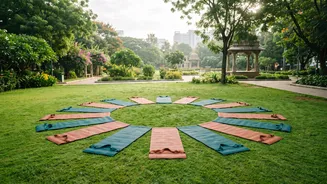
Bengaluru's TenderSURE (Specifications for Urban Roads Execution) project represents a comprehensive model for urban road redesign. Launched over a decade ago, the project prioritises pedestrian safety and continuous, wide footpaths, while also organising all underground utilities to prevent constant digging. The result is a network of roads that are more walkable and cycle-friendly, which has catalysed urban rejuvenation. Similarly, Chennai's 'Singara Chennai 2.0' initiative and its earlier NonstMotorised Transport (NMT) policy have led to the redevelopment of over 100km of roads with improved footpaths. Studies show this has not only made streets safer but has also encouraged more people to walk, contributing to better public health and reduced emissions. The city is also developing numerous new parks and playgrounds with features like yoga areas and sports facilities.
The Blueprint for an Active Community
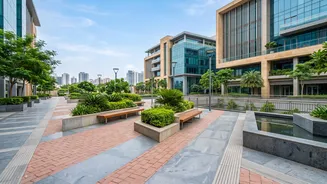
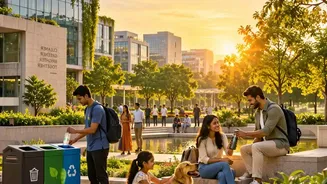
The success of these revamped spaces hinges on specific design elements. These include wide, continuous, and universally accessible footpaths, dedicated cycling tracks, and ample street furniture like benches. Many projects incorporate green elements like planters and trees, which also help mitigate urban heat. Play areas for children, openndair gyms, and flexible zones for community events or street vendors are also common features. In Kolkata , for instance , plans are underway to revamp dilapidated parks into multipurpose community spaces with dedicated zones for yoga , children ' s tuition , and indoor sports . By designing spaces that are adaptable and cater to a wide variety of activities , cities are creating environments that naturally encourage people to be more active and to interact with their neighbours .