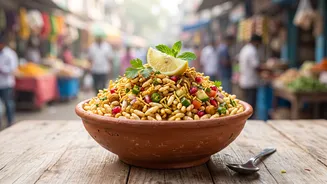



In the grand theatre of Indian street food, few snacks command the stage with such sensory drama as Bengali Jhalmuri. It’s a riot of crunch, spice, and freshness, but its soul lies in one indispensable ingredient: pungent, sharp mustard oil.
An Introduction to Jhalmuri
At its heart,
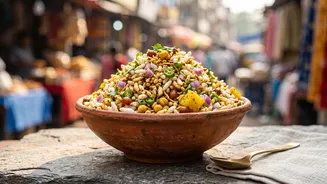
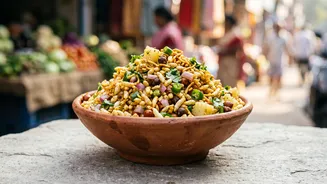
Jhalmuri is a deceptively simple snack. The name itself is a giveaway: 'jhal' means spicy, and 'muri' refers to puffed rice. But calling it just spicy puffed rice would be a gross understatement. It is an intricate medley of textures and flavours, a perfect example of how humble ingredients can be transformed into something extraordinary. This snack is a cornerstone of Bengali street food culture, found everywhere from bustling Kolkata street corners to the leisurely compartments of local trains. It’s a light yet satisfying snack, tossed together in minutes by skilled vendors known as 'jhalmuriwalas', who expertly combine a dozen or more ingredients in a steel container, shaking it vigorously to create the final, flavour-packed mix served in a paper cone.
The Unmistakable Pungency of Mustard Oil
While puffed rice forms the base, the real magic, the very essence of authentic Jhalmuri, comes from mustard oil. Not just any mustard oil, but 'kachhi ghani' – a cold-pressed, unrefined version that retains its natural, sharp pungency. This is not a subtle background note; it is the lead vocalist. The oil's powerful, almost sinus-clearing aroma and fiery taste are what bind all the other elements together. It coats every grain of puffed rice, moistens the dry spices, and elevates the fresh vegetables. Without the assertive kick of raw mustard oil, Jhalmuri would lose its identity. It’s the flavour that instantly transports any Bengali back home, a taste so integral that substituting it is considered almost sacrilegious. The oil acts as more than a dressing; it is the lifeblood of the dish.
A Symphony of Ingredients
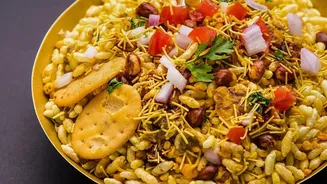
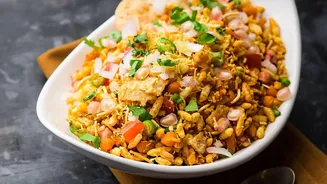
The genius of Jhalmuri lies in its harmonious complexity. The crisp, airy puffed rice is joined by 'chanachur' or 'Bombay mix', a savoury mix of fried lentils, peanuts, and sev (crispy chickpea flour noodles), which adds another layer of crunch and spice. Freshness comes from finely chopped onions, green chillies, tomatoes, and coriander leaves. Many variations include boiled potatoes or chickpeas, adding a soft, yielding texture to the mix. Tanginess is introduced through a squeeze of lime or the addition of chopped raw mango when in season. Finally, a unique blend of dry spices, often a closely guarded secret of the vendor, is sprinkled in. The mustard oil works to amalgamate these disparate textures and tastes, ensuring that every spoonful is a balanced explosion of spicy, tangy, fresh, and savoury notes.
More Than Just a Snack
Jhalmuri is deeply woven into the social fabric of Bengal. It is the fuel for 'adda' – the beloved Bengali tradition of long, informal conversations. It’s the snack of choice on train journeys, during evening walks in the park, and after a long day of work or school. The act of watching a jhalmuriwala at work is a spectacle in itself – the swift chopping, the casual tossing of ingredients, the rhythmic shaking of the canister. It is performance art that culminates in a delicious, personalised snack. For many, the flavour of Jhalmuri is inseparable from memories of friendship, travel, and the simple joys of life. It’s a food that is both deeply personal and universally communal, a taste of nostalgia served fresh in a cone.