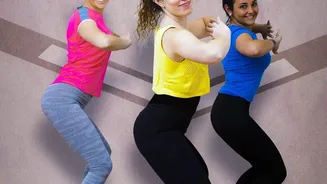







Coordination and Agility
If your primary goal is to improve lower-body coordination, dancing has a clear edge. Activities like salsa, hip-hop, or even classical ballet force your brain and body to work together, memorising complex step sequences and moving in multiple planes
of motion—forward, backward, and side-to-side. This enhances muscle memory, balance, and spatial awareness. Rowing, by contrast, is a powerful but repetitive exercise. It locks the body into a single plane of motion. While it requires coordination to synchronise your legs, core, and arms for a powerful stroke, it doesn't challenge your agility or ability to react to changing patterns in the same way as dancing.
Muscle Engagement: Power vs. Grace
Rowing is renowned as a true total-body workout. It is often cited that a single stroke engages about 85-86% of your body's muscles, with the legs (quadriceps, glutes) generating the initial power, followed by the core and back, and finishing with the arms. It is incredibly efficient for building functional strength. Dancing also works the entire body, but the emphasis varies greatly by style. Most forms heavily recruit the lower limbs and core for stability and power. While rowing builds balanced, linear strength, dancing develops strength through a wider, more varied range of motion.
Cardiovascular Health and Calorie Burn
Both activities are excellent for cardiovascular health, strengthening your heart and improving endurance. Rowing provides a potent, low-impact cardio session that can be easily scaled in intensity. Vigorous rowing can burn between 400 and 1,000 calories per hour, depending on intensity and body weight. The calorie burn for dancing can be more variable. While a gentle ballroom class is a great low-impact option, a high-intensity style like street dance can burn as many, or even more, calories per hour than steady running or cycling. Some estimates show aerobic dancing can burn over 350 calories in 30 minutes. Ultimately, the intensity you bring to the workout is the deciding factor.
Impact, Injury Risk, and Accessibility
Rowing is celebrated for being a low-impact exercise, making it an excellent choice for people with joint sensitivities or those recovering from certain injuries. The main risk comes from improper form, which can lead to back strain. The impact level of dancing depends on the style. Ballroom dancing can be very gentle on the joints, whereas styles involving lots of jumping, like some forms of ballet or hip-hop, are higher impact. Overuse injuries in the feet, ankles, and knees are more common in dancers. In terms of accessibility, dancing wins handily. You can do it anywhere with minimal to no equipment. Rowing requires a specific machine or access to a boat on the water.
The Mental and Social Factor
Beyond the physical, the mental benefits of your chosen exercise are crucial for long-term commitment. Dancing is often a social, creative, and joyful activity. Learning choreography stimulates the brain and memory, and the release of endorphins can significantly boost your mood. Rowing offers a different kind of mental engagement. The rhythmic, repetitive nature of the stroke can be meditative, allowing for a mental escape. It can be a solo journey of pushing your own limits or a team sport that demands perfect synchronicity.