

Pesarattu: The Andhra Protein Powerhouse
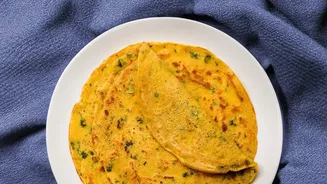
Hailing from Andhra Pradesh, Pesarattu is a crisp, crepe-like dish that looks like a dosa but is made from a batter of whole green moong dal. Its name literally translates to "green gram crepe" in Telugu. Unlike a traditional dosa, the batter requires
no lengthy fermentation, making it a quick and nutritious option. Packed with protein, it's spiced with ginger and green chillies. It's often served with a fiery ginger chutney (Allam Pachadi) that cuts through the earthy flavour of the dal. A popular variation known as the 'MLA Pesarattu', famously served in Hyderabad, comes with a stuffing of savoury upma, making it a truly substantial meal.
Appam: Kerala's Lacy, Bowl-Shaped Delight
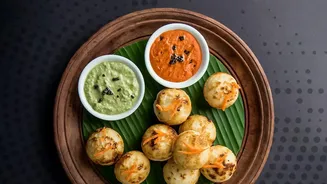
Travel south to Kerala and you'll find the delicate Appam. These are soft, bowl-shaped pancakes made from a fermented batter of rice and coconut. The special curved pan, or 'appachatti', gives it a unique texture: incredibly soft and spongy in the centre with thin, crisp, lace-like edges. The fermentation, traditionally done with palm toddy but now more commonly with yeast, gives it a subtle tang. Appam is the perfect vehicle for a mild and fragrant vegetable or chicken stew, known locally as 'ishtew'—a delightful adaptation of the English word 'stew'. This breakfast is deeply associated with Kerala's Christian community and is a staple on festive occasions.
Siddu: The Steamed Bread from the Himalayas
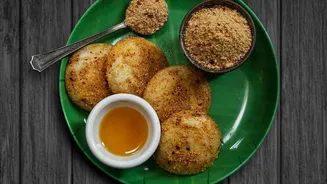
Venture into the mountains of Himachal Pradesh for Siddu, a comforting steamed bun made from a fermented wheat flour dough. This hearty dish, particularly popular in regions like Kullu, Manali, and Shimla, is a staple during cold winters. The dough is leavened with yeast, which makes it soft and fluffy. It’s then stuffed with a variety of fillings, which can be savoury or sweet. Savoury versions often include a paste of walnuts, poppy seeds, or lentils, while sweet ones might feature jaggery and nuts. Traditionally, Siddu is served hot with a generous dollop of desi ghee or alongside a dal.
Khaman: The Spongy Snack from Gujarat
Often confused with its cousin, Dhokla, Khaman is a bright yellow, spongy, steamed cake from Gujarat that is becoming a breakfast favourite across the country. While both are steamed snacks, the key difference lies in the ingredients. Khaman is made from gram flour (besan) and is leavened instantly, resulting in a fluffier, softer texture. Dhokla, on the other hand, is traditionally made from a fermented batter of rice and chickpeas, giving it a denser consistency. Khaman is typically savoury with a hint of sweetness, enhanced by a tempering of mustard seeds, curry leaves, and green chillies poured over the top. It's light, easy to digest, and a quick-to-make option.
Tan: The Versatile Flatbread of Manipur
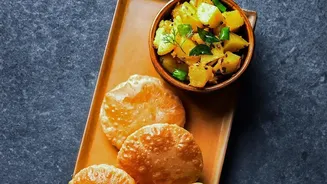
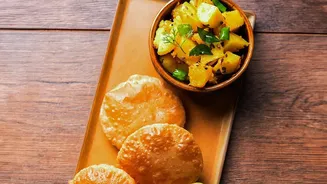
From the Northeast, the Manipuri breakfast table offers Tan, a simple yet satisfying flatbread. Made from a basic dough of flour, salt, and water, Tan can be prepared in two ways: deep-fried like a puri or cooked flat on a griddle like a crepe. It's a versatile staple enjoyed across the state, often for the first meal of the day. Tan is rarely eaten alone and is typically paired with Aloo Kangmet, a mash of boiled potatoes flavoured with mustard oil and chillies, or a simple pea dal. To complete the meal, it's often served with a cup of 'changang', a local black tea.