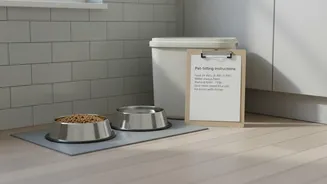




Why Vague Instructions Fail
Simply writing “Feed twice a day” is a recipe for potential problems. A pet-sitter, especially one with multiple clients, can easily get confused about portion sizes, timings, or specific dietary needs. Vague instructions can lead to overfeeding, underfeeding,
digestive upset, or even a pet refusing to eat altogether. Pets thrive on routine, and consistency in their feeding schedule is crucial for minimising their stress while you are away. A detailed, written guide removes guesswork, empowering your sitter to provide the best possible care and ensuring your pet remains happy and healthy. Think of it not as micromanagement, but as a vital tool for your pet's welfare.
The Core Meal Plan
Your instructions should be a clear, step-by-step guide to your pet's main meals. Start with the basics: specify the exact brand and type of food—whether it's dry kibble, wet food, or a specific formula. Clearly state the precise amount for each meal, using standard measurements like 'one cup' or 'half a can'. Mention the exact times for breakfast and dinner. If you have more than one pet, especially if they are on different diets, create separate, clearly labelled instructions for each one to prevent mix-ups. Don't forget to show the sitter exactly where the food is stored. Note any special preparations, such as soaking kibble in warm water or mixing in supplements.
The Rules on Treats
Treats are often a source of joy for pets and a way for them to bond with the sitter, but rules are essential. Be explicit about which treats are approved and how many your pet can have per day. This prevents accidental overindulgence, which can lead to an upset stomach or disrupt their regular appetite. Also note where the treats are kept. It's equally important to list what is not a treat. If your pet has a sensitive stomach or is on a restricted diet, make it clear that no extra snacks or human food should be given, no matter how much they beg. This clarity helps the sitter maintain your pet’s dietary discipline and health.
Hydration and Odd Habits
Water is just as important as food. Show the sitter where the water bowls are and explain how often they should be cleaned and refilled with fresh water. If your pet has a particular preference—like only drinking from a specific bowl, enjoying an ice cube in their water on hot days, or preferring running water from a fountain or tap—be sure to mention it. Every pet has unique quirks, and food is no exception. Does your cat refuse to eat unless you shake the bowl? Does your dog only eat if you stand there and watch? These little details may seem silly, but they can be the key to preventing a sitter from panicking when a pet unexpectedly skips a meal.
Allergies and Forbidden Foods
This section is non-negotiable for your pet's safety. Create a prominent, easy-to-read list of any known food allergies or sensitivities. This could range from common protein allergies to reactions to certain grains. Alongside allergies, list all 'forbidden foods'. This includes common human foods that are toxic to pets, such as chocolate, onions, grapes, and anything containing xylitol. By putting this in writing, you leave no room for error. A sitter who is unaware of these dangers might unknowingly give your pet something harmful. Highlighting these restrictions is one of the most important things you can do to protect your pet.
Emergency Feeding Plan
Even with the best instructions, things can go wrong. What should the sitter do if your pet refuses to eat or drink for an extended period? Outline a clear plan. For example: “If he/she has not eaten for 24 hours, please contact me. If you cannot reach me, please call our vet.” Provide the name, address, and phone number for both your regular veterinarian and a 24-hour emergency animal hospital. It's also wise to leave a signed letter authorising your pet-sitter to seek and approve veterinary treatment in your absence if you are unreachable. This preparation ensures that a minor issue doesn't become a major emergency.