
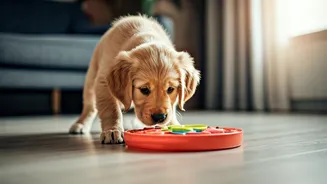


Turn Mealtime into a Game
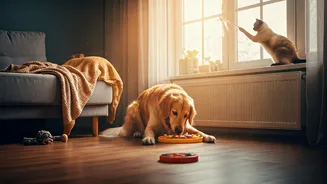
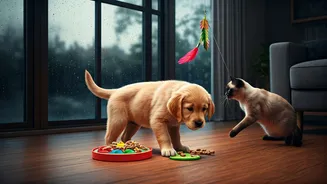
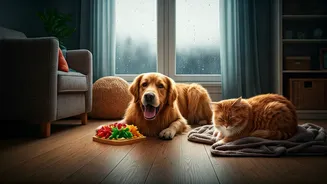
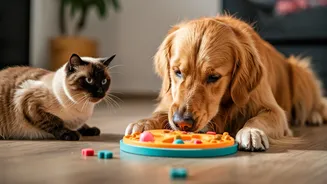
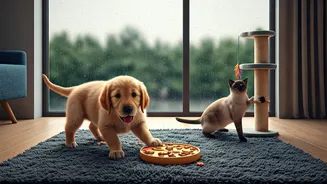
Why let your pet gobble down their food in 30 seconds when you can turn it into 15 minutes of brain-boosting fun? Instead of using a bowl, scatter their kibble on a clean floor or a ‘snuffle mat’. For dogs, you can roll up treats in an old towel. For cats,
hiding small portions of their food around the room encourages their natural hunting instincts. This concept, known as ‘contra-freeloading’, taps into an animal's innate desire to work for their food. It provides excellent mental stimulation, prevents bloating from eating too fast, and makes meals an exciting event rather than a routine chore.
Master the Art of DIY Toys
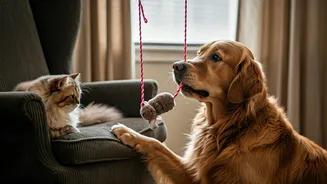
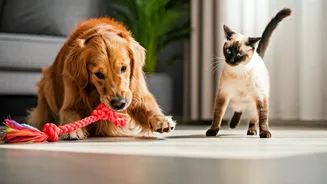
You don't need a cupboard full of store-bought plastic. Your recycling bin is a treasure trove of entertainment. An empty plastic bottle (with the cap and ring removed) can be a fascinating noise-maker for a dog. Put a few pieces of kibble inside to make it a puzzle. For cats, a simple ball of crunched-up paper or a peacock feather can be more alluring than the most expensive toy. You can also braid old t-shirts into a sturdy rope for a game of tug-of-war. Always supervise your pet with a new DIY toy to ensure they don’t ingest any small parts. The key is novelty; rotating these simple toys keeps them interesting.
Harness the Power of Scent
A pet’s world is dominated by smell. Engaging their nose is one of the easiest and most powerful ways to entertain them. For dogs, this can be as simple as letting them sniff extensively on their walks—don’t rush them! This is their version of reading the local newspaper. At home, you can play the ‘which hand?’ game with a treat, or hide treats around a room for them to find. For indoor cats, bring the outside in. A leaf, a non-toxic flower, or a stick from your garden (ensure it’s from a safe plant) provides a world of new information for them to process. Scent work is tiring for a pet in the best way possible, calming them down and satisfying their instincts.
Never Underestimate a Cardboard Box
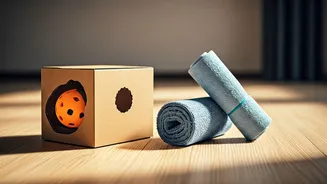
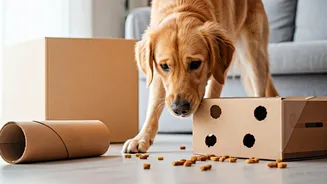
It’s a universal truth: cats love boxes. A simple cardboard carton provides a safe hiding spot, a place to ambush toys from, and a satisfying surface to scratch and chew. But dogs can also get in on the fun. A large box can be a temporary den, while smaller boxes can be filled with paper and a few hidden treats to create a canine treasure chest. You can cut holes in the sides to create a puzzle or simply leave it open for them to explore. It costs nothing, provides hours of fun, and can be easily replaced when it gets destroyed.
Teach an Old (or Young) Pet New Tricks
Training isn't just about obedience; it's a fantastic mental workout and a bonding experience. Five to ten minutes of training a day can be more tiring for a dog than a 30-minute walk. Start with simple commands like 'shake hands', 'spin', or 'touch' (teaching them to touch your hand with their nose). For cats, clicker training can be used to teach them to come when called, sit, or even give a high-five. The process of learning, problem-solving, and earning a reward is deeply fulfilling for pets. It builds their confidence and strengthens the communication between you and your animal companion.
Create 'Cat TV' or a 'Doggy Window'
Visual stimulation is a passive but effective way to keep pets from getting bored, especially if they are home alone. For cats, securely position a bird feeder outside a window. The fluttering birds, squirrels, and insects provide endless entertainment—a live-action nature documentary just for them. This is often called 'Cat TV'. For dogs, ensure they have a comfortable spot with a clear view out a front window. Watching the comings and goings of the neighbourhood can be very engaging for them. It allows them to feel connected to the world outside while staying safe indoors.