







The Power of an Isometric Hold
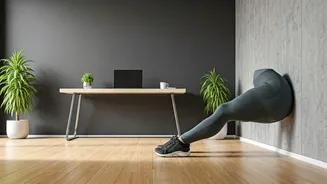
The wall sit, also known as the wall squat, is an isometric exercise. Unlike dynamic exercises where your muscles contract and lengthen through a range of motion (like a traditional squat), isometric exercises involve contracting your muscles without
any visible movement in the joint. You simply hold a static position. This type of training is incredibly effective for building muscular endurance and stability. By holding the position, you force the muscle fibres to remain under constant tension, which is a fantastic way to stimulate strength gains, improve your mind-muscle connection, and challenge your willpower.
How to Perform the Perfect Wall Sit
Proper form is crucial for maximising benefits and preventing injury. Follow these steps to execute a flawless wall sit: 1. **Find Your Wall:** Stand with your back against a smooth, sturdy wall. 2. **Position Your Feet:** Your feet should be shoulder-width apart and about two feet away from the wall. Experiment with the distance to find what feels right for your body. 3. **Slide Down:** Slowly slide your back down the wall until your thighs are parallel to the floor. Your knees should be bent at a 90-degree angle. Check your alignment—your knees should be directly above your ankles, not tracking out over your toes. 4. **Engage Your Body:** Ensure your back is flat against the wall, from your shoulders to your lower back. Engage your core by pulling your belly button towards your spine. Keep your weight distributed evenly through your heels. 5. **Hold the Position:** Keep your arms relaxed at your sides, crossed over your chest, or extended in front of you. Breathe steadily and hold the position for your target time.
Muscles Activated During a Wall Sit
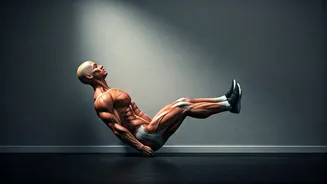
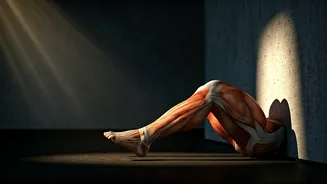
While it may look simple, the wall sit is a powerful lower-body exercise. The primary muscle group you’ll feel working—or burning—is the quadriceps, the large muscles at the front of your thighs. They do most of the work to hold your body up. However, several other muscles are also engaged to support and stabilise the position. These include the glutes (your buttocks), the hamstrings (the back of your thighs), the adductors (inner thighs), and your calves. Your abdominal muscles and lower back also work to keep your torso upright and stable against the wall, making it a surprisingly comprehensive hold.
The One-Minute Endurance Goal
So, why one minute? Holding a wall sit for 60 seconds is a classic benchmark for good muscular endurance in the lower body. For a beginner, this can feel like an eternity. Don't be discouraged if you can't hit it on your first try. The key is progressive overload. Start with a duration you can manage with good form, even if it's just 20 or 30 seconds. Aim to hold it for a few seconds longer each session or each week. This gradual increase in time under tension is what forces your muscles to adapt and grow stronger. Once you can comfortably hold the position for a minute, you know you've built a solid foundation of strength.
Common Mistakes and How to Avoid Them
To get the most out of your wall sits and stay injury-free, watch out for these common form errors: * **Not Going Low Enough:** If your thighs aren't parallel to the floor, you're not fully engaging the target muscles. Slide down until you hit that 90-degree angle at the knees. * **Letting Knees Go Past Toes:** This puts unnecessary strain on your knee joints. If this happens, move your feet further away from the wall until your shins are perpendicular to the floor. * **Leaning Forward or Arching Your Back:** Keep your entire back, including your shoulders and lower back, pressed firmly against the wall. This ensures proper alignment and core engagement. * **Holding Your Breath:** It's a natural reaction when under tension, but it's important to breathe steadily throughout the hold. Inhale through your nose, exhale through your mouth.
Ready for a Greater Challenge?
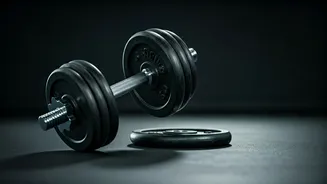
Once you've mastered the one-minute hold, you don't have to stop there. You can make the exercise more challenging in several ways. Try holding a dumbbell or a weight plate on your lap to add resistance. You can also increase the instability and challenge your core by lifting one foot off the ground for a single-leg wall sit (start with just a few seconds per leg). Another variation is to place a small exercise ball between your knees and squeeze it throughout the hold to further activate your inner thigh muscles.