





From Finding Planets to Knowing Them
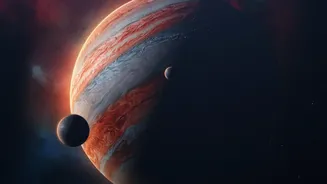
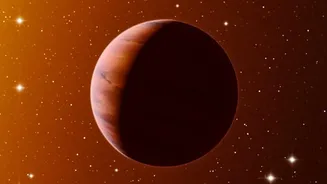
The discovery of thousands of exoplanets since the 1990s was a monumental achievement, confirming that our solar system is not unique. However, finding a planet is only the first step. The real question has always been: could any of them support life?
Answering this requires moving beyond mere detection to detailed characterisation. This is where the science of atmospheric analysis comes in. It represents a pivotal shift in astrophysics, turning abstract points of light into tangible worlds with climates, chemistry, and potentially, biology. The central goal of exoplanet science is now to understand what these planets are made of, and atmospheric composition is the key to unlocking those secrets.
How to Read an Alien Atmosphere
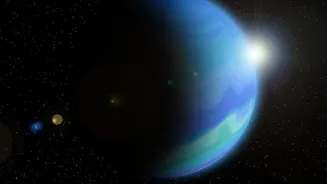
The primary method scientists use is called transmission spectroscopy. It’s a remarkably elegant technique. When an exoplanet passes in front of its host star from our viewpoint—an event known as a transit—a tiny fraction of the starlight filters through the planet's atmosphere. Different gases in that atmosphere absorb specific colours, or wavelengths, of light. Back on Earth, or on space-based observatories, powerful telescopes can capture this filtered light. By analysing the resulting spectrum—a kind of barcode of light—scientists can see which wavelengths are missing. These missing slivers reveal precisely which chemicals are present in the alien world’s air, such as water vapour, carbon dioxide, or methane. It’s like conducting a chemical analysis from trillions of kilometres away.
The Search for Biosignatures
The ultimate prize in this cosmic detective work is the discovery of a 'biosignature'—a gas or a combination of gases that strongly suggests the presence of life. On Earth, life has fundamentally altered our atmosphere. The most famous biosignature is oxygen. Oxygen is a highly reactive gas that would not exist in such high concentrations in our atmosphere without being constantly replenished by living organisms through photosynthesis. Scientists are therefore hunting for atmospheres with abundant oxygen and its byproduct, ozone. But context is crucial. Finding methane alongside oxygen, for instance, would be particularly exciting, as these two gases typically destroy each other and their coexistence could point to a constant biological source. The search isn't just for Earth-like conditions, but for any chemical imbalance that nature alone would struggle to explain.
JWST: The Current Game-Changer
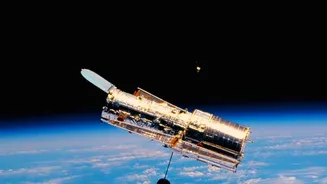
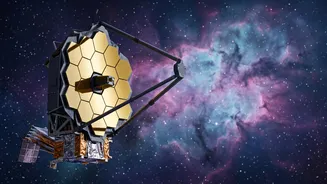
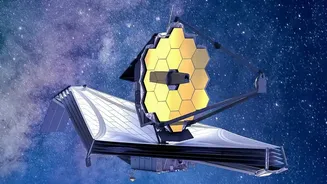
NASA's James Webb Space Telescope (JWST) has revolutionised the field. With its large mirror and unparalleled sensitivity to infrared light, it can perform transmission spectroscopy with incredible precision. Since becoming operational, JWST has already provided stunning insights, detecting clear signs of water vapour, sulfur dioxide, and carbon dioxide in the atmospheres of distant gas giants. These early successes have served as a powerful proof-of-concept, demonstrating that we have the technology to decipher the chemistry of alien worlds. Every observation from JWST not only teaches us about a specific planet but also refines the techniques and builds the scientific foundation for future, even more ambitious projects. It has confirmed that atmospheric analysis isn't just a theoretical possibility; it's a practical and powerful tool.
Designing the Next Generation of Telescopes
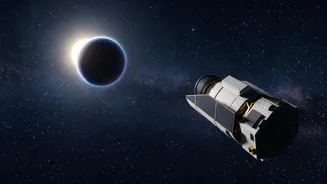
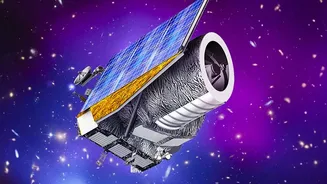
The promise shown by JWST is now directly shaping the blueprints for the next generation of deep space missions. These future observatories are being designed with atmospheric characterisation as their primary objective. The European Space Agency’s Ariel mission, scheduled for launch in 2029, is a prime example. It is the first mission dedicated solely to performing a large-scale chemical survey of around 1000 exoplanet atmospheres, creating a diverse catalogue of what alien skies are made of. Looking further ahead to the 2040s, NASA's next great observatory has been dubbed the Habitable Worlds Observatory (HWO). Its main goal is to directly image dozens of Earth-like planets around Sun-like stars and scrutinise their atmospheres for biosignatures. The very existence of these planned, multi-billion dollar missions shows a clear consensus: the future of the search for extraterrestrial life lies in reading the air of distant worlds.