

From Scrap to Staple
We’ve all been there: a recipe calls for a handful of coriander leaves, and you’re left with a bundle of stems. While they might be tougher in texture, these stems carry the same bright, citrusy flavour profile as the leaves. By infusing them in oil,
you extract all that wonderful essence, creating a versatile pantry staple that’s both delicious and sustainable. Turning scraps into something special is one of the most satisfying kitchen hacks. This process not only saves money but also ensures you get the maximum value out of your fresh produce. The resulting oil is a fantastic finishing touch for countless dishes, adding a professional flair and a concentrated burst of coriander flavour that you can't get from just the leaves.
A Note on Food Safety
Before we begin, it's crucial to discuss food safety. Homemade infused oils can create a low-oxygen environment where harmful bacteria like Clostridium botulinum can thrive if not prepared correctly. This is particularly a risk when using fresh, moisture-rich ingredients like herbs or garlic. The key to preventing this is to ensure your herbs are as dry as possible before they go into the oil, as water is necessary for bacterial growth. For maximum safety, the recommended method involves gently heating the oil with the herbs, which both infuses the flavour more quickly and helps to eliminate moisture. It is also essential to store the finished oil correctly.
Gather Your Ingredients and Tools
The beauty of this project lies in its simplicity. You don't need any fancy equipment. Here's what you'll need: A large bunch of leftover coriander stems Approximately 1-2 cups of a neutral-flavoured oil (sunflower, grapeseed, or a light olive oil work well) A small saucepan A clean, sterilised glass jar or bottle with a tight-fitting lid * A fine-mesh sieve or cheesecloth for straining First, wash your coriander stems thoroughly and pat them completely dry. Any lingering moisture is what you want to avoid, so take your time with this step. Once dry, roughly chop the stems to help release their aromatic compounds more easily during infusion.
The Infusion Process, Step by Step
With everything prepped, you’re ready to start infusing. Combine the chopped coriander stems and your chosen oil in the small saucepan. Heat the mixture over a very low flame. You do not want to fry the stems; the goal is to warm the oil gently. Let the mixture heat for about 5-10 minutes, watching carefully to ensure it doesn't simmer or bubble. The oil should become incredibly fragrant. Once you can smell the strong aroma of coriander, remove the pan from the heat. Allow the oil and stems to cool down together in the saucepan, which gives them more time to infuse. This slow, gentle heating method is safer than a cold infusion and extracts a deep, robust flavour.
Straining and Storing Your Oil
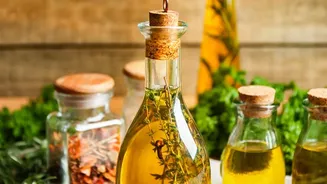
Once the oil has completely cooled to room temperature, it's time to strain it. Place a fine-mesh sieve or a few layers of cheesecloth over your sterilised jar and carefully pour the oil through it. This will separate the stems and any smaller particles, leaving you with a clear, beautifully green-tinted oil. Press down gently on the stems in the sieve to extract every last drop of flavour. Discard the spent stems in your compost bin. Seal your jar tightly. Because fresh ingredients were used, this oil must be stored in the refrigerator and should be used within a few weeks for the best flavour and safety. Keeping it in the fridge will also prevent the oil from going rancid.
How to Use Your Coriander Oil
Now for the fun part: using your homemade creation. This coriander-infused oil is incredibly versatile. Drizzle it over roasted vegetables, grilled chicken, or fish to add a fresh, herbaceous finish. It’s a wonderful base for a salad vinaigrette, especially when paired with lime juice. You can also use it to garnish soups, swirl into dips like hummus or yoghurt, or toss with rice and other grains for an instant flavour boost. The warm, citrusy notes of the coriander make it a perfect companion for Mediterranean, Middle Eastern, and Asian-inspired dishes.