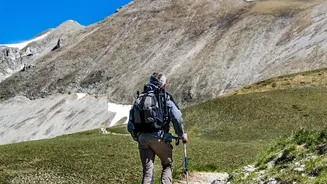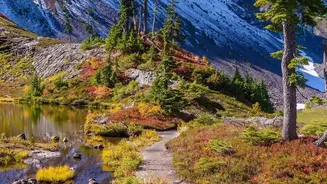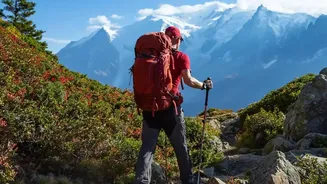


Start With an Honest Self-Assessment
Before you even look at a map, the most crucial step is to be honest about your fitness and experience. A trail guide’s 'moderate' rating might feel 'difficult' if you're not used to hiking at elevation. Consider your regular activity level. Are you a seasoned
hiker who is comfortable with long distances and significant elevation gain, or are you looking for a pleasant walk to a viewpoint? Underestimate your ability level at first; it's better to finish a trail feeling energized than to be exhausted and overwhelmed halfway through. Also, consider the least experienced person in your group and choose a trail that suits their abilities to ensure everyone has a safe and enjoyable time.
Know Your 'Why'
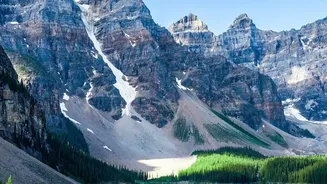
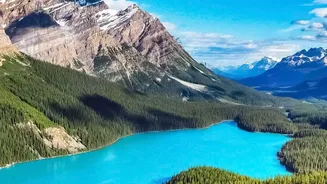
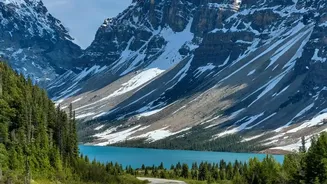
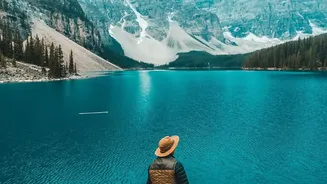
What kind of experience are you seeking? Your motivation will significantly narrow down the options. Are you chasing the iconic, postcard-perfect shot of a turquoise lake? Trails around Lake Louise and Moraine Lake might be your focus. Are you hiking with young children? Look for flatter, shorter routes like the Johnston Canyon Lower Falls or the Fenlands Loop near Banff. Perhaps you crave solitude and want to escape the crowds. In that case, heading into less-trafficked areas of Yoho or Kootenay National Parks, or tackling a longer trail early in the morning, could be your best bet. Or maybe the goal is to see wildlife, in which case certain valleys and meadows known for animal sightings might be preferable. Defining your goal helps filter out hundreds of trails that don't match your ideal day out.
Decode the Trail Ratings
Parks Canada and other trail resources use a rating system to give you a general idea of a trail's difficulty. Typically, you'll see ratings of 'Easy', 'Moderate', and 'Difficult'. - Easy: These trails are generally well-maintained, relatively flat with minimal elevation change, and suitable for most fitness levels, including families with small children. They often have hard-packed surfaces. Think of the Lake Louise Lakeshore Trail or the walk to the Johnston Canyon Lower Falls. - Moderate: Expect a more strenuous effort. These trails involve elevation gain, uneven surfaces, and possibly some steep sections. Basic trail experience is recommended. The Plain of Six Glaciers near Lake Louise is a classic moderate hike, offering huge rewards for a sustained effort. - Difficult: These trails are for experienced hikers in good physical condition. They feature major elevation changes, long steep sections, and potentially rough, unmaintained terrain. An example is the Sulphur Skyline Trail in Jasper, which is a steep climb leading to panoramic views.
Look Beyond Distance
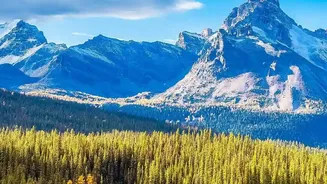
A common mistake is choosing a trail based on distance alone. A short, 5-kilometre hike can be incredibly strenuous if it involves a steep, 800-metre elevation gain. Always look at both the round-trip distance and the total elevation gain. The elevation profile tells you how much climbing is involved and is often a better indicator of a trail's true difficulty than its length. Prime hiking season in the Rockies is generally from mid-June to October, but snow can linger at higher elevations well into July. Always check the latest trail reports on the Parks Canada or Alberta Parks websites for current conditions, wildlife warnings, and potential closures before you head out.
Prepare for a Safe Adventure
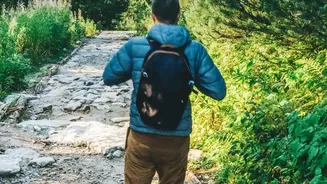
Safety is paramount in the Rockies. Weather can change in an instant, so always pack extra layers of clothing, including rain gear, even on a sunny day. Sturdy, broken-in footwear is non-negotiable. Always carry more water and food than you think you'll need. Cell service is unreliable, so don't depend on your phone for navigation; bring a physical map or download one ahead of time. Finally, you are in bear country. Hike in groups, make noise on the trail by talking loudly, and always carry bear spray where it is easily accessible—and know how to use it. Staying at least 100 metres away from bears and other large animals like moose and elk is crucial for both your safety and theirs.