


Roasted Bhutta (Corn on the Cob)
Across India, the sight of a cart vendor roasting corn on an open flame is a quintessential monsoon scene. Bhutta, or roasted corn on the cob, is arguably the most widespread and naturally healthy rainy-day snack. The corn is roasted directly on embers
until the kernels are tender and lightly charred, giving them a smoky, sweet flavour. It’s then typically rubbed with a mixture of salt, red chilli powder, and a generous squeeze of lime. This simple preparation uses no oil and delivers a satisfyingly warm and tangy bite, making it a perfect, guilt-free companion to the cool, rainy weather. It's a snack that is both rustic and universally loved.
Panki from Gujarat
Panki is a delicate and savoury pancake from Gujarati cuisine, celebrated for its unique cooking method. A thin batter, usually made from rice flour and sometimes soured with yoghurt, is spread between two banana leaves that have been lightly greased. The 'envelope' is then cooked on a hot tawa or griddle. The banana leaves protect the batter from direct heat, allowing it to steam gently in its own moisture. This process imparts a subtle, earthy fragrance to the soft, flavourful Panki. Seasoned with ginger, green chillies, and cumin, it requires minimal oil just to grease the leaves, making it an incredibly light yet satisfying snack. It's served hot, still inside its leafy packet.
Siddu from Himachal Pradesh
Hailing from the hilly regions of Himachal Pradesh, Siddu is a hearty steamed bread perfect for a chilly, rainy day. The dough is made from wheat flour and activated with yeast, which gives it a soft, fluffy texture after steaming. It is then stuffed with various fillings. While savoury versions might include urad dal or vegetables, sweeter fillings feature a mix of poppy seeds, walnuts, and jaggery. The prepared buns are steamed, not fried, making them a wholesome and substantial snack that can often feel like a mini-meal. Traditionally served with a generous dollop of ghee or a side of dal, Siddu is the ultimate comfort food for mountain monsoons.
Patra or Alu Vadi from the West Coast
Known as Patra in Gujarat and Alu Vadi in Maharashtra, this snack is a monsoon favourite made from colocasia leaves. The leaves are smeared with a spicy and tangy paste made from gram flour (besan), tamarind, jaggery, and spices. The layered leaves are then rolled up tightly and steamed until cooked through. After steaming, the rolls are sliced into thick pinwheels. While some traditions involve shallow frying these slices to make them crisp, they are perfectly delicious and much lighter when eaten right after steaming. The combination of sweet, sour, and spicy flavours makes it a complex and delightful snack.
Khandvi from Gujarat
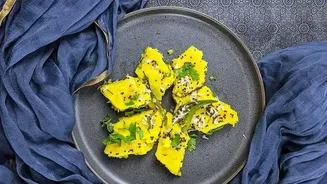
Khandvi is another feather-light snack from Gujarat that is ideal for those seeking flavour without the oil. It consists of delicate, tightly rolled layers made from a batter of gram flour and buttermilk or yoghurt. The key is cooking the batter to the perfect consistency before spreading it very thinly onto a flat surface. As it cools, it is cut into strips and rolled up into bite-sized swirls. While a tempering of mustard seeds, sesame seeds, and curry leaves is often poured over the top, it requires only a teaspoon of oil for a whole batch. The result is a soft, melt-in-your-mouth snack that is both savoury and subtly tangy.