




Gardening in Orbit: The ISS Success Story
For years, astronauts on the International Space Station (ISS) have supplemented their pre-packaged diets with fresh produce grown right there in orbit. Projects like NASA's Vegetable Production System (Veggie) and the more automated Advanced Plant Habitat
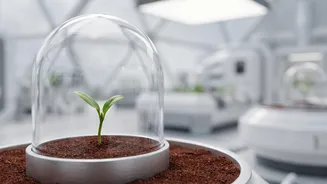
(APH) have proven that agriculture in microgravity is feasible. Using LED lights and specialized 'plant pillows' containing fertilizer and a clay-based growth medium, crews have successfully cultivated lettuce, kale, chile peppers, and even zinnias. These small-scale greenhouses provide not just crucial nutrients that degrade in packaged food over time, but also a psychological boost, offering a connection to Earth and the simple joy of gardening. These systems are highly controlled, with automated sensors managing everything from watering to atmospheric content, proving that in a carefully managed setting, plants can thrive hundreds of miles above Earth.
The Red Planet's Problematic Soil
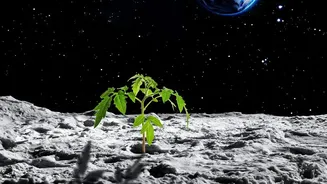
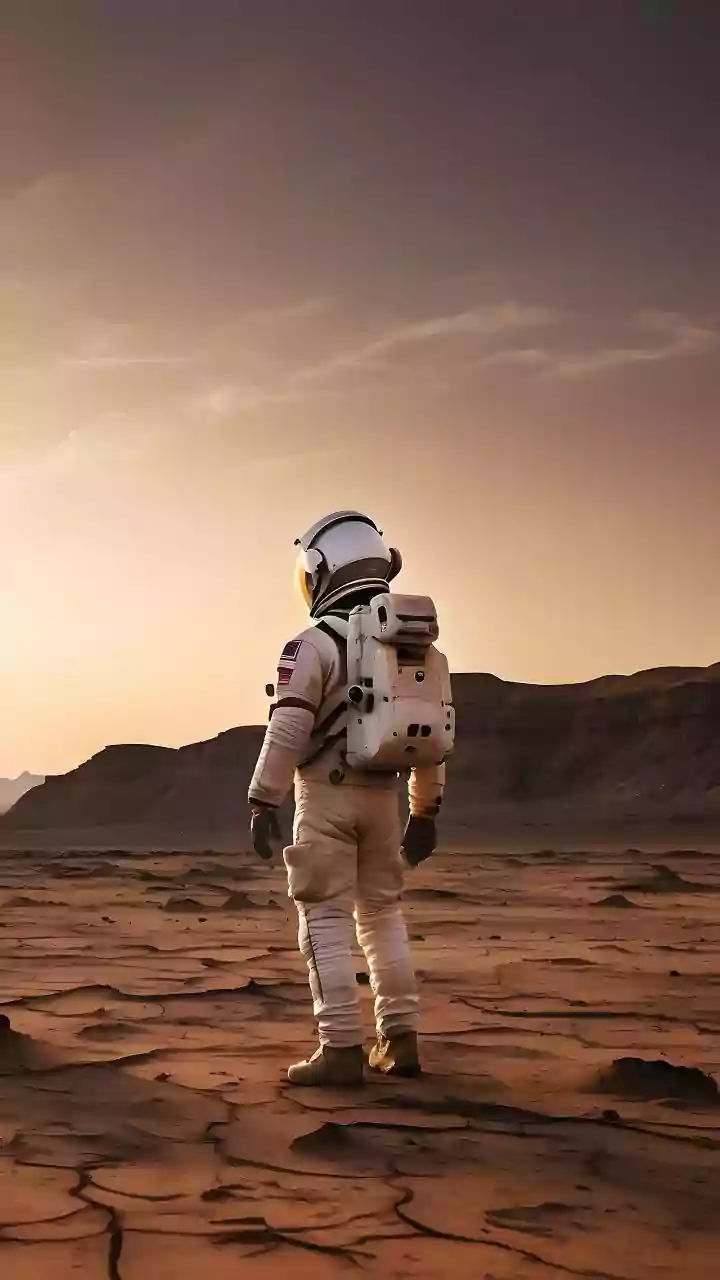
On Mars, the first and most fundamental challenge is the ground itself. What we call Martian 'soil' is actually regolith—a fine, dusty material made of broken rock with none of the organic matter that enriches Earth's soil. Martian regolith lacks the essential nutrients, especially nitrogen, needed for most plant life. Worse, it's laced with toxic perchlorate salts, which would need to be thoroughly washed or neutralized before the regolith could be used for farming. Unlike the custom-made, nutrient-rich plant pillows on the ISS, Martian soil in its natural state is sterile and inhospitable. While experiments have shown that some crops can grow in simulated regolith when treated with biofertilizers or added nutrients, preparing Martian land for agriculture would be a massive undertaking.
An Atmosphere of Difficulty
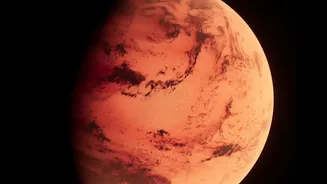
Even with perfect soil, plants on Mars couldn't grow in the open. The planet's atmosphere is about 100 times thinner than Earth's and composed mostly of carbon dioxide. This thin atmosphere provides almost no protection from sterilizing solar and cosmic radiation. Furthermore, it can't retain heat, leading to wild temperature swings and an average temperature of around -80°F (-62°C). Any Martian farm would need to be housed inside a pressurized, heated, and shielded greenhouse. This structure would have to maintain a breathable atmosphere, stable temperatures, and adequate protection from the harsh radiation outside—a far cry from the relatively simple chambers used on the ISS, which is already a protected environment.
Sunlight and Radiation Hurdles
Being farther from the sun, Mars receives less than half the sunlight that Earth does. While this level of light is technically sufficient for photosynthesis—comparable to parts of Scandinavia in the summer—it's not ideal, especially for high-yield crops. This problem is compounded by Mars's frequent and massive dust storms, which can blot out the sun for weeks at a time, potentially leading to crop failure. The thin atmosphere also means that harmful ultraviolet radiation bombards the surface, which can damage plants. While greenhouses can be built with UV protection, the constant threat of radiation and inconsistent sunlight makes reliance on solar energy for agriculture a risky proposition. Many concepts for Martian greenhouses therefore include powerful and energy-intensive artificial lighting, similar to the LEDs used on the ISS but on a much larger scale.
Future Farming: Solutions on the Horizon
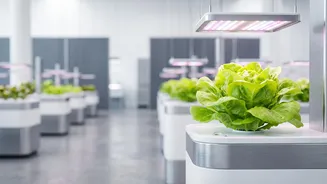
Given the immense challenges of using Martian soil, many researchers believe the most viable path forward is to bypass it altogether. Soilless farming methods like hydroponics (growing plants in nutrient-rich water) and aeroponics (misting plant roots with a nutrient solution) are promising alternatives. These systems, which are already being tested for space applications, use significantly less water, can be stacked vertically to save space, and offer precise control over nutrient delivery. Another key area of research is creating closed-loop bioregenerative systems, where astronaut waste is recycled to provide water and nutrients for the plants, which in turn provide food and oxygen for the astronauts. Ultimately, a combination of technologies—from genetically engineering crops to be more resilient to radiation and low light, to advanced, automated hydroponic greenhouses—will be required to make farming on Mars a reality.