




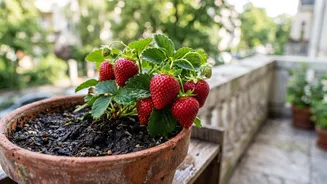

Why Soggy Soil Is a Strawberry's Worst Enemy
Strawberry plants have shallow root systems, which makes them sensitive to both under and overwatering. While they need consistent moisture to thrive, especially when producing fruit, waterlogged soil is a fast track to disaster. When soil is saturated,
the air pockets that roots need for oxygen disappear. Without oxygen, the roots essentially suffocate and can begin to die. This weakened state opens the door for fungal diseases and root rot, a condition where roots turn brown, mushy, and can develop a rotten smell. Paradoxically, a plant with root rot may start to wilt, looking just like a thirsty plant, which can trick well-meaning gardeners into watering it even more.
Your First Line of Defence: The Right Pot and Soil
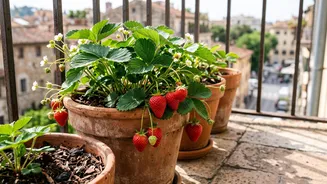
Success starts before you even add water. The right container and soil mix are crucial for preventing soggy conditions. First, ensure your pot has adequate drainage holes—at least three to four are recommended. If a decorative pot lacks them, you must drill them yourself. Terracotta pots are a good choice because the porous clay allows for better air circulation and helps wick away excess moisture, though they do dry out faster. Lighter-coloured plastic pots are also a great option as they retain moisture longer than terracotta and don't absorb as much heat as dark-coloured pots, which can stress the roots. As for soil, never use heavy garden soil, which compacts easily in pots. Instead, opt for a well-draining potting mix specifically designed for containers. A good DIY blend includes peat or coir, compost, and perlite or coarse sand to ensure water drains freely while retaining enough moisture.
The Golden Rule: Check, Don't Guess
The single most important tip for watering strawberries is to check the soil moisture before you water. Ditching a rigid schedule like 'water every day' in favour of observation will save your plants. The easiest method is the finger test: stick your finger about an inch or two into the soil. If it feels dry at that depth, it's time to water. If you feel moisture, wait and check again the next day. Container-grown strawberries dry out much faster than those in the ground, so a daily check is essential, especially during hot weather. In peak summer heat, you might even need to water twice a day.
A Practical Watering Guide
When you do water, do it thoroughly. Water slowly at the base of the plant, avoiding the leaves and fruit as much as possible to prevent fungal diseases. Keep adding water until you see it running freely from the drainage holes at the bottom of the pot. This deep watering encourages roots to grow downward and ensures all the soil is moistened. After watering, if your pot is in a saucer, make sure to empty any excess water within about 30 minutes. Letting the pot sit in a puddle of water completely negates the benefits of good drainage and is a common cause of root rot.
Signs of Trouble: Thirsty or Drowning?
Learning to read your plant's signals is key. An underwatered strawberry plant will have wilted, droopy leaves that may feel dry or crispy. An overwatered plant can also have wilted and yellowing leaves, but the key difference is the soil will be wet. The leaves of an overwatered plant often feel soft and mushy rather than crispy. You may also see stunted growth or water-soaked spots on the stems. If you suspect overwatering, gently check the roots. Healthy roots are typically white and firm, while rotting roots are brown or black, mushy, and may have a foul odour.