





The Hidden Danger in the Water
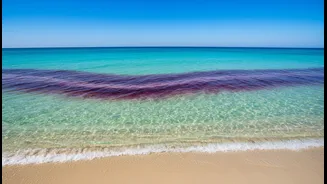
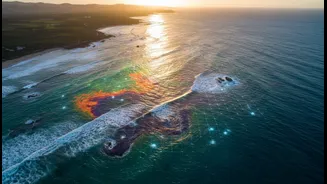
At first glance, an algal bloom might just look like discoloured water. But these events, often called 'red tides' or 'green tides', are rapid, uncontrolled growths of algae. While many are harmless, some, known as Harmful Algal Blooms (HABs), can be
devastating. These blooms can occur in fresh, brackish, or saltwater and are fuelled by factors like excess nutrients from agricultural runoff and wastewater, coupled with warm, sunny conditions. This is a growing concern along India's vast coastline, where increasing nutrient pollution and rising sea temperatures create a perfect storm for more frequent and intense blooms.
Direct and Devastating Impacts
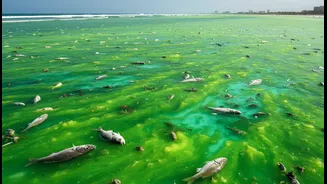
The most immediate effect of a harmful algal bloom is often a massive die-off of marine life. Some algae produce powerful toxins that can directly kill fish, birds, and marine mammals by attacking their central nervous systems. Others cause harm without producing toxins. Dense blooms can physically clog the gills of fish, leading to suffocation. As the massive quantities of algae die and decompose, the process consumes vast amounts of oxygen in the water, creating hypoxic or 'dead zones' where other organisms cannot survive. These blooms can also block sunlight, killing off essential seagrass beds that serve as nurseries for many species.
Why Watching from the Shore Isn't Enough
Observing dead fish wash ashore only tells us the final outcome. To truly understand and mitigate the effects of HABs, scientists need to know how animals behave during a bloom. Are they fleeing the area? Are they still feeding on contaminated prey? Are they getting trapped? Answering these questions requires a more sophisticated approach than simple observation. Marine animals can act as sentinels, providing an early warning of ocean health problems that could eventually impact humans. Changes in their health and behaviour signal that something is wrong in the ecosystem long before it becomes a full-blown crisis.
The Power of High-Tech Tracking
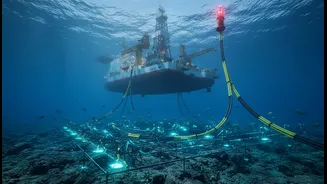
This is where modern technology comes in. Scientists use several methods to track marine animals. Satellite tags, attached to larger animals like turtles or marine mammals, transmit location data to satellites whenever the animal surfaces. For species that rarely surface, like many fish and sharks, acoustic telemetry is a revolutionary tool. A small transmitter, or 'tag', is attached to the animal, emitting a unique acoustic pulse. A network of underwater receivers, or 'listening stations', logs this signal whenever the tagged animal swims by, creating a detailed map of its movements entirely beneath the surface. These tags can also be equipped with sensors that record data on water temperature, depth, and even the animal's heart rate.
What Tracking Reveals During a Bloom
By combining tracking data with satellite imagery of a bloom, researchers can see exactly how animals react. Data has shown animals drastically altering their migration routes to avoid toxic waters. It can reveal if they are spending more time in deeper, less-affected water, or if they are forced into areas where they are more vulnerable to predators or other threats. For example, tracking can determine if a population of dolphins is leaving its traditional feeding ground during a bloom or if it's staying and consuming toxic fish. This information is vital for predicting which species are most at risk and how the toxins might move up the food chain. This knowledge allows for more accurate forecasting of the bloom's ecological impact and helps managers make informed decisions, like issuing warnings about contaminated seafood.
Connecting the Dots for Human Health
The importance of tracking extends directly to human well-being. Toxins produced during HABs can accumulate in shellfish like oysters and mussels. When humans consume contaminated seafood, it can cause severe illnesses, from gastrointestinal problems to debilitating neurological conditions. By tracking marine life, authorities gain a better understanding of how and where these toxins are spreading through the ecosystem. This allows them to implement targeted closures of fisheries and shellfish beds, protecting public health and minimising economic losses for coastal communities that depend on the ocean for their livelihoods.