



The Celestial 'Wow' Moment
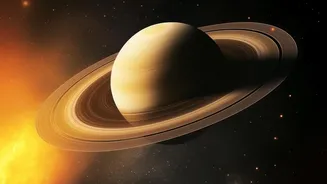
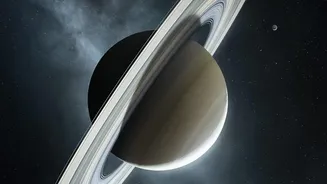
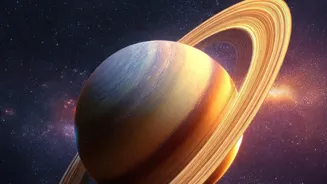
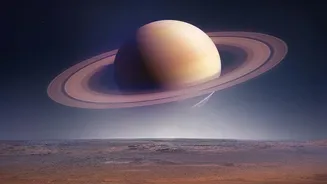
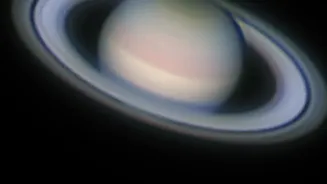
For many seasoned astronomers, the first time they saw Saturn through a telescope was the moment they were truly hooked. It’s one thing to see photos of the ringed planet, but it’s another experience entirely to see it with your own eyes, floating in the dark
with its impossibly perfect rings. That gasp of wonder is what makes Saturn so rewarding. Unlike fuzzy, distant nebulae or galaxies that can be challenging for beginners to find and appreciate, Saturn offers instant gratification. It looks exactly like you hope it will: a distinct orb, clearly separated from its magnificent ring system. No other object quite prepares you for the three-dimensional appearance of Saturn in an eyepiece; it feels real and profound.
Why August 2026 Is Prime Time
While Saturn is always a spectacle, its visibility changes throughout the year. August 2026 is an excellent month to observe it because the planet is heading towards its annual opposition, which occurs on October 4. Opposition is when Earth passes directly between Saturn and the Sun. During this period, the planet is at its closest and brightest for the year. Throughout August, Saturn will rise earlier each night, making it more convenient to view. At the start of the month, you'll find it in the eastern sky around 11 p.m., but by the end of the month, it will be visible as early as 9 p.m. It will appear as a bright, steady, yellowish point of light in the constellation Pisces.
The Rings Are Back in Style
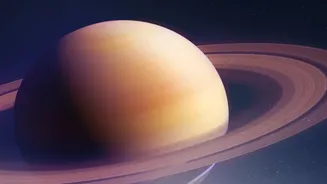
What makes this year particularly special is the view of the rings themselves. In 2025, Saturn's rings were tilted almost perfectly edge-on to us, making them look like a thin, razor-sharp line and almost seem to disappear. Now, in August 2026, the rings are opening up again, tilted at about 7.5 to 9 degrees from our perspective. This angle is more than enough to provide a dramatic, clear view of the rings as a distinct structure, even in a small telescope. This is the best view we’ve had since 2022, and the rings will continue to open up over the next several years, heading towards their maximum tilt in 2032. So, you are catching the planet at the beginning of its most spectacular viewing phase.
Gearing Up: What You Really Need
You don't need a powerful, expensive telescope to be amazed by Saturn. In fact, the rings are visible in almost any small telescope with at least 25x magnification. A modest beginner's telescope, such as a 70mm refractor or a 4.5-inch reflector, will easily show the rings as a separate feature. To start, use your lowest-power eyepiece to find and center the planet. It will look like a slightly elongated star. Once it's centered, you can switch to a higher-power eyepiece (aiming for 100-150x magnification) to get a clearer, more detailed view. Don't be tempted to use the highest magnification possible right away, as this can make the image blurry, especially if atmospheric conditions aren't perfectly calm.
What to Look For
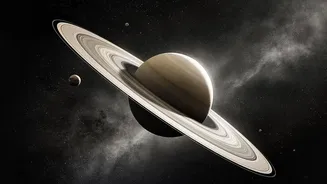
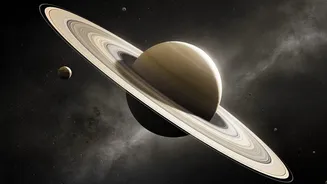
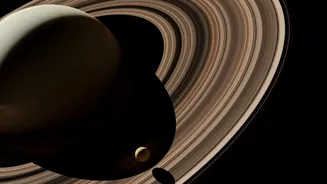
When you have Saturn in focus, take a moment to appreciate the view. You will clearly see the planet's globe and the rings encircling it. With a small telescope, the rings will likely look like a single, solid structure. If you have a slightly larger scope (4 inches or more) and a steady night, you might be able to spot the Cassini Division—a thin, dark gap that separates the A and B rings. You may also be able to spot Saturn's largest and brightest moon, Titan. It will look like a small, star-like point of light very close to the planet. Observing Titan's position from one night to the next is a rewarding activity in itself, reminding you that you are looking at a complex and dynamic system.