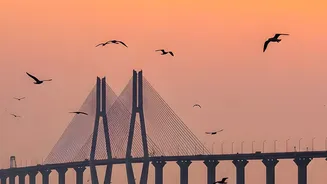






Have you ever looked up from a bustling city street and spotted an unfamiliar bird soaring high above? It might not be a lost local. Increasingly, altered wind patterns are redirecting migratory birds over India's major metropolitan areas.
Invisible Rivers in the Sky
Every year,
millions of birds travel thousands of kilometres along ancient routes known as flyways. India is a crucial crossroads for the Central Asian Flyway, which connects the cold breeding grounds of Eurasia with the warmer wintering spots in South Asia. Species like the Bar-headed Goose, famous for flying over the Himalayas, and countless ducks, cranes, and shorebirds rely on these aerial highways for survival. Traditionally, these routes followed geographical features like coastlines and river valleys, linking critical wetlands and forests where birds could rest and refuel. But now, subtle changes in the atmosphere are redrawing these invisible maps, with significant consequences for both the birds and our cities.
The Power of a Tailwind
For a bird on a long-distance journey, energy is everything. To conserve it, they become master aviators, expertly using wind to their advantage. A strong tailwind is like a free ride, allowing birds to cover greater distances with fewer wing beats. They are incredibly sensitive to shifts in air pressure and wind direction, often waiting for favourable conditions before beginning a long flight. Recent climate shifts, however, are altering historic wind patterns. Factors like rising temperatures and more extreme weather events are making winds more variable. This means that the reliable 'tailwind expressways' birds have used for generations may no longer be the most efficient path, forcing them to find new routes.
A New Urban Flyway
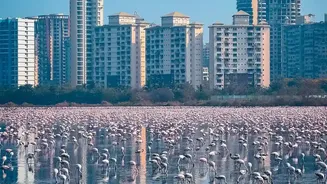
The result is a phenomenon that birdwatchers and scientists are increasingly observing: migratory birds appearing over dense urban centres like Delhi, Mumbai, and Bengaluru. Instead of flying over traditional rural or coastal stopover sites, shifting winds are now funnelling them directly over concrete jungles. While this offers city dwellers a surprising glimpse of magnificent species, it presents a perilous obstacle course for the birds. Urban areas are rife with dangers that these long-distance travellers are not equipped to handle. The journey through a city is fraught with unfamiliar and often fatal threats.
The City as an Obstacle Course
One of the greatest urban threats is artificial light. Migrating at night to avoid predators and use celestial cues for navigation, birds become disoriented by the intense glow of cities. Brightly lit skyscrapers can act like magnets, trapping birds in confusing circles of light, causing them to deplete precious energy reserves or collide with buildings. Glass-covered buildings are another major hazard. By day, they reflect the sky and trees, tricking birds into seeing a clear flight path. By night, they become invisible barriers. Other dangers include air pollution, a scarcity of safe green spaces for rest, and the general stress of a noisy, unfamiliar environment. The combined effect turns our cities into deadly traps.
The Rise of the Citizen Scientist
But this urban shift has also sparked a positive movement. Armed with smartphones and a growing awareness, city residents are becoming crucial data collectors. Apps like eBird and iNaturalist allow anyone to log bird sightings, helping scientists track these new migration patterns in realtime. This crowdsourced data is invaluable for identifying which species are being affected and where urban 'hotspots' of bird activity are forming. This information helps conservation organisations and local governments develop targeted strategies, such as advocating for 'lights out' programmes during peak migration seasons or protecting small urban parks and water bodies that serve as vital, if unconventional, stopover sites for these weary travellers.