







A Flower-Like Ghost from an Ancient Ocean
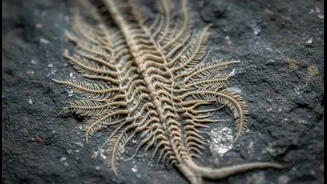
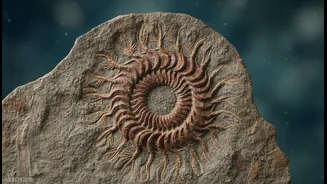
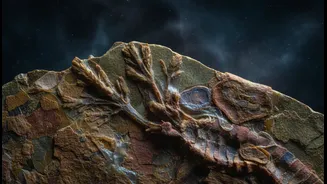
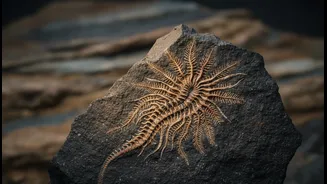
Long before dinosaurs, and even before plants colonized the continents, Earth’s shallow seas were teeming with life. Among the inhabitants were crinoids, relatives of modern starfish that looked more like sea flowers anchored to the ocean floor. Millions
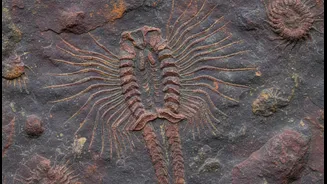
of crinoid fossils exist, but they almost always preserve only the hard, skeletal parts. Soft tissues—like organs, skin, and in this case, feeding structures—decay almost immediately. Now, paleontologists from the University of Oklahoma have identified preserved tube feet in a crinoid species called Dendrocrinus simcoensis. Found in a museum in Montréal, this fossil is the oldest known example of crinoid soft tissue ever documented, offering a rare snapshot of how these ancient animals actually lived and ate.
Why Preserved Soft Tissue is a Game-Changer
Finding a fossil with soft parts is like finding a film of a historical event instead of just a single photograph. Skeletons tell us about an animal's structure, but soft tissues reveal its biology. They can tell us how an animal moved, what it ate, and how its internal systems worked. In this case, the preserved tube feet of the crinoid provide direct evidence of its feeding strategy. This discovery gives scientists a much clearer picture of the biodiversity and complexity of Earth's earliest reef ecosystems. The conditions required for such preservation are incredibly specific and rare, needing rapid burial in low-oxygen conditions to halt decay almost instantly. That’s why researchers call a find like this “truly one in a million.”
Before You 'Act': A Quick Guide to Science News
Sensational headlines about science are common. While exciting, they can sometimes be misleading. The second part of this story’s headline—'What to Check before Acting on the Update'—is a prompt to be a critical reader. 'Acting' on a fossil discovery might mean sharing the news, discussing it, or even being targeted by scams. Here’s a simple checklist to help you sort fact from hype whenever you see a major scientific announcement.
Check the Source and the Science
First, consider where the news is coming from. Is it a reputable news outlet known for solid science reporting? Did they cite the scientific journal where the research was published? In this case, the crinoid study was published in a peer-reviewed journal, which is the gold standard for scientific credibility. This means other experts in the field reviewed the study for errors before it was published. Also, look for quotes from the researchers themselves or from other independent experts. This adds a layer of authenticity that is often missing from less reliable reports.
Watch for Exaggerated Claims and Hoaxes
Be wary of headlines that claim a discovery 'changes everything we know' or 'proves scientists were wrong.' Science usually builds on previous knowledge, rather than completely overturning it. History is also filled with famous fossil hoaxes, like the 'Piltdown Man,' a forgery that misled scientists for 40 years. In the fossil market, fakes are common, from resin claws sold to tourists to complex composite skeletons created to fetch a higher price. While this crinoid fossil is a verified discovery held in a museum collection, the public attention it generates can create opportunities for scammers selling fake artifacts online. The rule of thumb is simple: if a private seller online is offering a 'one-of-a-kind' fossil that seems too good to be true, it almost certainly is.