


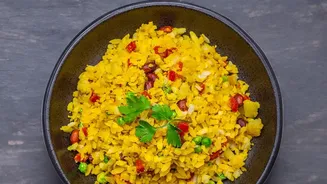
For millions across India, poha is the quintessential breakfast. But in the heart of the country, this savoury staple is served with a surprising partner: a spiral of hot, sweet jalebi. It’s a combination that tells a story of flavour and history.
A Breakfast Born in the Heart of India
The
pairing of savoury poha with sweet jalebi is a culinary signature of the Malwa region of Madhya Pradesh, with the city of Indore being its most famous champion. While flattened rice is a breakfast staple across the nation, its combination with jalebi is a beloved daily ritual here. Every morning, the streets of Indore and Bhopal come alive with vendors setting up their stalls, ready to serve thousands of plates of this iconic duo. The tradition is so ingrained that it is considered a welcome ceremony for newcomers and a non-negotiable part of the city's identity. This unique breakfast is not just a meal; it is a cultural institution, believed to have gained its current form after India's independence and refined over decades by local vendors.
The Unique Craft of Indori Poha
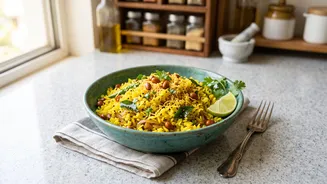
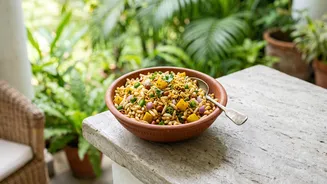
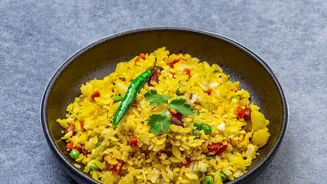
What makes the poha from this region special is not just its partner, but its preparation. Unlike versions from other states, Indori poha is steamed rather than fully pan-cooked, which gives it a distinct softness and fluffiness that lasts for hours. The flattened rice is rinsed, mixed with turmeric and salt, and then gently steamed over a pot of boiling water. The flavour profile is also unique, often featuring fennel seeds (saunf) for a hint of sweetness. But the real secret weapon is Jeeravan masala, a complex and tangy spice blend of over 20 spices, including cumin, black salt, and dry mango powder, which is sprinkled generously on top just before serving. This masala gives the poha a zesty kick that perfectly prepares the palate for what comes next.
A Symphony of Sweet and Savoury
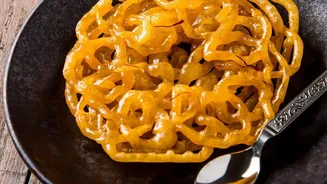
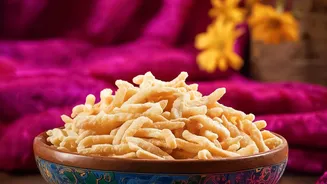
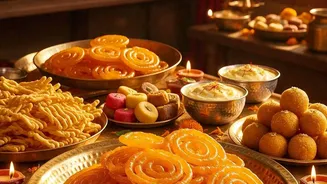
On paper, the pairing might seem unusual, but on the plate, it makes perfect sense. The culinary logic lies in the delightful contrast of flavours and textures. The poha itself is a medley of sensations: the softness of the steamed rice, the sharp tang from a squeeze of lemon, and the crunch from a garnish of raw onions and crispy sev. The jalebi, a deep-fried spiral of fermented batter soaked in sugar syrup, offers a direct and satisfying counterpoint. Each bite can be a mix of the spicy, salty poha and the sweet, syrupy jalebi, creating a balanced and harmonious experience. This love for layered flavours is characteristic of Malwa's culinary culture, which has been shaped by a blend of Maharashtrian, Rajasthani, and Gujarati influences.
An Edible Piece of History
The combination of poha and jalebi also tells a story of cultural migration. Poha, while an ancient grain mentioned even in the Mahabharata, is believed to have been popularised in Central India by the Maratha Holkars, who brought the dish from Maharashtra. Jalebi, on the other hand, has roots in the Middle East, known as 'Zalabiya', and travelled through Persia and the Mughal courts to become a beloved sweet across India. The meeting of these two dishes on a single plate in Madhya Pradesh reflects the region's unique history as a crossroads of cultures. It represents the confluence of Maratha influence from the south and Mughal culinary traditions from the north, creating a breakfast that is truly a product of its geography.