



Start with the Origin
Just like wine, the 'terroir' of tea—the soil, climate, and altitude—has a huge impact on its flavour. Many speciality teas are named after the region where they are grown, such as Darjeeling, Assam, or Nilgiri from India, or Ceylon from Sri Lanka. 'Single-origin'
means the tea comes from one specific place, offering a pure expression of that region's character. Blends, on the other hand, combine teas from different areas to achieve a consistent flavour profile. Higher elevation teas, like those from Darjeeling, often grow more slowly, which can result in more complex and floral flavours. Knowing the origin gives you the first major clue about the taste inside the package.
Examine the Leaf
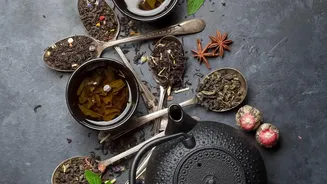
The appearance of the dry leaf is a direct indicator of quality. Speciality teas often use whole leaves, which are considered the highest grade. Terms like 'Orange Pekoe' (OP) refer not to a flavour, but to a grade of whole, intact leaves. 'Broken Orange Pekoe' (BOP) consists of smaller leaf pieces, which brew faster and produce a stronger, more robust cup, often used in tea bags. The lowest grades are 'fannings' and 'dust', which are tiny particles found in mass-market tea bags. Generally, the more whole and uniform the leaves, the more nuanced and complex the flavour will be, as they release their essence more slowly during brewing.
Check the Harvest Date
Tea is an agricultural product, and its freshness matters immensely. The harvest date can tell you a lot about a tea's quality and flavour profile. For many teas, especially greens and whites, the first harvest of the year after the plant's winter dormancy (often called 'First Flush' in India or 'Ming Qian' in China) is the most prized. These early spring leaves store more natural sugars and have a delicate, sweet flavour. Later harvests, such as those in the summer, result in faster growth, which can lead to more bitter and astringent flavours. Reputable sellers will always provide the harvest year and sometimes even the season. If this information isn't available, the tea may not be as fresh.
Investigate the Ingredients
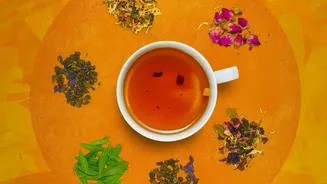
Beyond pure tea, many blends include other ingredients. The key is to know what you are looking for. Flavoured teas can use real dried fruits, herbs, and spices, which are often called 'inclusions'. They can also use flavourings, which fall into two main camps: natural and artificial. 'Natural flavouring' means the flavour is derived from a natural source, like a plant or fruit. 'Artificial flavouring' is created in a lab. While chemically similar, some producers may use artificial flavours to mask lower-quality tea. If the ingredient list is vague, simply stating 'flavouring', it is likely not from a natural source. For the most authentic taste, look for teas with real, identifiable ingredients.
Watch for Added Sweetness
Many people are surprised to find sugar in their tea, especially in ready-to-drink iced teas and powdered chai mixes. Manufacturers use added sugars to enhance flavour and create a consistent product, but these can hide under many different names on an ingredient list. Look for terms like cane sugar, corn syrup, dextrose, fructose, agave nectar, and even fruit juice concentrate. If one of these is listed as one of the first few ingredients, the product is likely high in added sugar. Choosing unsweetened tea and adding your own sweetener gives you complete control over the sweetness and allows the tea's natural flavour to shine through.