






A Laboratory in Earth's Orbit
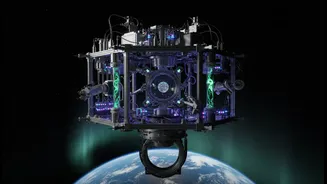
The Indian Space Research Organisation (ISRO) is pioneering a unique approach to both space exploration and science education. At the heart of this effort is the PSLV Orbital Experimental Module, or POEM. Instead of letting the final stage of its workhorse
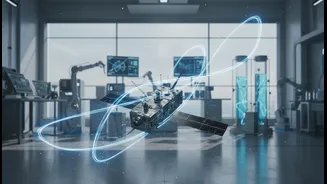
PSLV rocket become space debris after deploying a satellite, ISRO repurposes it. Engineers augment the spent stage with solar panels, a control system, and communication equipment, effectively turning it into a short-term, free-flying science platform that orbits the Earth for up to six months. This innovative and cost-effective solution provides a golden opportunity for academic institutions, start-ups, and students to run their own experiments in the unique environment of space.
Why is Microgravity So Special?
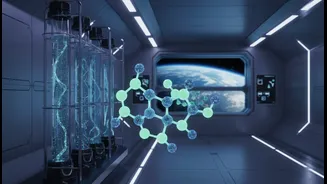
Microgravity, often called near-weightlessness, is the condition experienced in orbit where the pull of gravity is significantly reduced. This environment is a game-changer for scientific research. On Earth, gravity influences everything from how fluids mix to how cells grow. In space, these fundamental processes behave differently. For instance, without buoyancy, crystals can grow with near-perfect structures, which is invaluable for materials science and drug development. Studying how biological systems like plants or human cells adapt to microgravity can yield profound insights into life itself, with applications for both long-duration space missions and health on Earth. ISRO's platforms provide access to this coveted research environment, which was once the exclusive domain of major space agencies.
From University Labs to Outer Space
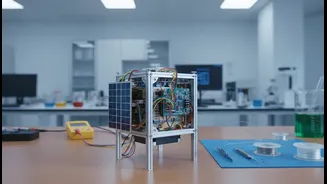
ISRO actively encourages participation from the nation's academic community. Through its student satellite programs and opportunities to fly payloads on missions like POEM, the agency provides technical mentorship and launch support. This allows students to move beyond textbooks and gain hands-on experience in designing, building, and testing space-grade hardware. For example, recent POEM missions have hosted payloads from universities and startups to study everything from the germination of seeds in space to testing new types of propulsion systems. The Indian National Space Promotion and Authorisation Centre (IN-SPACe) also plays a key role, facilitating these collaborations and ensuring that students from across the country have a pathway to participate.
Fostering a Generation of Innovators
These initiatives are about more than just individual experiments; they are a strategic investment in India's future. By democratizing access to space, ISRO is nurturing a generation of scientists and engineers with practical, real-world skills. Programs like YUVIKA (YUva VIgyani KAryakram), a residential course for high schoolers, aim to "catch them young" by imparting basic knowledge of space science and technology. This systematic approach, from school-level awareness campaigns to university-level payload development, builds a robust pipeline of talent. It ensures that India's space ecosystem will not only be sustained but will continue to innovate and grow, driven by young minds who have already touched the cosmos.