





A New Strategy for the Red Planet
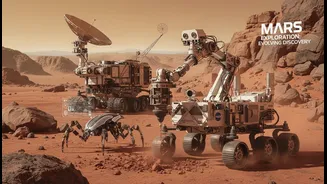
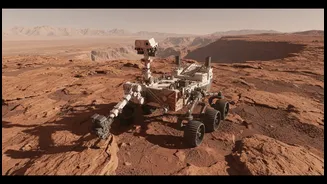
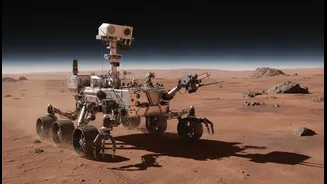
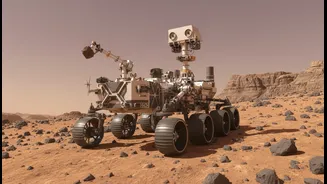
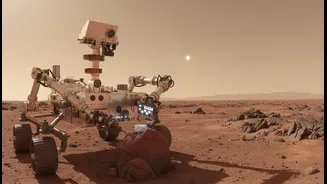
NASA's approach to Mars is undergoing a fundamental change, moving away from the paradigm of large, single-point explorers like Curiosity and Perseverance. Recent initiatives signal a clear pivot towards a more distributed and collaborative model. This
shift is embodied by programs like STRIDE (Science Transport and Robotic Innovation for Deployment and Exploration), which recently awarded contracts to seven companies to develop next-generation mobility systems. The goal is to create robots that can access challenging terrain and travel farther than ever before, opening up new frontiers for science. This new philosophy prioritizes launching more frequent, lower-cost missions that leverage public-private partnerships, a significant departure from the multi-billion-dollar flagship missions of the past.
From Lone Wolves to Robotic Teams
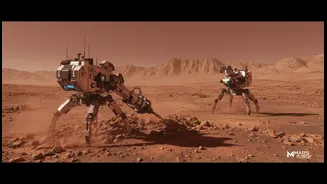
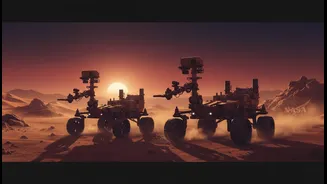
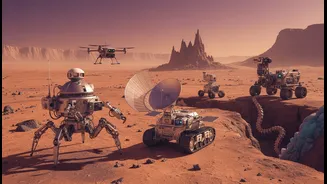
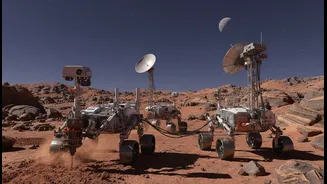
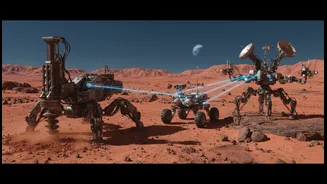
The era of the solo rover, while incredibly successful, has its limits. These missions are high-stakes, with a single point of failure potentially jeopardizing years of work and billions of dollars. The new approach draws inspiration from projects like CADRE (Cooperative Autonomous Distributed Robotic Exploration), which, while being tested on the Moon, provides a blueprint for Mars. CADRE uses a team of shoebox-sized rovers that work together autonomously. They communicate via a mesh network, share data, and make collective decisions without constant input from Earth. Imagine a team of these robots spreading out to map a vast area, creating detailed 3D subsurface maps with ground-penetrating radar — a task impossible for a single rover to accomplish efficiently. This swarm approach offers redundancy; if one robot fails, the mission can continue.
The Power of Autonomy and AI
The secret ingredient making this shift possible is the rapid advancement in artificial intelligence and autonomous systems. For robots to work together millions of miles from home, they can't wait for instructions. The communication delay between Earth and Mars can be up to 20 minutes each way, making real-time control impossible. Future systems will rely on onboard AI to navigate, identify scientifically interesting targets, and coordinate actions. NASA is already testing AI on the Perseverance rover to help its PIXL instrument autonomously identify and analyze rock composition. The next generation will expand this capability, allowing a team of robots to, for example, collectively decide to investigate an unusual geological formation they discover, assigning different roles to each member to maximize data collection.
Unlocking New Scientific Frontiers
This new robotic ecosystem will allow scientists to ask questions that were previously out of reach. Instead of a single path, teams of robots—both on the ground and in the air—can create a comprehensive picture of a region. Following the groundbreaking success of the Ingenuity helicopter, concepts like the SkyFall mission plan to deploy multiple advanced helicopters to map subsurface ice and scout landing sites. These aerial scouts could work in tandem with ground rovers, identifying points of interest from above and guiding their terrestrial partners to them. This collaborative model is crucial for finding resources like water ice, which is not only a target of intense scientific interest but is also essential for supporting future human missions.
Paving the Way for Human Explorers
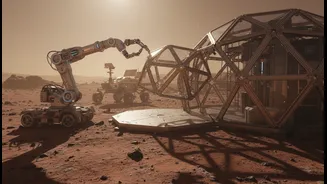
Ultimately, this shift in robotic strategy is a critical step toward landing humans on Mars. Future astronauts will need a detailed understanding of their environment before they arrive. Swarms of autonomous robots can act as advance scouts, mapping terrain, identifying hazards, and locating vital resources. They could be tasked with preparing landing sites or even deploying initial infrastructure. By leveraging commercial partners through initiatives like STRIDE, NASA is fostering an ecosystem of innovation that will build the tools and technologies needed for a sustained human presence. This isn't just about replacing one big rover with many small ones; it's about building a robust, resilient, and collaborative robotic workforce that will explore alongside, and ahead of, the first human pioneers on Mars.