



A Landmark Observation
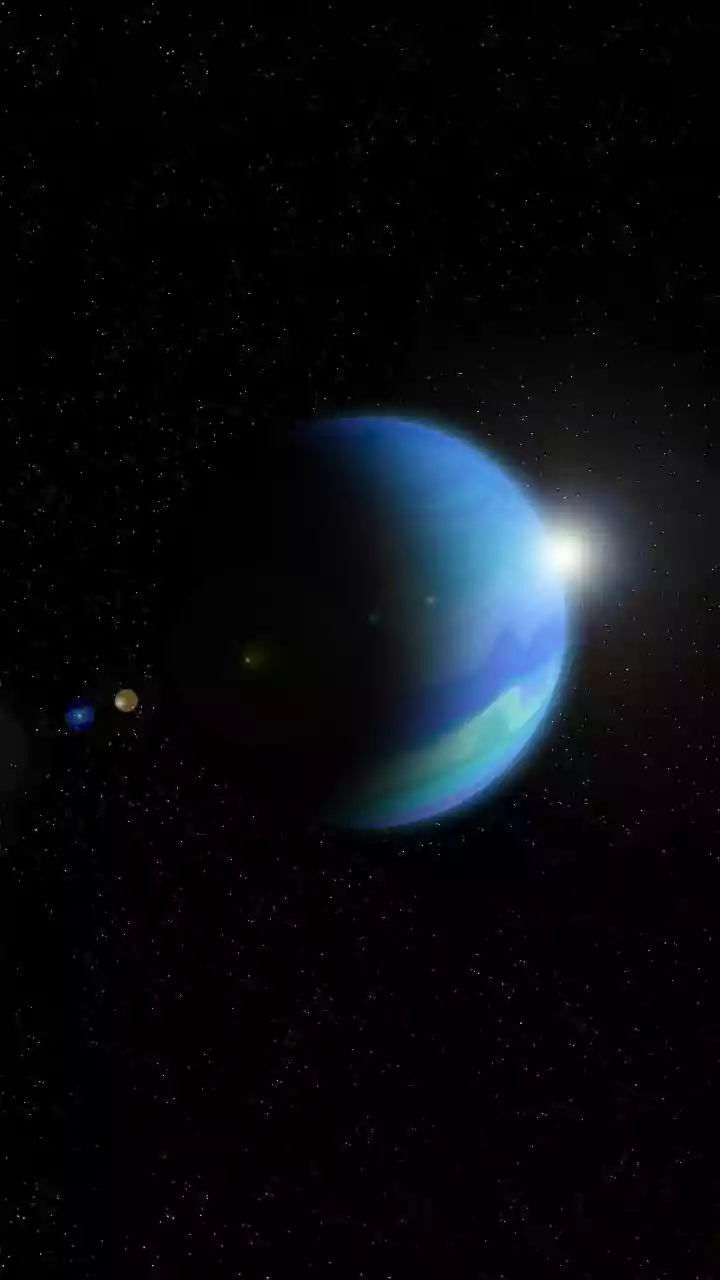
Astronomers have announced the detection of water vapour on GJ 486 b, a rocky 'super-Earth' located just 26 light-years away. While water has been found on giant gas planets before, spotting its chemical signature in the thin atmosphere of a rocky world
is a landmark achievement. This is precisely the kind of discovery the James Webb Space Telescope was built for: to peer into the skies of planets similar in composition to our own and begin decoding their secrets. The finding represents a huge leap forward in our ability to characterise potentially habitable worlds, even if this particular planet is far from a paradise.
How Webb Peeks at Alien Air
Detecting anything on a planet light-years away sounds like science fiction, but Webb does it using a clever technique called transmission spectroscopy. As the exoplanet GJ 486 b passed in front of its host star, the telescope carefully measured the starlight that filtered through the very edge of the planet. The gases in the planet's atmosphere, if it has one, absorb specific colours of light, leaving a unique chemical 'fingerprint'. By analysing which colours are missing from the starlight, scientists can determine what molecules are present. In this case, across two separate transits, Webb's instruments picked up the unmistakable signature of water.
A Word of Scientific Caution
Before we imagine oceans and rain, scientists are urging caution. The discovery is tantalising but not yet definitive proof of a planetary atmosphere. An equally plausible explanation is that the water vapour isn't from the planet at all, but from its star. GJ 486 b orbits a cool red dwarf star. These stars can have large, cool 'starspots' (similar to sunspots) that are cool enough for water vapour to form within them. As the planet moved in front of the star, it's possible Webb was simply seeing the signature of water from one of these spots, which would mimic the signal of a planetary atmosphere. Distinguishing between these two possibilities is the next critical step for researchers.
An Inhospitable World
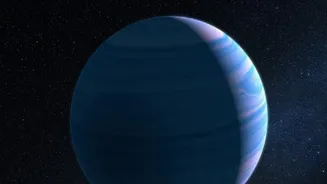
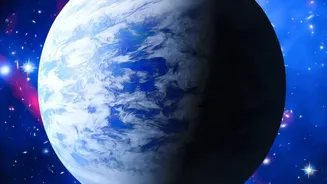
Even if the water vapour is confirmed to be from the planet, GJ 486 b is not a candidate for Earth 2.0. The planet is about 30% larger than Earth and three times as massive, but it orbits its star at an incredibly close distance, completing a full year in just 1.5 Earth days. This proximity results in a scorching surface temperature of around 430 degrees Celsius (800 degrees Fahrenheit), far too hot for liquid water to exist. The planet is also likely 'tidally locked', with one side permanently facing its star in perpetual daylight and the other in endless night. If it does have an atmosphere, it would likely be a thick, steamy one constantly being replenished by volcanic activity.
The Next Frontier for Webb
This discovery's true significance lies not in the habitability of GJ 486 b, but in what it proves about our technological capabilities. Detecting atmospheric components on a rocky world is a primary goal for the JWST. Having succeeded, astronomers can now refine their methods for more promising targets, like the planets in the famous TRAPPIST-1 system. Scientists will use other instruments on Webb, like the Mid-Infrared Instrument (MIRI), to conduct follow-up observations. These will help determine if the water is from the planet or the star and will pave the way for the ultimate prize: analysing the atmosphere of a rocky planet in its star's habitable zone, the region where liquid water could potentially exist on its surface.