



A Gathering Storm of Threats
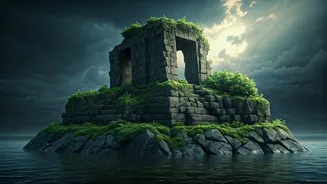
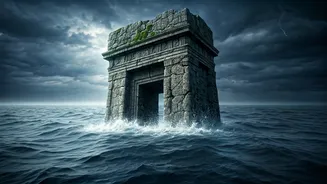
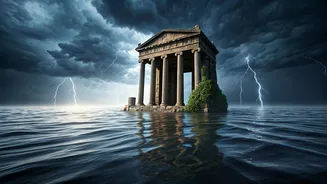
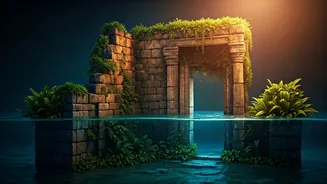
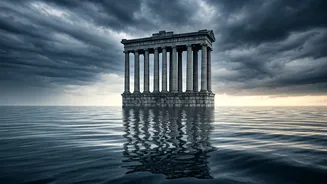
Our shared cultural heritage is facing an unprecedented crisis. According to the World Monuments Fund, climate change, rapid urbanisation, and irresponsible tourism are among the primary dangers threatening historical sites globally. We see this in the coastal
erosion threatening landmarks in Venice and the ancient ruins of Leptis Magna in Libya, where rising sea levels pose a catastrophic risk. In Egypt, higher temperatures and increased humidity are causing the colour of ancient stones to fade and facades to crack. This isn't a distant problem; in India, sites like the Sun Temple at Konark and the Sundarbans National Park face similar dangers from coastal erosion and flooding. This perfect storm of environmental and human pressure means that traditional preservation methods are no longer enough. We are in a race against time, and simply patching up the damage is a losing strategy.
Moving Beyond Restoration
For centuries, the philosophy of preservation has been one of careful restoration—returning a structure to its former glory. But when the forces causing the decay are relentless and accelerating, this approach becomes insufficient. We cannot build a wall high enough to permanently protect Venice from rising seas without fundamentally altering the city. We cannot stop the acid rain that wears away marble facades or the extreme heat that warps ancient stone. The conversation must shift from restoration to resilience. This is the core of future-proof thinking: a proactive strategy that accepts the reality of new environmental conditions and seeks to help heritage sites adapt. It requires us to ask not just how we can fix the damage, but how we can prevent it from happening in the first place, even if it means unconventional interventions.
The Arsenal of Innovation
Future-proofing is not science fiction; it’s already happening. The key is technology. Scientists and conservators are now creating "digital twins" of historical monuments. Using technologies like 3D laser scanning, photogrammetry, and AI, they build high-fidelity virtual replicas of sites like Notre Dame Cathedral or the ruins of Pompeii. These digital models serve multiple purposes. They are a perfect archival record, a blueprint for restoration if disaster strikes. More importantly, when combined with real-time data from IoT sensors monitoring temperature, humidity, and pollution, these digital twins can predict structural decay before it's visible to the naked eye, allowing for preemptive maintenance. This move from reactive repair to predictive conservation is a revolutionary step in safeguarding our history.
Redefining Authenticity
However, this new approach raises complex philosophical questions about authenticity. Is a monument still authentic if it’s reinforced with advanced polymers or protected by a futuristic flood barrier? Does a digital replica, no matter how perfect, hold the same cultural value as the original? Finding the balance between preservation and authenticity is one of the most significant challenges for modern heritage management. The goal is not to create sterile, artificial environments, but to enable the original structures to survive in a world they were not built for. Sometimes, this may involve difficult choices, like the managed retreat of certain artefacts or allowing a ruin to evolve with its changing environment. The aim is to preserve the site's historical meaning and value, even if its physical form must adapt.
A Shared Global Responsibility
Ultimately, protecting our past is a collective duty. International organisations like UNESCO play a crucial role in coordinating efforts and setting standards, but action must also be local. Empowering the communities that live alongside these sites is essential, as they are the first line of defence and have a vested interest in their survival. The challenges are immense, from securing funding to navigating political will. Yet, the cost of inaction is far greater—a permanent loss of our collective memory and identity. These sites are not just tourist attractions; they are tangible links to the ingenuity, art, and struggles of our ancestors.