





From Farm Waste to Water Hero
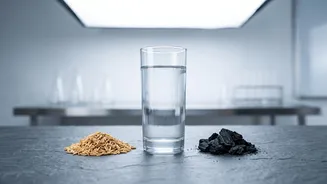
Every year, India generates millions of tonnes of rice husks as a byproduct of its massive rice production. Often, this agricultural residue is burned in open fields, contributing to severe air pollution, or simply left to rot. But through a process called
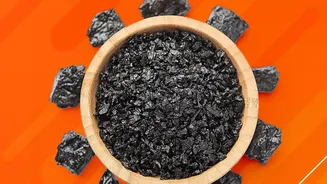
pyrolysis, this waste can be transformed into biochar, a stable, carbon-rich material that looks like charcoal but has remarkable properties. This process of heating the husks in a low-oxygen environment not only prevents pollution but also creates a valuable product from something that was once discarded. It's a prime example of a circular economy, turning a widespread problem into a sustainable solution.
A Natural Sponge for Pollutants
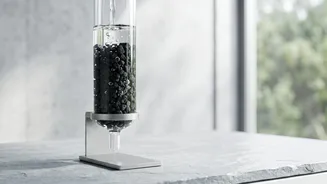
The secret to biochar's effectiveness lies in its incredibly porous structure. When viewed under a microscope, it's a network of tiny holes and vast internal surface area, making it an excellent natural filter. As contaminated water passes through rice husk biochar, this structure works like a sponge, trapping a wide range of impurities. The process, known as adsorption, allows the biochar to bind with harmful substances. Studies have shown it is effective at removing heavy metals, pesticides, dyes, and even antibiotics from water. Essentially, the pollutants stick to the biochar's surface, leaving cleaner, safer water behind.
The Low-Cost Advantage
For many urban and semi-urban areas in India, the biggest hurdle to clean water is cost. Conventional water treatment technologies can be expensive to build and maintain. Biochar offers a significantly more affordable alternative. The raw material, rice husks, is abundant and cheap, especially in an agrarian nation like India. The production process, pyrolysis, can be done using relatively simple, low-tech methods, making it suitable for decentralised, community-level filtration systems. Compared to industrial activated carbon, which is energy-intensive to produce, biochar is a more economical and environmentally friendly choice for many water purification needs.
More Than Just Clean Water
The benefits of using rice husk biochar extend beyond water purification. The process itself can be used to generate energy. During pyrolysis, energy-rich gases are released that can be captured and burned to power the equipment, creating a self-sustaining system. Furthermore, the biochar itself is a form of carbon sequestration; by converting the husk into a stable solid, the carbon that would have been released into the atmosphere is instead locked away for potentially centuries. Once the biochar's filtration life is over, it doesn't become waste. It can be added to soil as a conditioner, improving fertility, water retention, and crop yields.
Challenges and the Road Ahead
Despite its immense potential, scaling up the use of rice husk biochar for city water purification faces hurdles. One major challenge is standardisation. The quality and effectiveness of biochar can vary depending on the feedstock and the exact pyrolysis conditions, such as temperature and duration. Establishing consistent production methods is key to ensuring reliable performance. There are also logistical challenges in collection, production, and integration into existing water systems. Further research and investment are needed to optimize the technology for different types of urban water sources and to create policies that support its adoption.