



A Heavy Metal Mystery in the Asteroid Belt
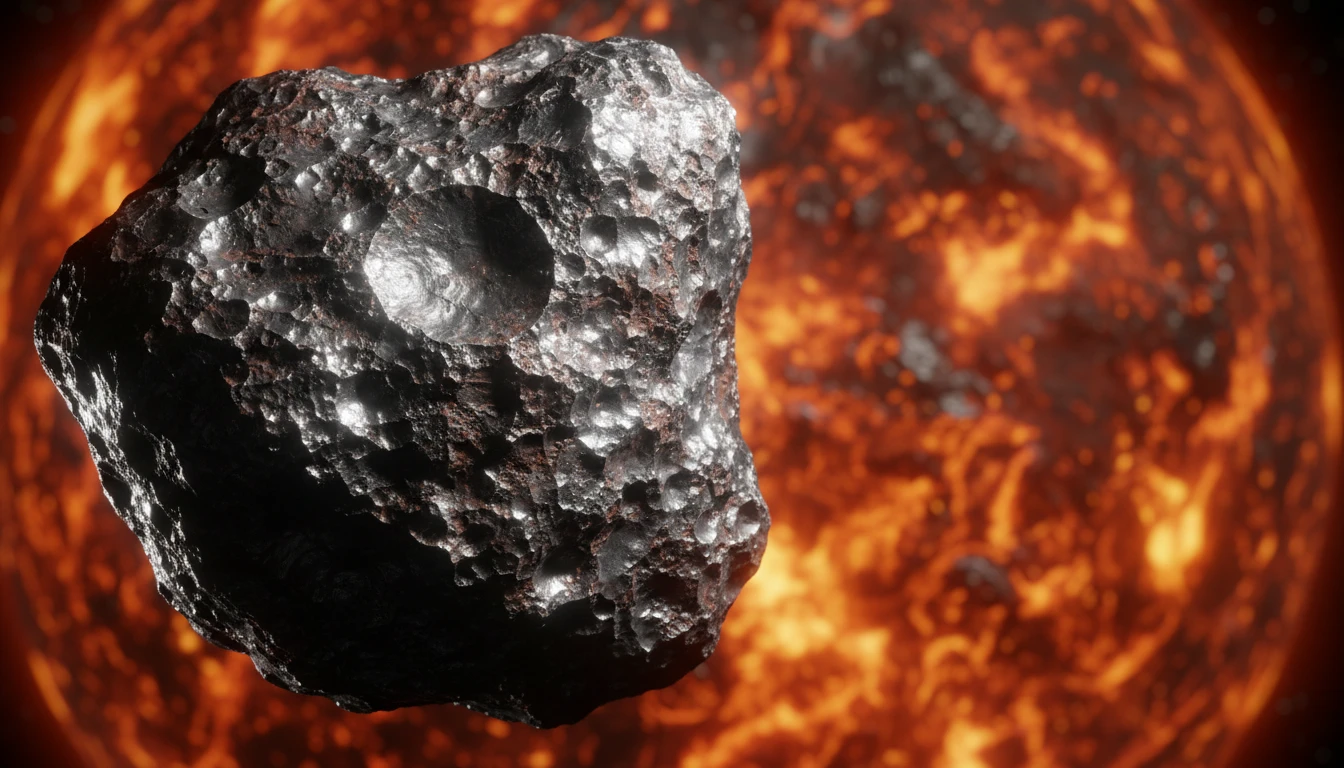
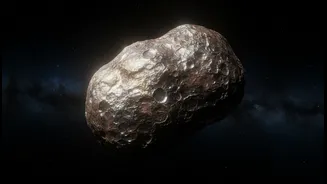
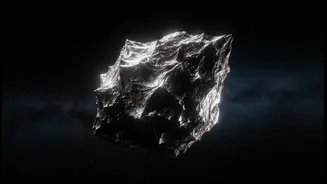
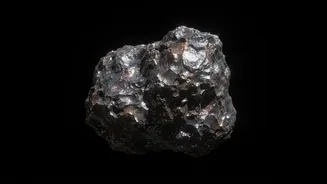
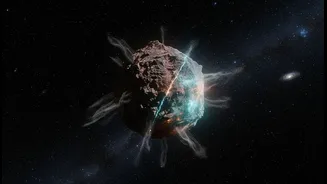
Imagine a world hundreds of kilometres wide, floating in the cold vacuum of space, made primarily of iron and nickel. That’s 16 Psyche, one of the most intriguing objects in the main asteroid belt between Mars and Jupiter. For decades, scientists have
theorised that Psyche could be the exposed core of a protoplanet—a baby planet that was smashed apart by violent collisions during the early days of our solar system. If true, visiting Psyche would be like taking a trip to the centre of the Earth, a place we can never directly see. It offers a unique opportunity to study the building blocks of rocky planets like our own. This tantalising possibility led NASA to launch the Psyche spacecraft in October 2023, beginning a nearly six-year, 3.6-billion-kilometre journey to this metal world. The mission’s goal is simple yet profound: to determine what Psyche truly is and, in doing so, unlock secrets of planetary formation.
New Clues Emerge from Afar
While the Psyche spacecraft is still years from its destination, currently cruising through space after a successful gravity-assist flyby of Mars, the scientific community hasn't been sitting idle. The headline's premise of data coming from the probe about the asteroid is a bit premature; the spacecraft’s instruments are aimed at its distant target, but the most groundbreaking new details are coming from powerful eyes closer to home. Using the James Webb Space Telescope, scientists have recently made a startling discovery: evidence of hydroxyl, a component of water, on Psyche’s surface. This is a major twist in the asteroid's story. A dry, metallic core born from a fiery planetary collision isn't expected to have water-bearing minerals. This single finding complicates the neat narrative of Psyche being a simple remnant core and adds a new layer of mystery for the mission to solve.
Rewriting the Story of Psyche
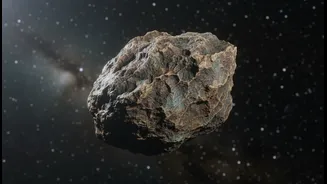
So what does this new evidence mean? It has sent scientists back to the drawing board, considering alternative origin stories for this enigmatic object. One theory is that the water didn't come from within Psyche but was delivered to its surface by impacts from smaller, wetter asteroids over billions of years. Another, more radical idea is that Psyche may not have formed where it is today. Perhaps it originated much further out in the solar system, beyond the so-called 'snow line' where icy materials are abundant, before migrating to its current orbit. This discovery builds on other observations that have already challenged the 'pure metal' hypothesis. Data on Psyche's density suggests it's not as dense as a solid lump of iron and nickel should be, hinting it might be more porous—like a giant metal sponge—or that it contains a significant amount of lighter silicate rock mixed in. Some models even suggest the asteroid could have a rocky mantle hidden beneath a metallic surface brought up by ancient iron volcanoes, a process known as ferrovolcanism.
The Probe Holds the Ultimate Answers
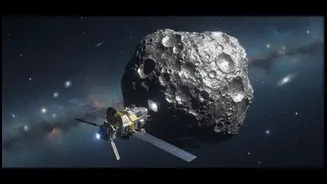
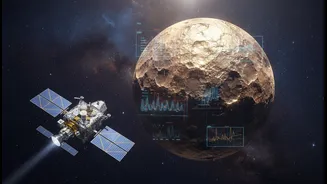
These competing theories make the arrival of the Psyche spacecraft in August 2029 even more highly anticipated. The clues gathered from Earth are tantalising but ultimately ambiguous. Only an up-close investigation can provide the ground truth. Once it enters orbit, the spacecraft will spend 21 months mapping the asteroid in incredible detail. Its multispectral imager will analyse the surface geology and composition, determining what is metal and what is rock. A gamma-ray and neutron spectrometer will identify the specific elements present, while a magnetometer will search for any remnant magnetic field—a key clue that would support its origin as a planetary core. The probe's gravity measurements will finally give a definitive answer on the asteroid's internal structure and porosity. By combining all this data, scientists will be able to test each of the competing hypotheses and finally piece together Psyche’s true history.