




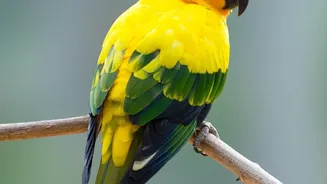


When a parrot says 'Hello!', it feels like magic. But the way these birds learn to speak is a fascinating blend of science, social bonding, and surprising intelligence that goes far beyond simple mimicry. It’s a process that reveals much about them, and us.
More Than Just Mimicry
The common belief is that parrots are merely feathered tape recorders, repeating sounds without comprehension. While they are masters of mimicry, the process is far more sophisticated. This ability is called vocal learning, a rare talent in the animal kingdom shared by only a few other groups, like songbirds, hummingbirds, and humans. Unlike most animals that are born with a fixed set of calls, vocal learners can modify their vocalizations based on what they hear. For a pet parrot, this means listening to the sounds of its household—the doorbell, a laugh, and especially the speech of its human family—and attempting to reproduce them. This isn't just imitation; it's an active process of learning and adapting.
The Importance of The Flock
The social element is the most critical piece of the puzzle. In the wild, parrots are highly social creatures that use complex calls to communicate and bond with their flock. When a parrot is brought into a human home, its human family becomes its flock. The drive to vocalize and fit in is deeply ingrained. By imitating the sounds of their human 'flock', parrots are participating in social bonding. They are motivated to communicate to get attention, request things, and strengthen their connection with their caregivers. Research shows that parrots learn far more effectively from live, interactive tutors than from passive sources like audio tapes. This social feedback loop—where a bird makes a sound and gets a positive reaction—is what truly solidifies the learning.
Listen, Babble, and Refine
Much like human infants, young parrots go through a 'babbling' phase. They quietly practice a wide range of sounds they have heard, from soft peeps to clicks, experimenting with their vocal abilities. Researchers have observed that these babbling sessions often happen when the young birds are alone, suggesting it's a form of personal practice. During this stage, a parrot might produce a sound that is vaguely similar to a human word. If its owner gets excited and repeats the correct word back, the parrot learns to refine its vocalization. Phrases like 'Hello' and 'I love you' are common because they are often spoken with enthusiasm, making them more memorable and rewarding for the parrot to learn.
A Brain Built for Sound
A parrot's remarkable ability is rooted in its unique brain structure. Scientists have discovered that parrot brains have specialized regions for vocal learning that are different from even other vocal-learning birds like songbirds. Parrots possess a unique 'shell' or 'outer ring' system around the core vocal learning center in their brains. This 'song system within a song system' is believed to be what gives parrots their advanced ability to process and replicate such a wide variety of sounds, including human speech. The relative size of these shell regions is larger in species known for being prolific talkers, such as the African Grey parrot, which helps explain why some species are chattier than others.
Do They Know What They're Saying?
This is the million-dollar question. The answer is, in part. While parrots don't understand grammar or abstract concepts in the same way humans do, they are masters of contextual association. A parrot might learn to say 'Hello' when someone enters a room or 'Wanna go back' when it's tired of a situation. Famous studies, particularly with an African Grey parrot named Alex, have shown that some parrots can learn to identify objects, colors, and shapes, using words to label them correctly. For most pet parrots, their 'understanding' is about linking a specific sound with a specific context, action, or reward. They learn that saying 'apple' might result in getting a piece of apple, a powerful and intelligent form of communication, even if it's not a philosophical discussion.