







The AI as a Summariser
At its most basic and widely adopted level, AI has become an expert summariser. Tools embedded in platforms like Google Workspace and Microsoft Copilot can condense lengthy documents, email threads, and hours-long video meetings into concise, digestible
briefs. Instead of manually sifting through information, an employee can now ask an AI to pull out the key decisions and action items from a project's entire history. This function aims to combat information overload and the productivity drain from ever-increasing meeting schedules, which have reportedly tripled since 2020. By handling the burdensome task of information compression, these AI assistants free up employees to focus on more complex, creative, and strategic work.
The AI as a Tracker
The second, and more controversial, function is that of a tracker. Modern workforce analytics platforms now use AI to monitor employee activity in granular detail. These systems log which applications are used, measure active versus idle time, and can even analyze keystroke patterns and capture screenshots. The stated goal is to optimize productivity, identify workflow bottlenecks, and ensure compliance, particularly in remote and hybrid work settings. Companies like ActivTrak and Teramind offer dashboards that provide managers with aggregated data on team performance. However, this capability raises significant concerns about surveillance, employee privacy, and the potential for a trust deficit between management and staff.
The AI as a Context Layer
Perhaps the most powerful evolution is the emergence of AI as a 'context layer' or 'company brain'. This goes beyond summarising individual documents; it involves creating a unified, intelligent map of an entire organization's knowledge. This AI layer connects to all of a company's data sources—from CRMs like Salesforce to communication hubs like Slack and internal wikis—to understand not just what information exists, but how it relates. When an employee asks a question, the AI can provide an answer based on a comprehensive understanding of company processes, historical data, and internal definitions. This creates a strategic partner that can reason based on the company's specific reality, not just generic web data.
The Great Convergence
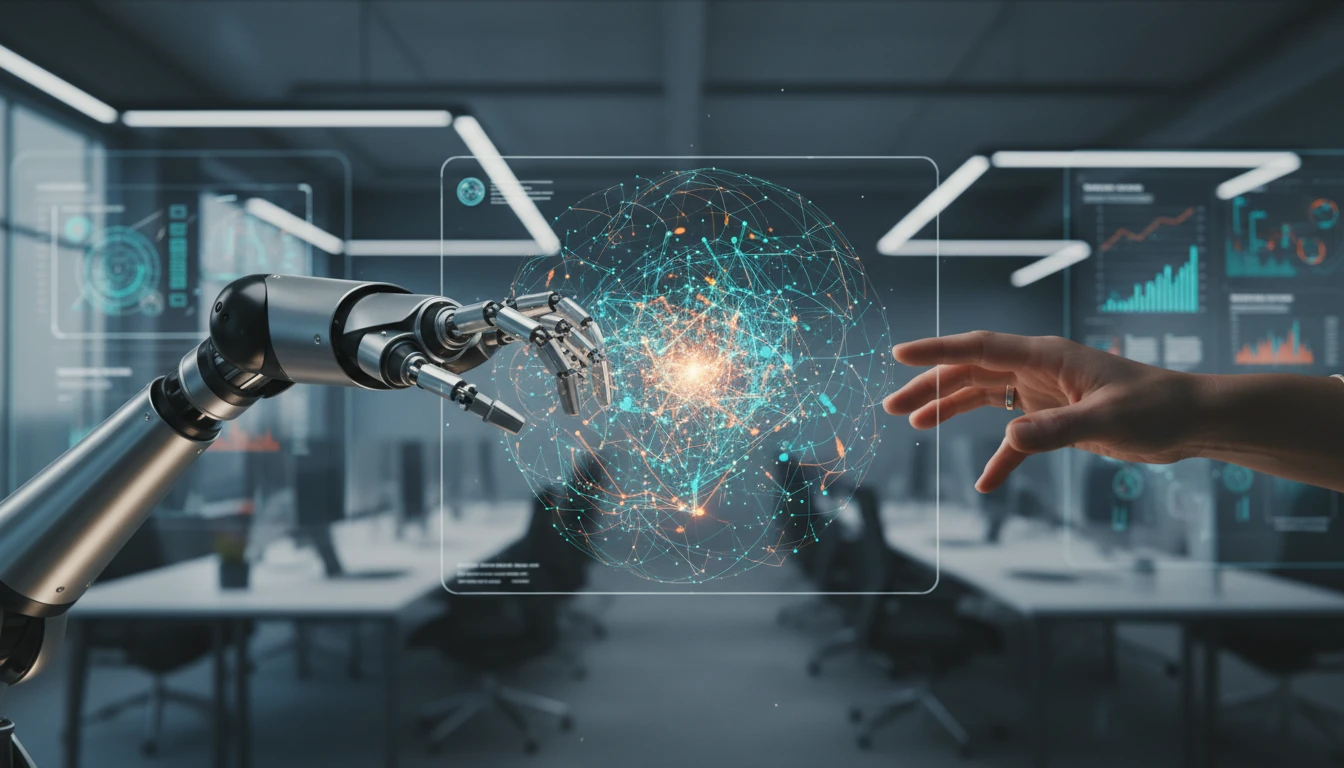
The true transformation lies in how these three functions—summariser, tracker, and context layer—are converging. An AI assistant like Microsoft Copilot or Google's Gemini doesn't just summarise a meeting; it does so with full context of the project's history and the people involved. It knows who was assigned what task because it can track activity and outcomes across different applications. When a manager asks for a project status update, the AI can synthesize meeting notes, check task progress in a project management tool, and cross-reference recent customer emails, all at once. This creates a single, omniscient source of truth, capable of not just retrieving information but also interpreting it based on real-time workplace activity.
The Promise of Hyper-Productivity
The primary driver for adopting this integrated AI is the promise of unprecedented efficiency. By automating routine cognitive tasks, businesses aim to boost productivity and innovation. Proponents argue that it frees employees from mundane work, allowing them to focus on high-value activities that require human judgment and creativity. Studies suggest that AI integration can indeed increase efficiency and improve the quality of decision-making. For organizations, this means faster project completion, better resource allocation, and a potential competitive advantage. The vision is a workplace where AI handles the administrative and analytical heavy lifting, empowering humans to perform at their best.
The Peril of Digital Micromanagement
Despite the benefits, this convergence presents significant risks. The same system that provides helpful context can also become a tool for invasive surveillance and digital micromanagement. Constant monitoring can lead to increased stress, anxiety, and a feeling of lost autonomy among workers. There are also major ethical and privacy concerns, especially regarding how sensitive employee and company data is collected, used, and secured. Furthermore, over-reliance on AI for summarization and analysis may weaken employees' own critical thinking and problem-solving skills over time. Striking a balance between leveraging AI for productivity and protecting employee well-being and privacy is now a critical challenge for every organization.