







What Are 'Gen Z Credit Cards'?
The term 'Gen Z Credit Card' doesn't refer to a single product but a category of financial tools designed for young adults with little or no credit history. Unlike traditional credit cards that often require income proof, these are built to be accessible.
Many function as secured credit cards, where a user makes a small fixed deposit that becomes their credit limit. For instance, a ₹5,000 deposit would mean a ₹5,000 credit limit. This model minimises risk for the lender and prevents the user from spending more than they have deposited. Other variations include cards with very low, controlled credit limits (e.g., ₹15,000) or fintech apps that function like debit cards but report payments to credit bureaus. The common thread is that they are designed as on-ramps to the credit system.
The Promise: Building a Strong Financial Future
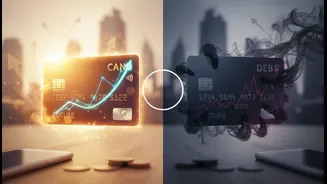
The primary benefit of these cards is the ability to build a credit score early. In India, a healthy CIBIL score (typically 750 or above) is crucial for securing future loans for education, a vehicle, or a home. By using a starter card for small, regular purchases—like a monthly phone bill or streaming subscription—and paying the bill in full each month, a young person can establish a positive payment history. This is often the biggest factor in calculating a credit score. These products help solve a classic problem: you need credit to get a credit score, but you need a score to get credit. By providing a structured way to demonstrate financial responsibility, these cards can help students and young professionals graduate with a solid credit history instead of starting from zero.
Built-In Guardrails for Better Habits?
Many of these new-age cards come with features specifically designed to encourage good financial habits. Low credit limits are the most obvious guardrail, making it difficult to accumulate significant debt. Some platforms include apps with tools for tracking spending in real-time, which addresses a key Gen Z concern about the lack of transparency with traditional credit cards. Many also heavily promote paying the full balance each month, steering users away from the 'minimum payment trap' where interest charges can quickly spiral. By keeping credit utilisation—the percentage of your available credit that you use—low (ideally under 30%), users learn a key principle of good credit management. The goal is to make responsible use the path of least resistance.
The Risk: Normalising Early-Credit Culture
However, critics raise a valid concern: does making credit easy and accessible from a young age normalise the act of borrowing? The danger lies in blurring the line between spending one's own money and spending borrowed money. Even with low limits, the habit of swiping a card can create a psychological distance from the actual cost, potentially leading to overspending. There is a risk that users become too comfortable with the idea of credit, viewing it as an extension of their income rather than a tool to be used strategically. This is the essence of 'early-credit normalisation'—where borrowing becomes a default behaviour before strong, independent financial discipline is fully formed. The ease of 'Buy Now, Pay Later' (BNPL) services, popular with Gen Z, highlights this trend, where instant gratification can sometimes overshadow long-term financial planning.
The Verdict: A Tool, Not a Panacea
Ultimately, a Gen Z credit card is a tool, and its impact depends entirely on the user. These cards can absolutely help build a credit score, provide a safety net for small emergencies, and teach the mechanics of revolving credit in a controlled environment. However, they cannot magically instill good financial habits. Financial independence comes from budgeting, saving, and making conscious spending decisions—skills that must be learned separately. Without this foundation, any credit product can become a liability. The most effective approach combines using a starter credit product for its score-building benefits while treating it like a debit card: only spend what you know you can pay off in full.