


The Hidden Menace in Your Pots
Root decay, often called root rot, is the number one killer of container plants. It happens when roots are starved of oxygen because the soil is waterlogged for too long. In the enclosed environment of a pot, this is incredibly common. Unlike in a garden
bed, excess water has nowhere to go, creating an anaerobic environment where fungi and bacteria thrive. The tragic irony is that the symptoms of root rot—wilting, yellowing leaves—often look like the plant is thirsty, tempting well-meaning gardeners to water it even more, which only worsens the problem. By the time you notice the signs above the soil, the damage below is often severe, with roots turning brown, mushy, and smelly.
What Are Micro-Engineered Soil Sensors?
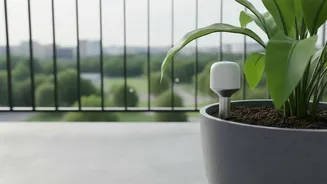
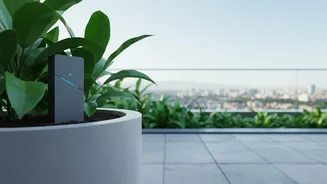
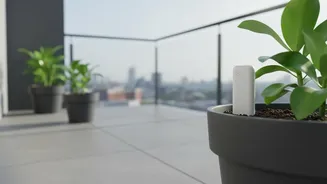
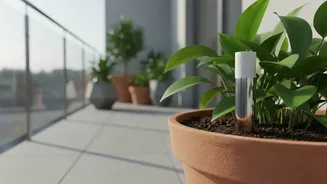
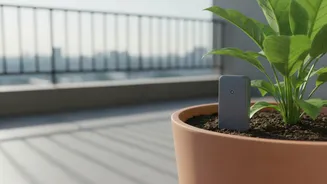
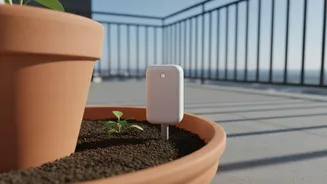
Enter the smart soil sensor. Think of it as a tiny, high-tech dipstick for your plant's soil. These 'micro-engineered' devices are small probes you insert into the pot, where they live among the roots. They are designed to continuously track key conditions within the soil and, in most cases, send that data directly to an app on your smartphone. Instead of relying on a fixed watering schedule or the notoriously unreliable 'finger test,' you get real-time, precise information from the place that matters most: the root zone. This isn't just a gadget; it’s a diagnostic tool that gives your plants a voice, telling you exactly what they need, when they need it.
From Electrical Signals to Plant Health
So, how do they work? Most home-gardening sensors measure soil moisture using one of two main principles: resistance or capacitance. Resistive sensors measure how easily a small electrical current passes between two probes. Dry soil has high resistance, while wet soil conducts electricity more easily. Capacitive sensors work a bit differently. They measure the soil's ability to hold an electrical charge, which is known as its dielectric constant. Since water has a much higher dielectric constant than soil particles and air, the sensor can calculate the volume of water in the soil based on this measurement. The sensor’s electronics translate these electrical changes into a simple, understandable moisture percentage, taking the guesswork out of watering.
Ending the Overwatering Cycle
The primary way these sensors prevent root decay is by eliminating overwatering. With a constant data stream from the sensor, you can see precisely when the soil moisture drops to a level where the plant actually needs a drink. The app might send you a notification saying, 'Your fern's soil is at 20% moisture. Time to water!' This data-driven approach allows you to break free from rigid schedules that don't account for changes in temperature, humidity, or plant growth. You water only when necessary, ensuring the roots have a healthy balance of both moisture and oxygen. This simple shift from guessing to knowing is the most effective defense against the waterlogged conditions that cause root rot.
Beyond Just Water
While moisture is the main event, many modern sensors offer a more holistic view of soil health. More advanced models also measure soil temperature, ambient light exposure, and even electrical conductivity (EC). EC acts as a proxy for nutrient and salinity levels in the soil. This is particularly useful for container gardens, where over-fertilizing can lead to a buildup of salts that stress and burn roots, making them more susceptible to disease. A sensor that tracks EC can warn you if fertilizer levels are too high, helping you avoid another common pitfall. By combining data on moisture, light, and nutrients, these devices empower you to create the perfect micro-environment for your balcony plants to flourish.