

The Urban Charging Problem
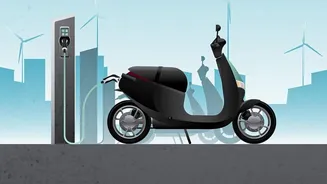
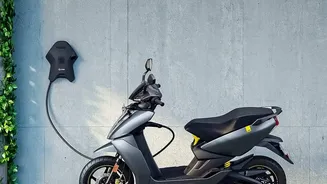
Electric scooters are perfect for navigating congested city streets, but their utility has always been capped by their batteries. A standard home charge can take several hours, creating significant downtime for daily commuters and a major revenue loss
for commercial users like delivery riders. This long wait, coupled with the fear of running out of power mid-journey, has been a persistent barrier to wider EV adoption. The core issue lies with traditional lithium-ion battery technology, which, while effective, has limitations on how quickly it can safely absorb power without degrading. The demand for a solution that mirrors the speed of a petrol refill has pushed manufacturers to innovate beyond the plug.
Solution 1: The Ultra-Fast Charge
One of the most exciting advancements comes from innovations in battery cell chemistry. Indian companies like Log9 Materials are pioneering batteries that can be charged at incredible speeds. Using advancements like graphene-enhanced anodes, these batteries are designed for rapid energy intake without the risk of overheating or significant degradation. Log9, for instance, has developed technology that allows an electric two-wheeler to charge from zero to full in just 12-15 minutes. This is a game-changer for fleet operators and anyone who relies on their scooter throughout the day. Instead of an overnight charge, a rider can take a short break and be back on the road with a nearly full battery, dramatically improving uptime and convenience.
Solution 2: The Two-Minute Swap
An entirely different approach to the problem is to not charge the scooter at all—at least not in the traditional sense. Battery swapping is an alternative model where a rider pulls into a station, removes their depleted battery, and replaces it with a fully charged one in about two minutes. This system effectively eliminates charging wait times. Networks from companies like Battery Smart and Bounce Infinity are expanding across Indian cities, primarily serving the commercial and last-mile delivery sectors. While major consumer brands like Ather and Ola currently use fixed batteries, the swapping ecosystem is proving its value for high-mileage users who cannot afford to be tethered to a charging point.
New Chemistries for Better Performance
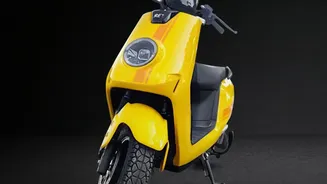
Beyond charging speed, the very materials inside the batteries are evolving. Many manufacturers are shifting towards Lithium Iron Phosphate (LFP) batteries. While traditional NMC (Nickel Manganese Cobalt) cells offer high energy density, LFP batteries provide superior safety, a much longer lifespan, and greater thermal stability, making them well-suited for India's demanding climate. Ather Energy, for example, recently introduced LFP battery options for its Rizta family scooter, aiming to offer the benefits of this robust chemistry to a wider audience. These newer battery types are a crucial step in making EVs not just faster to charge, but also safer and more durable in the long run.
On the Horizon: Solid-State and Sodium-Ion
Looking further ahead, the industry is buzzing about solid-state and sodium-ion batteries. Solid-state batteries replace the flammable liquid electrolyte found in current batteries with a solid material. This breakthrough could double a scooter's range, enable charging in under 15 minutes, and make batteries virtually fire-proof. Meanwhile, sodium-ion batteries offer a different promise: lower cost and sustainability. By using abundant and inexpensive sodium instead of lithium, this technology could make electric scooters more affordable for a much wider market in India. While still in early stages, these technologies represent the next great leap in urban mobility.