




Our Most Famous Cosmic Neighbors
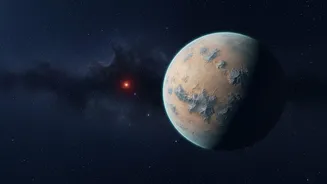
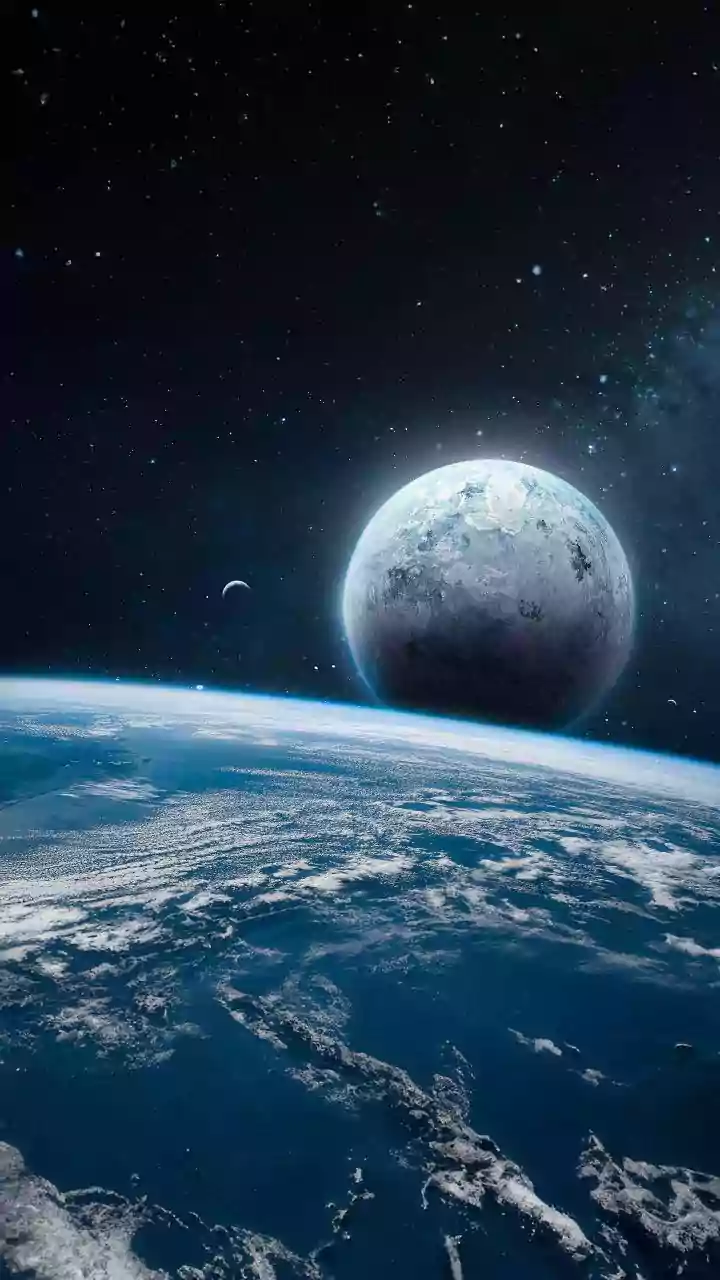
Ever since its discovery, the TRAPPIST-1 system has captured the public’s imagination. It’s a compact solar system orbiting a cool, red dwarf star. What makes it so special is that several of its rocky, Earth-sized planets reside in the ‘habitable zone’
— the orbital region where conditions might be just right for liquid water to exist on a planet's surface. Of these worlds, TRAPPIST-1e is a particularly compelling candidate. It is similar in size to Earth and receives a comparable amount of stellar energy, making it a primary target for astronomers hoping to find a world with an atmosphere.
Whispers of an Atmosphere
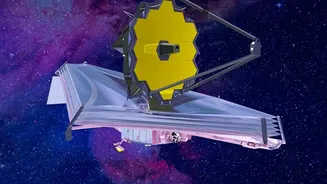
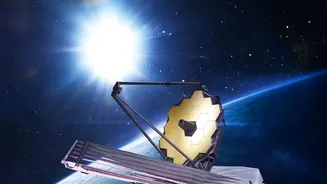
The JWST uses a technique called transmission spectroscopy, analysing the faint filtering of starlight through a planet’s atmosphere as it transits its star. Recent observations of TRAPPIST-1e have delivered tantalising, though not yet conclusive, results. Scientists have been able to rule out certain scenarios, such as a thick, hydrogen-dominated primary atmosphere or a dense carbon-dioxide-filled sky like that of Venus or Mars. The current data leaves two major possibilities on the table: the planet could be a bare rock with no significant atmosphere, or it could possess a secondary atmosphere made of heavier elements. Within that second scenario, models suggest the potential for a nitrogen-based atmosphere, possibly with intriguing hints of methane.
Why Carbon Gases Are Key
The potential presence of carbon-based gases like methane (CH4) is a critical piece of the puzzle. On Earth, the vast majority of atmospheric methane is produced by life, from microbes in wetlands to livestock. This makes it a compelling ‘biosignature’—a chemical fingerprint that could indicate biological processes. While the headline's mention of 'heavy' carbon gases like ethane and propane would be an even stronger indicator, the mere presence of a significant and constantly replenished methane supply on a rocky world is enough to spark serious scientific discussion. Methane is relatively fragile and is broken down by ultraviolet radiation from a star, so a methane-rich atmosphere implies something on the planet is actively producing it.
The Great Debate: Life or Geology?
Finding methane wouldn't automatically mean we've found alien life. The core of the scientific debate is distinguishing between biological and geological origins. Abiotic processes, such as volcanism or chemical reactions in hydrothermal vents (serpentinization), can also produce methane without any involvement from life. However, planetary scientists argue that it's difficult for geological processes alone to sustain the high levels of methane that would be detectable from Earth. The real smoking gun would be an atmosphere with a specific chemical imbalance. For example, finding an atmosphere rich in both methane and carbon dioxide but with very little carbon monoxide would be hard to explain with geology alone, making a biological source a much stronger hypothesis.
The Challenge of Certainty
These groundbreaking observations are pushing the limits of our technology. TRAPPIST-1 is an active red dwarf star, prone to flares and stellar activity that can interfere with the incredibly faint signals JWST is trying to detect. This 'stellar contamination' makes it difficult to be certain if a detected chemical signature comes from the planet's atmosphere or is an artifact of the star itself. Disentangling these signals requires immense precision and, most importantly, more data. Astronomers have only analysed a handful of TRAPPIST-1e's transits so far, and many more are planned. Each pass will allow the team to build a clearer picture and reduce the uncertainty, hopefully moving from a tantalizing hint to a confident detection.