





The Growing Menace of Space Junk
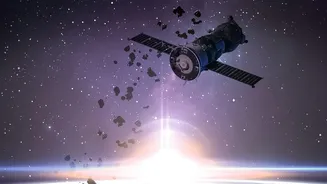
Low-Earth Orbit (LEO), the orbital band where most observation and communication satellites live, is increasingly cluttered. Think of it as a high-speed highway with no traffic rules. Over 1.2 million pieces of untrackable debris larger than a centimetre
are estimated to be circling our planet. These fragments—remnants of old rockets, defunct satellites, and past collisions—travel at speeds of up to 28,000 kilometres per hour. At that velocity, even an object the size of a paint chip carries enough energy to cripple or destroy a multi-crore satellite. The threat is not theoretical; it is a constant, growing danger that requires active monitoring and intervention to prevent disaster. The Indian Space Research Organisation (ISRO) is facing this threat head-on, with recent data showing a rising need for evasive action to protect its fleet.
India's High-Tech Response
To counter this invisible threat, ISRO is developing and deploying advanced artificial intelligence systems. While the term "AI Thrusters" paints a vivid picture, the reality is even more sophisticated. It involves an AI-powered brain that autonomously detects threats, calculates collision risks, and then commands the satellite's existing thrusters to perform a precise evasive manoeuvre. This work is spearheaded by ISRO's System for Safe and Sustainable Space Operations Management (IS4OM), a dedicated centre established to protect India's valuable space assets. By automating this process, ISRO can reduce response times from hours to minutes, a critical advantage when objects are closing in at hypersonic speeds. The goal is to create a system where a satellite can protect itself without constant human oversight.
How the Autonomous Shield Works
The process begins with data. ISRO's Project NETRA (Network for Space Object Tracking and Analysis) uses a network of radars and optical telescopes to track objects in orbit. This data, combined with alerts from international partners like the US Space Command, feeds into the AI system. The AI algorithms then get to work, predicting the trajectory of both the Indian satellite and any potential threats. If the system calculates a high probability of a close approach, it automatically plans a Collision Avoidance Manoeuvre (CAM). This is a carefully calculated engine burn that nudges the satellite into a slightly different, safer orbit. The AI must optimise this burn to use the minimum amount of precious onboard fuel, thus extending the satellite's operational lifespan. This is a significant leap from the current process, which often relies on human operators to analyse data and manually execute manoeuvres.
Protecting India’s Eyes in the Sky
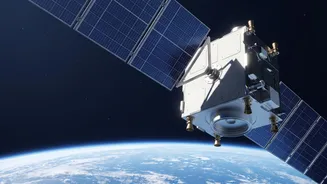
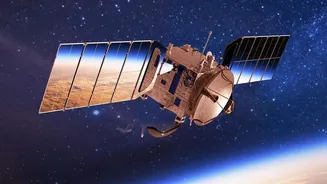
This technology is being deployed to protect one of India's most critical space resources: its fleet of Earth-observation satellites. This fleet, which includes the Cartosat, Resourcesat, and RISAT series, provides crucial data for the nation. These satellites are the backbone of modern agriculture, monitoring crop health and water resources. They are indispensable for weather forecasting, urban planning, and infrastructure development. Furthermore, they play a vital role in national security, providing surveillance and mapping capabilities. A collision that disables even one of these satellites could have significant economic and strategic consequences. With 20 of India's 22 active LEO satellites facing heightened collision risk, an automated defence system is no longer a luxury, but a necessity.
A Leap for ISRO and Sustainable Space
The development of this autonomous collision avoidance system marks a major milestone for India. It not only enhances the safety and longevity of its own missions but also positions ISRO as a global leader in responsible space operations. With the number of satellites in orbit projected to grow exponentially due to mega-constellations, the problem of space traffic management is a global challenge. By developing AI-driven solutions, India is contributing to the long-term sustainability of space, aiming for 'Debris-Free Space Missions by 2030'. This move demonstrates a forward-thinking approach, ensuring that as India's ambitions in space grow—from the Gaganyaan human spaceflight mission to further exploration—its assets remain secure in an increasingly hazardous environment.