






What 'Opposition' Means for Stargazers
In simple terms, opposition is the moment when Earth passes directly between the Sun and an outer planet like Saturn. This alignment has two major benefits for skywatchers. First, the planet is at its closest point to Earth for the year, making it appear
larger and brighter than at any other time. Second, it means the planet is visible for the entire night. Saturn will rise in the east around sunset, climb to its highest point in the sky around local midnight, and set in the west near sunrise. This celestial arrangement provides a long and ideal window for observation.
Mark Your Calendar: Key Dates and Times
While Saturn's opposition in October 2026 is a major event, the next one is not far behind. Saturn will reach opposition again on October 18, 2027. The beauty of this event is that you don't need to observe it on the exact date. The planet will be exceptionally bright and well-positioned for viewing for several weeks before and after this date. On the night of opposition, look for Saturn in the constellation Pisces. It will become visible in the eastern sky as dusk falls and will journey across the sky throughout the night.
Viewing With the Naked Eye
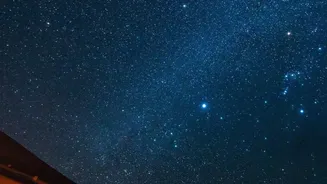
You don’t need any special equipment to spot Saturn. It will appear as a bright, steady, yellowish-white point of light in the sky. Unlike stars, which twinkle because of atmospheric turbulence, planets tend to shine with a more constant glow. During opposition, Saturn will be one of the brightest objects in its patch of the sky, making it relatively easy to distinguish. To find it, you can use a popular stargazing app on your phone, which can provide a real-time map of the sky from your location.
Using Binoculars and Telescopes
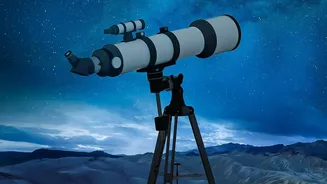
While impressive to the naked eye, Saturn’s true majesty is revealed with optical aid. A good pair of high-powered binoculars (10x50 or stronger) might show the planet as a tiny, slightly elongated oval, hinting at the presence of its rings. However, to actually see the rings distinctly separated from the planet, you will need a telescope. Even a small beginner's telescope with about 25x to 35x magnification can be enough to resolve the famous rings, a sight that turns a point of light into a breathtaking world. With a larger amateur telescope, you might even spot the Cassini Division—a gap in the rings—or its largest moon, Titan, appearing as a tiny star-like point next to the planet.
Tips for the Best Experience in India
To make the most of this celestial event, a little preparation goes a long way. First, check the weather forecast for a clear night. Get away from city lights if you can; locations like the outskirts of your town, a regional park, or designated dark-sky spots will offer a much better view. Give your eyes at least 20 minutes to adapt to the darkness, and avoid looking at your phone screen, as the bright light will reset your night vision. If you are in a city, try to find an open space like a park or a rooftop with a clear view of the eastern horizon. The higher Saturn is in the sky, the clearer the view will be, as you will be looking through less of Earth's turbulent atmosphere.