







The Junkyard Above Our Heads
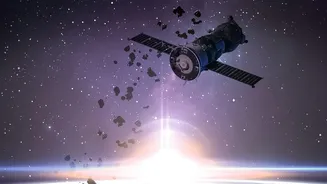
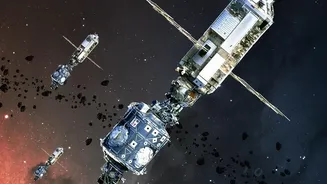
Low Earth Orbit is not the pristine void many imagine. It is a scrapyard of human activity, littered with millions of pieces of space junk. This debris includes everything from defunct satellites and spent rocket stages to tiny fragments from past collisions.
While it may sound harmless, each piece is a bullet. Travelling at speeds exceeding 28,000 kilometres per hour, even a 10-centimetre object can obliterate a multi-crore satellite upon impact. This growing hazard threatens to trigger a chain reaction, where one collision creates more debris, leading to more collisions, making entire orbits unusable for generations. The risk is no longer theoretical; it is a clear and present danger to global space infrastructure.
India’s Critical Eyes in the Sky
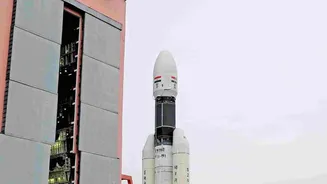
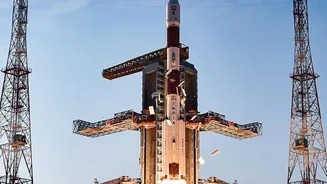
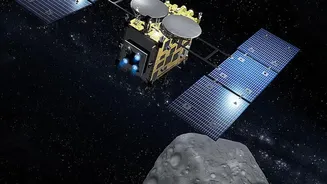
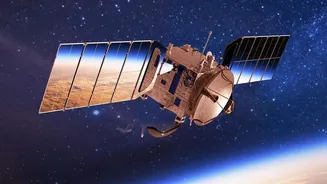
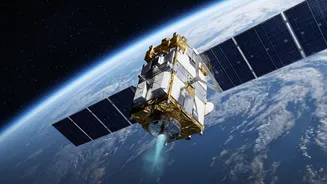
For India, the stakes are incredibly high. The Indian Space Research Organisation (ISRO) operates a fleet of more than 50 active satellites. These are not luxury items; they form the backbone of the nation’s critical infrastructure. Observation satellites provide vital data for weather forecasting, agricultural planning, urban development, disaster management during cyclones and floods, and national security. From a fisherman checking the weather forecast to a soldier navigating in remote terrain, millions of Indians rely on services enabled by these orbital assets. Protecting this fleet is not just a matter of technological pride; it is a national imperative. The number of collision avoidance manoeuvres ISRO has had to perform has been steadily increasing, highlighting the urgency of the situation.
NETRA: The Digital Watchtower
To counter this threat, ISRO has established Project NETRA (Network for space object TRacking and Analysis). This is India's indigenous early-warning system, designed to give the nation its own capability in Space Situational Awareness (SSA) and reduce its reliance on data from foreign agencies like NORAD. Project NETRA functions as a sophisticated watchtower, using a network of powerful radars and optical telescopes to spot, track, and catalogue objects in orbit. With the ability to detect objects as small as 10 centimetres, NETRA provides crucial warnings about potential collisions, giving satellite operators the lead time they need to react.
The AI Brain and Advanced Thrusters
But detecting a threat is only half the battle. The crucial next step is to act, and that is where artificial intelligence and advanced propulsion come in. ISRO, in collaboration with academic institutions like IIIT-Delhi, is developing AI-powered platforms to process the vast amounts of data from Project NETRA. These AI systems can predict an object's trajectory with high accuracy, calculate collision risk, and recommend the optimal avoidance manoeuvre in real-time—a task that is becoming too complex for human operators alone. Once a decision is made, the satellite’s thrusters are fired to execute a small, precise nudge. Startups like Bengaluru-based Bellatrix Aerospace are developing next-generation electric and 'green' thrusters that are more efficient and sustainable than older chemical-based systems, enabling satellites to perform these life-saving dodges more effectively and for longer.
Securing India's Future in Space
This combination of AI-driven analysis and advanced propulsion systems forms a proactive defence shield for India's space fleet. It represents a strategic shift from simply reacting to threats to anticipating and neutralizing them autonomously. This capability is foundational to India's broader ambitions in space, including its goal of achieving 'Debris-Free Space Missions' by 2030. By ensuring its satellites can operate safely, India not only protects its current investments but also paves the way for more complex future missions, from human spaceflight to interplanetary exploration. It solidifies India's position as a responsible and self-reliant major space power committed to the long-term sustainability of space activities.