







NASA is holding firm on its goal to land astronauts on the Moon in 2028. Following a program shuffle, the Artemis IV mission is now set to be the first crewed lunar landing in over 50 years, a complex and ambitious undertaking.
A Shift in the Flight Plan
Originally, the historic
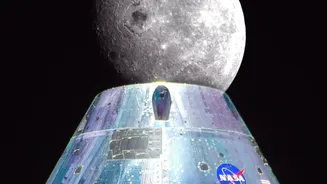
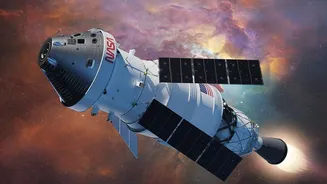
return to the lunar surface was slated for Artemis III. However, in early 2026, NASA restructured its plans. Artemis III, now scheduled for 2027, was repurposed as a crucial dress rehearsal in low-Earth orbit. This mission will involve the Orion crew capsule docking with lander prototypes from both SpaceX and Blue Origin to test critical systems close to home. This strategic pivot shifted the momentous landing to Artemis IV, making it the official target for putting boots back on the Moon. The decision was made to 'buy down risk' by proving out the complex rendezvous and docking procedures before attempting them in lunar orbit. While the goal is ambitious, NASA has expressed confidence in the updated timeline.
The Two Pillars of Artemis IV
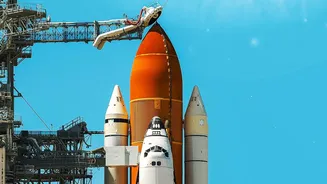
The Artemis IV mission is defined by two primary, equally challenging objectives. First and foremost, it will be the mission that finally returns humans to the lunar surface, specifically targeting the Moon's scientifically valuable South Pole. Two astronauts will descend from lunar orbit, spend several days conducting experiments, collecting samples, and exploring the terrain before returning to their crewmates. The second major objective is to begin the assembly of the lunar Gateway, an international outpost that will orbit the Moon. Artemis IV is tasked with delivering the European Space Agency's International Habitation module, or I-Hab. This makes the mission a dual-purpose flight: one part lunar landing, one part deep-space construction project. This complexity is compounded by the fact that the mission will be the first flight of the more powerful Block 1B variant of the Space Launch System (SLS) rocket, which is necessary to carry both the Orion capsule and the heavy Gateway module.
The Great Lander Competition
A central question hanging over Artemis IV is which vehicle will actually carry the astronauts to the surface. NASA is fostering a competition between two commercial giants: SpaceX, with its Starship Human Landing System (HLS), and Blue Origin, with its Blue Moon lander. The Artemis III mission in 2027 will serve as a key test, with the Orion crew practicing docking with versions of both landers. The final selection for Artemis IV will depend on which company is deemed most ready to fly. Each system presents its own enormous logistical challenges. SpaceX’s Starship, for instance, requires a complex sequence of in-orbit refueling flights to fill up its tanks before heading to the Moon. Estimates on the number of tanker flights needed have varied widely, highlighting the unproven nature of the process. This competitive approach is designed to spur innovation and provide NASA with options, but it also adds a layer of uncertainty to the 2028 timeline.
Can They Hit the 2028 Target?
While NASA remains publicly committed to 2028, government watchdogs and internal reports have highlighted significant hurdles. The Government Accountability Office (GAO) and NASA's own Inspector General have previously raised concerns about the schedules for both the landers and the new SLS Block 1B rocket. Delays in the development of the Exploration Upper Stage (EUS) for the Block 1B have been noted, with a projected delivery in April 2027, leaving little room for error ahead of a 2028 launch. Furthermore, successfully demonstrating orbital refueling at an unprecedented scale remains a critical, unproven milestone for the Starship option. The accelerated timeline is driven, in part, by a renewed sense of international competition, particularly with China's own ambitious lunar program aiming for a crewed landing around 2030. Meeting the 2028 goal will require a near-flawless execution of multiple, highly complex, and interdependent technological developments from both NASA and its commercial partners.