



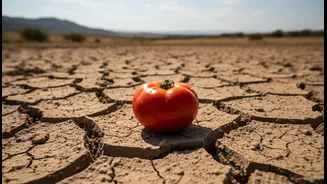


The Spreading Scourge of Salty Soil
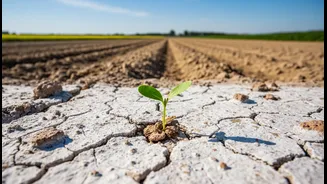
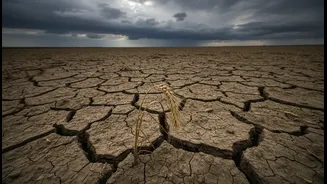
Soil salinity is a growing threat to India's food security and the livelihoods of millions of farmers. Currently, over 6.7 million hectares of land are affected, and this figure could rise dramatically by 2050. This condition arises from both natural
processes and human activities. In arid and semi-arid regions, low rainfall and high evaporation rates cause salts to accumulate in the topsoil. This is worsened by practices like over-irrigation with poor quality groundwater, inadequate drainage, and excessive use of certain chemical fertilisers. For farmers, the results are devastating: stunted crop growth, sharply reduced yields, and mounting debt as they pour more resources into land that is becoming less productive. The salt disrupts a plant's ability to absorb water and essential nutrients, effectively making it die of thirst even in moist soil.
Introducing Nature’s Microscopic Allies
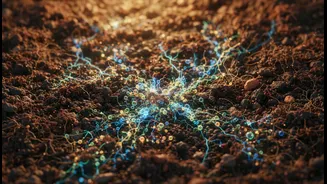
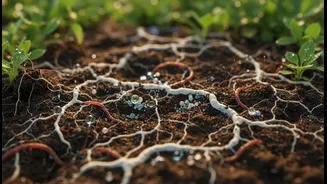
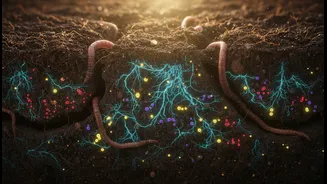
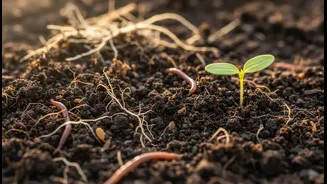
The solution may not lie in more chemicals, but in life itself. Scientists are increasingly looking to a team of 'natural helpers'—beneficial microorganisms and specific types of plants—to combat soil salinity. This cleanup crew includes salt-tolerant bacteria (like Pseudomonas and Bacillus), arbuscular mycorrhizal fungi (AMF), and hardy plants known as halophytes. These are not genetically engineered creations, but organisms that have naturally evolved to thrive in high-salt environments. Their power lies in their symbiotic relationship with crop plants, offering a biological lifeline in soils that would otherwise be barren.
How These Helpers Restore the Land
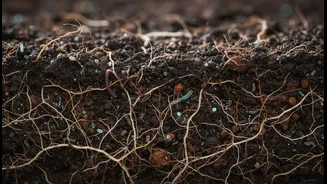
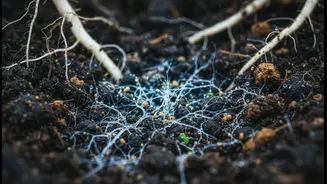
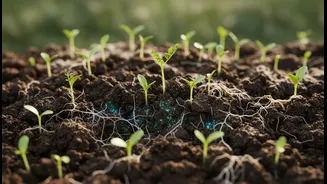
These natural allies work in several ingenious ways. Salt-tolerant bacteria can produce a range of beneficial compounds. Some create a sticky biofilm that improves soil structure, allowing excess salt to be washed away more easily. Others produce enzymes that lower plant stress levels or siderophores that help plants absorb crucial micronutrients like iron, which is often locked up in saline soils. Arbuscular mycorrhizal fungi act as an extension of the plant's root system. Their vast network of microscopic filaments, or hyphae, can explore a much larger volume of soil, selectively absorbing water and nutrients while helping to block the uptake of toxic sodium ions. This helps plants maintain a healthy internal balance and continue to grow. A recent study found some bacteria help plants produce more lignin, a substance that strengthens root tissues and acts as a physical shield against salt.
The Plant-Based Salt Removers
Working alongside these microbes are halophytes, or salt-loving plants. These remarkable species have evolved to absorb and store large quantities of salt in their tissues. By planting certain halophytes, such as species of Suaeda or Sesuvium, farmers can perform 'phyto-desalination'—literally using plants to pull salt out of the ground. One study estimated that the halophyte Suaeda maritima could remove over 500 kg of salt per hectare in a single four-month season. After these plants are harvested, the salt they have accumulated is removed from the field for good. This method not only reduces salinity but can also improve soil structure and fertility for subsequent crops.
The Path from Lab to Farmland
Bringing these natural solutions to the fields of India is the next critical step. This approach, known as bioremediation, offers a sustainable and cost-effective alternative to engineering-heavy solutions like subsurface drainage systems, which are often too expensive for small farmers. Research is focused on identifying the most effective strains of microbes and species of halophytes for India's diverse climates and soil types. The goal is to develop bio-inoculants and farming protocols that are easy for farmers to adopt. While not a magic bullet, this nature-based strategy represents a paradigm shift, moving away from a purely chemical-based approach to one that leverages the power of ecology to heal the land and secure our agricultural future.