




What Is This Quantum Lab in Space?
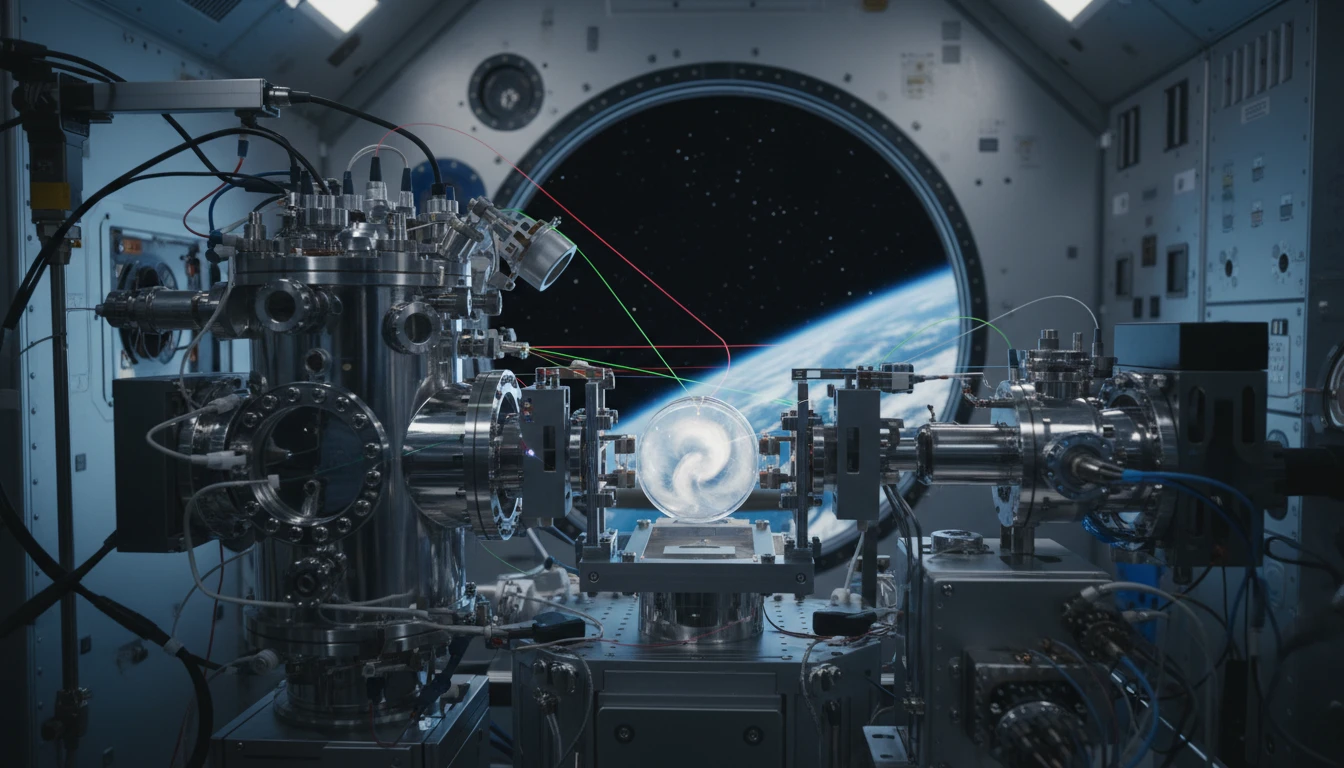
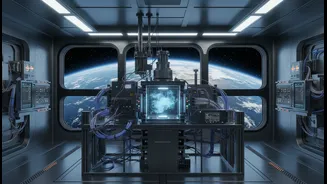
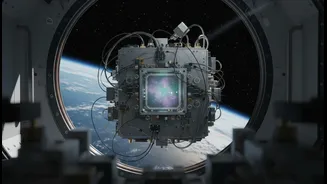
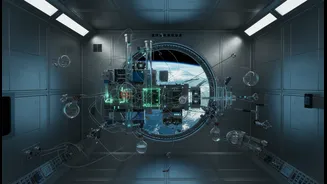
The facility is called the Cold Atom Lab (CAL). Its mission is to study the behaviour of matter at the smallest scales—the realm of quantum mechanics, where particles can act like waves and exist in multiple places at once. To do this, the lab chills
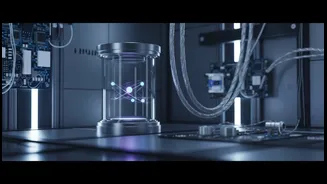
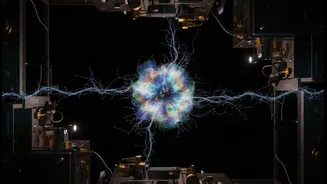
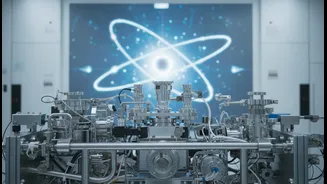
atoms of elements like rubidium and potassium to temperatures just a fraction of a degree above absolute zero, which is minus 273.15 degrees Celsius. At this extreme cold, atoms slow to a near standstill and form a strange fifth state of matter called a Bose-Einstein condensate (BEC). In this state, a cloud of individual atoms starts to behave like a single, massive quantum object, allowing scientists to observe quantum phenomena on a much larger scale.
Why Study the Coldest Atoms in Space?
The main reason is to escape the constant pull of gravity. On Earth, when scientists create a Bose-Einstein condensate to study it, gravity almost immediately yanks the atom cloud downwards, limiting observation time to mere fractions of a second. In the microgravity environment of the ISS, these delicate quantum states can float freely for much longer—up to 10 seconds. This extended observation time allows for more precise measurements and enables experiments that are simply impossible to perform on the ground. The near-zero gravity environment lets the atom clouds expand and their wave-like properties become more pronounced, giving researchers a clearer and longer look into their fundamental nature.
What Are the Latest Enhancements?
The recent upgrade, the fourth since the lab was installed in 2018, has significantly boosted its capabilities. Astronauts installed a newly designed magnetic trap, which is crucial for holding the ultra-cold atom clouds in place. This new trap allows scientists to mould the quantum gas into different shapes, which helps in testing various properties of the atoms. The upgrade also included improved metal strips that are heated to create the initial atom gas clouds, providing a better starting point for the cooling process. These enhancements, operated remotely from Earth, give researchers more powerful tools to probe the weird and wonderful rules of the quantum world.
From 'Quantum 2.0' to Future Tech
Scientists refer to this new era of hands-on manipulation of quantum states as "quantum 2.0". The first quantum revolution gave us transformative technologies like lasers, microchips, and MRI machines. This next phase aims for similar leaps. The research on the ISS is not just about fundamental physics; it is also a testbed for future space-ready quantum technologies. These could lead to ultra-precise sensors for navigation that do not rely on GPS, capable of guiding spacecraft or mapping Earth's gravitational field to monitor underground water reserves and melting ice sheets. Other potential applications include building more advanced atomic clocks for better timekeeping and developing new forms of quantum communication.