
What Am I Looking For?
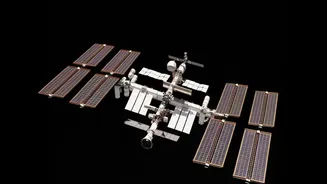
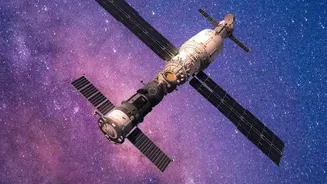
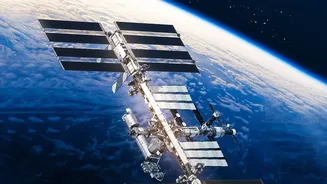
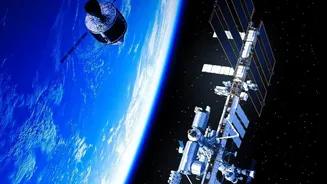
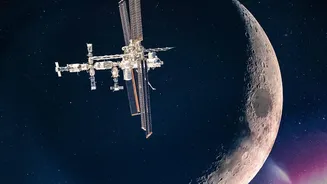
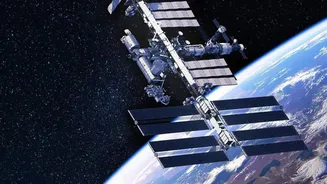
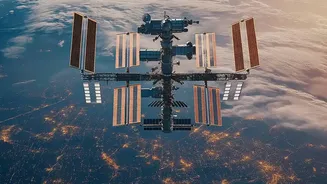
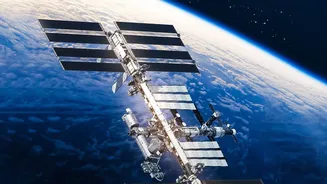
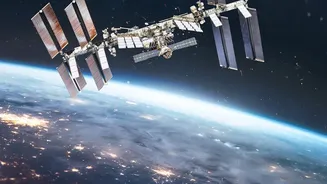
Spotting the ISS is a unique experience. Unlike an airplane, it doesn't have flashing lights; instead, it appears as a very bright, steady, fast-moving point of light gliding across the sky. It looks like a brilliant star purposefully crossing from one
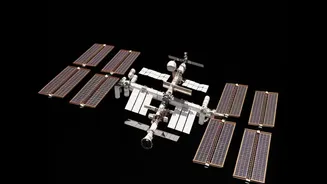
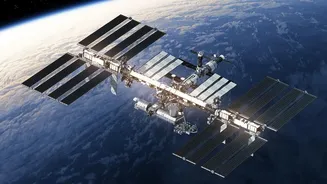
horizon to the other. The reason we can see it is that its massive solar arrays reflect sunlight, making it one of the brightest objects in the night sky, often outshining everything except the Moon. This makes it visible even from light-polluted cities. The best viewing times are typically a few hours before sunrise or after sunset, when the sky is dark but the station is high enough to catch the Sun's rays.
Your Pocket Guide to the Cosmos
The challenge for beginners isn't seeing the ISS, but knowing exactly when and where to look. This is where your smartphone becomes an essential astronomy tool. Dozens of apps are designed to give you precise predictions for ISS passes over your specific location. They remove all the guesswork by providing alerts, sky maps, and directional guidance. These apps use your phone's GPS to calculate viewing opportunities, telling you the exact time the station will appear, the path it will take across the sky, how bright it will be, and how long it will be visible.
Top Apps for Spotting the Station
While many apps can help, a few stand out for their user-friendly design and reliability. Spot The Station: NASA's official app is a straightforward and dependable choice. It provides accurate sighting lists, optional notifications to alert you before a pass, and a clean interface showing you where to look in the sky. ISS Detector: This is a favourite among many skywatchers for its simplicity and powerful features. The main screen lists upcoming visible passes, and it even has an optional weather integration feature to let you know if clouds will spoil the view. The free version focuses on the ISS, while paid extensions can track Starlink satellites, the Hubble Space Telescope, and more. Heavens-Above: Available as both a website and an app, Heavens-Above is a comprehensive resource for tracking the ISS and a vast number of other satellites. It offers detailed star charts showing the satellite's path against the constellations and provides precise data on brightness and altitude for each pass. SkyView Lite: This app uses augmented reality (AR) to offer a different experience. You can simply point your phone at the sky, and the app will identify stars, constellations, and satellites—including the ISS—as they pass overhead. It’s an intuitive way to find the station and learn about the other objects in the night sky at the same time.
Tips for a Perfect Sighting
Once you have your app set up and a pass is predicted, a few simple steps can improve your viewing experience. First, try to head outside about five minutes early. This gives your eyes time to adjust to the darkness, making it easier to spot the station as it appears. Find a location with a clear view, especially towards the direction where the app says the ISS will first appear (often in the west). While you don't need any equipment, a pair of binoculars can enhance the view, making the ISS appear brighter as it sails silently across the sky. Finally, remember that some passes are better than others. A high pass, where the station travels almost directly overhead (near 90 degrees elevation), will be brighter and visible for longer—sometimes for over five minutes.