



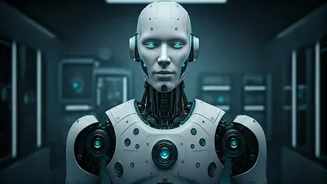


Meet India's 'Friend in Space'
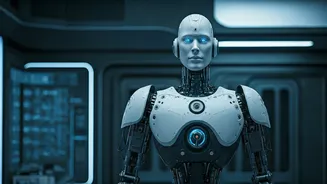
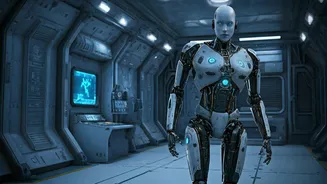
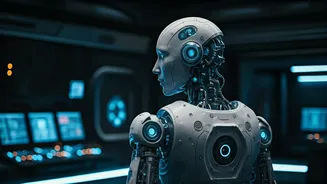
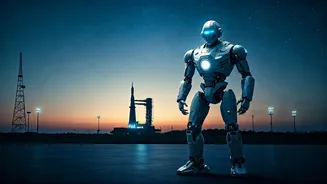
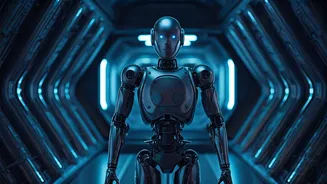
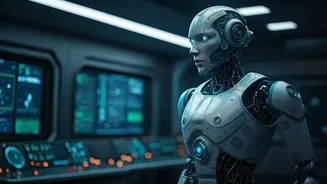
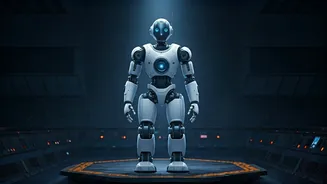
Vyommitra, whose name is a blend of the Sanskrit words for 'space' (Vyoma) and 'friend' (Mitra), is a sophisticated half-humanoid robot developed by the Indian Space Research Organisation (ISRO). Unveiled in 2020, she is designed not with legs but with a torso,
head, and two arms, specifically for functioning within a space capsule. Built at the Vikram Sarabhai Space Centre, Vyommitra is far more than a dummy; she is an advanced robotic system designed to simulate human functions, capable of recognising humans, mimicking their activity, and communicating in both English and Hindi. Her creation marks a strategic decision by ISRO to use robotics to gather crucial data on how a human body would react in space, paving the way for safer crewed missions.
The Historic 2026 Mission
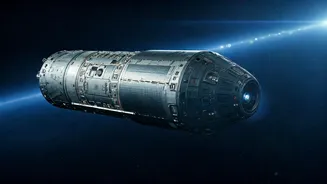
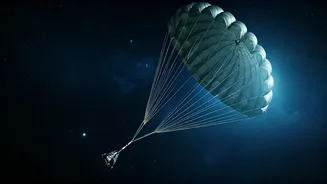
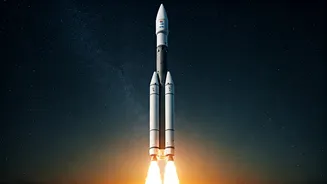
The year 2026 is slated to be pivotal for ISRO, with the first uncrewed Gaganyaan test flight, Gaganyaan-1 (G1), scheduled for the second half of the year. This mission will see Vyommitra launched into a 400 km low Earth orbit aboard India’s human-rated LVM3 rocket. This uncrewed flight is the ultimate dress rehearsal before ISRO sends Indian astronauts, or 'Gaganyatris', into space. The success of Vyommitra's flight will be a direct validation of the spacecraft's life support systems, environmental controls, and overall performance, ensuring the capsule is safe enough for a human crew. The mission has seen several timeline adjustments to ensure every aspect is perfected, reflecting ISRO's 'safety first' approach.
More Than Just a Passenger
Onboard the G1 mission, Vyommitra will be an active participant, not a passive observer. Her role is to perform a series of critical tasks to test the crew module's readiness. She will operate switch panels, monitor module parameters, and communicate with the ground control team, providing real-time data on the cabin's environment. This includes tracking things like cabin pressure, temperature, and giving warnings if needed. Vyommitra will also simulate human physiological responses, helping scientists understand the effects of launch vibrations and microgravity on the body. By having her perform these tasks, ISRO can analyse how the spacecraft systems respond to human-like interaction without putting a human astronaut at risk.
A Crucial Step for Human Spaceflight
The Gaganyaan programme is India’s ambitious initiative to demonstrate human spaceflight capability by launching a crew into orbit and returning them safely to Earth. Vyommitra's flight is arguably the most critical stepping stone toward this goal. For a nation to independently send its citizens into space, it must first prove beyond doubt that its technology is reliable and safe. By using a humanoid to perform these final validation tests, India joins a sophisticated group of space-faring nations. The data gathered by Vyommitra will provide the final layer of confidence needed to proceed with the crewed mission, which is currently targeted for 2027. Her journey represents the bridge between decades of robotic exploration and the dawn of India's human spaceflight era.