




The Robotic Advance Guard
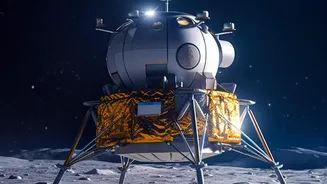
Before the next generation of astronauts arrives, the Moon is set to become a construction site operated by a new class of workers: autonomous robots. Projects under NASA's Commercial Lunar Payload Services (CLPS) initiative are sending a host of robotic
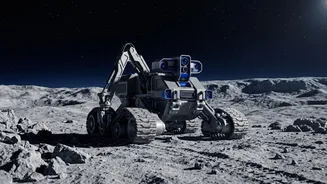
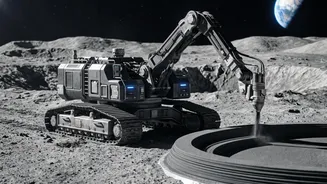
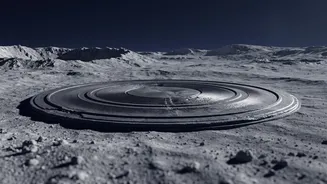
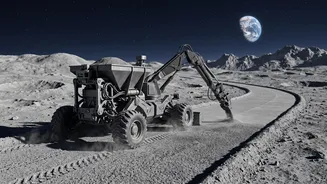
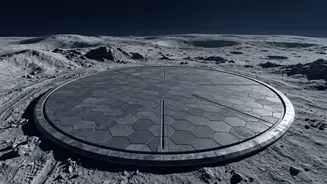
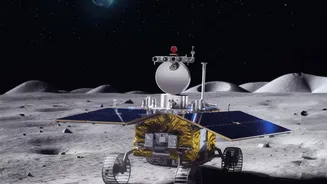
systems to the lunar surface. For instance, the upcoming CADRE (Cooperative Autonomous Distributed Robotic Exploration) mission, slated for a 2026 landing, will deploy a team of three small rovers to autonomously map the terrain in 3D. These carry-on-sized robots will work as a coordinated team, making decisions without direct human control to survey the area where future infrastructure might stand. Other concepts, like NASA's IPEx (ISRU Pilot Excavator), are specifically designed to function as robotic bulldozers and dump trucks, capable of mining and moving lunar soil, or regolith. These machines are the precursors to fleets that will one day level ground for landing pads, build protective berms, and prepare foundations for habitats.
A New Blueprint for Space Exploration
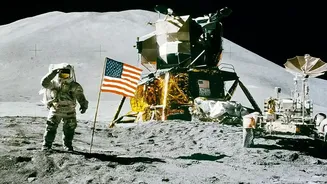
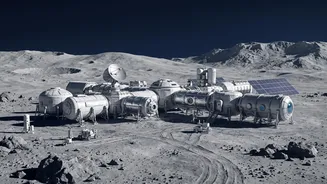
This 'robots-first' approach represents a major strategic pivot for space agencies like NASA. For decades, the model has been to send highly trained astronauts to perform complex tasks in person. The Artemis program, which aims to establish a long-term human presence on the Moon, changes that script. The new logic is simple: why risk human lives on dangerous and repetitive construction work when a robot can do it? A machine needs power, but it doesn't need life support, and it can work for months on end during the long lunar day. This allows astronauts to arrive at a prepared site, ready to begin scientific and exploratory work immediately, rather than spending their precious and costly time on basic site prep. It's a transition from exploration to infrastructure planning, laying the groundwork for a semi-permanent settlement.
Building a Lunar Economy
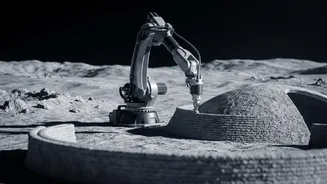
This shift is not just a NASA-led effort; it's the foundation of a new lunar economy. Private companies are central to this vision. Houston-based Intuitive Machines, for example, has secured multiple contracts to deliver both scientific and technological payloads—including robotic systems—to the Moon. Their landers are carrying everything from autonomous rovers to drills developed by Blue Origin's Honeybee Robotics. Meanwhile, companies like ICON and Lunar Outpost are developing 3D-printing technologies and rover autonomy software, respectively, with the goal of using local lunar materials (in-situ resource utilization, or ISRU) for construction. Launching building materials from Earth is prohibitively expensive. By proving that robots can build structures from regolith, these companies are creating a new market for off-world construction and logistics.
The Challenges of Building on the Moon
Despite the promise, building a lunar base with robots is incredibly difficult. The Moon is a harsh and unforgiving environment. There is no atmosphere, meaning no protection from radiation and extreme temperature swings. The lunar dust, or regolith, is not like sand on Earth; it's sharp, abrasive, and electrostatically charged, posing a significant threat to machinery. Furthermore, robots must be highly autonomous. The communication delay of about 2.6 seconds for a round trip makes real-time remote control impractical for complex tasks. The machines need to make their own decisions, navigate treacherous terrain, and even coordinate with each other to complete a job, as the CADRE mission will demonstrate. Power is another major hurdle; solar-powered robots must be able to survive the two-week-long lunar night, which requires robust energy storage systems.