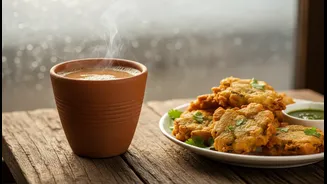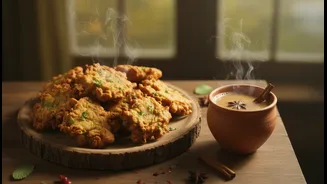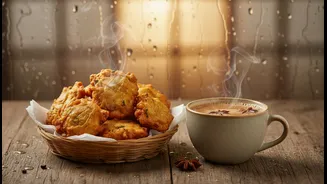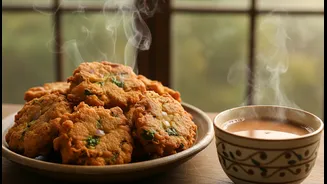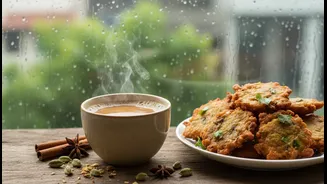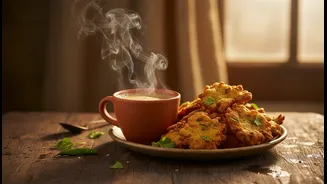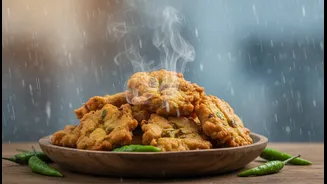





Why Do I Crave Fried Food When It Rains?
That sudden urge for something hot, crunchy, and comforting is not just in your head; it's rooted in biology. When the weather gets gloomy and sunlight is scarce, our levels of serotonin, the brain's 'happy chemical,' can take a dip. To counteract this,
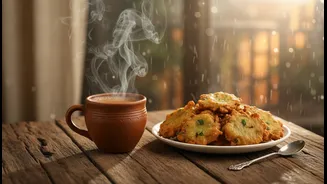
our brain craves carbohydrates and fried foods. These foods are rich in tryptophan, an amino acid that helps the body produce more serotonin, offering a temporary mood lift and a feeling of satisfaction. The warmth from a hot snack and a steaming cup of chai also provides a comforting psychological and physical shield against the cool, damp weather, making us feel cosy and content.
What Makes the Chai-Pakora Ritual So Special?
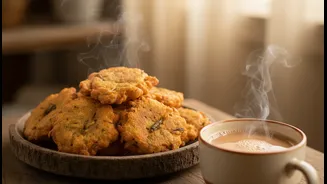
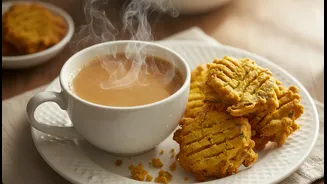
In India, chai is more than a beverage; it’s a cultural institution. The evening chai, or 'shaam ki chai,' is a treasured daily ritual that signals a pause—a moment to unwind, connect, and share stories with family and colleagues. It's a tradition that transcends social strata, found everywhere from bustling roadside 'tapris' to quiet family living rooms. Pakoras, being quick to prepare and endlessly versatile, became the perfect savoury companion. This pairing is not just about food and drink; it's a shared experience steeped in hospitality and community. Offering a guest chai and snacks is a fundamental gesture of warmth and welcome, solidifying this combination as a cornerstone of our social fabric.
How Does Texture Enhance the Experience?
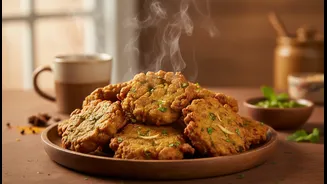
The magic of this combination lies in its delightful contrast of textures. The very definition of a good pakora is its 'kurkura' or crispy exterior. This crunch is incredibly satisfying on a psychological level, often signaling freshness to our brains. In the context of a damp, humid monsoon day, the dry, crispy texture of a pakora offers a welcome and comforting sensory opposition to the environment. When you follow a bite of a crunchy, savoury pakora with a sip of hot, sweet, milky chai, you create a complex and deeply pleasurable mouthfeel. This textural interplay—crispy versus smooth, solid versus liquid—is a multi-sensory experience that makes the combination far more satisfying than either component would be on its own.
What Is Sensory Memory and How Does It Work?
Have you ever noticed how the smell of ginger and cardamom brewing can instantly transport you back to your mother’s kitchen? That’s sensory memory at work. Our senses of smell and taste are powerfully linked to the parts of the brain that handle memory and emotion, namely the hippocampus and amygdala. This is why certain foods can evoke such strong feelings and vivid memories. For many, the flavour and aroma of chai and pakoras are tied to cherished moments: childhoods spent watching the rain, festive family gatherings, or comforting breaks during a long day. These foods don't just satisfy hunger; they satisfy a deeper, emotional need for connection and belonging, reminding us of safety, comfort, and home.