




A 'New' Guest in the Night Sky
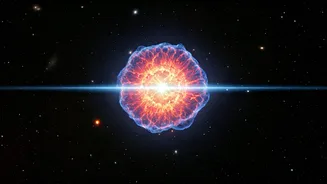
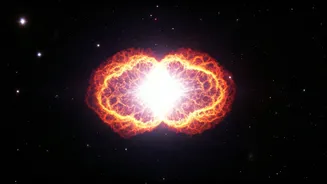
First, let's clear up the headline. While it feels like a brand-new star is being born, what we’re about to witness is technically a nova. The star system, known as T Coronae Borealis (T CrB), already exists about 3,000 light-years away. It’s usually
far too dim to be seen without powerful equipment. However, it's what's known as a 'recurrent nova,' a star that dramatically and periodically brightens. This particular one puts on a show for us roughly every 80 years, with the last performance taking place in 1946. For a few precious days, it will join the ranks of the brightest stars in our sky before fading back into obscurity. So, it's less of a new star and more of a 'guest star' making a spectacular, temporary appearance.
The Cosmic Dance Behind the Explosion
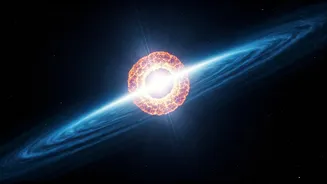
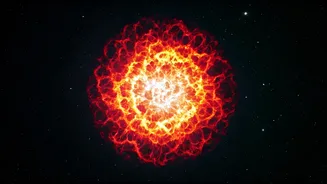
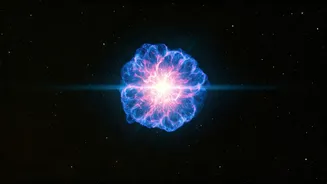
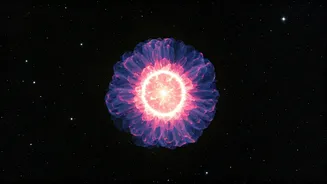
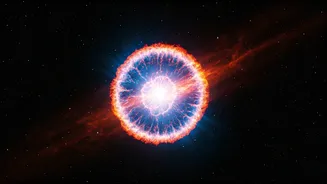
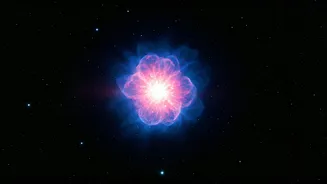
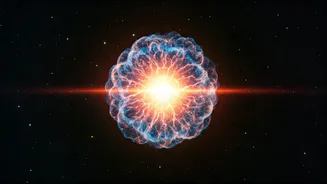
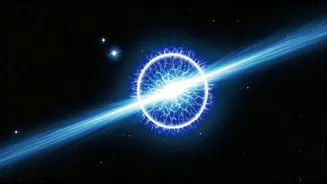
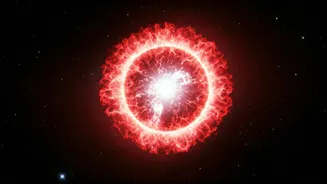
So, what causes this incredible outburst? T Coronae Borealis isn't one star, but two, locked in a tight cosmic dance. One is a red giant, an old, bloated star that is shedding its outer layers into space. Its partner is a white dwarf—the super-dense, collapsed core of a star that has run out of fuel. The white dwarf's immense gravity pulls material, mostly hydrogen, from the red giant. Think of it like a bucket being slowly filled with water. The hydrogen piles up on the white dwarf's surface, getting hotter and denser. Eventually, the pressure and temperature reach a critical point, triggering a runaway thermonuclear explosion. This explosion is what we see as the nova—a sudden, brilliant flash of light that increases the system's brightness by thousands of times. The explosion blasts the accumulated material into space, but leaves the two stars intact, ready to start the cycle all over again.
How, When, and Where to See It
This is the best part: you can see this with your own eyes. NASA and other astronomers predict the outburst will happen sometime between now and September 2024. The event is unpredictable, so the key is to be ready. You'll need to locate the constellation Corona Borealis, or the 'Northern Crown'—a small, C-shaped arc of stars. From most of India, it will be visible high in the evening sky during the summer months. It's located between the bright star Vega in the constellation Lyra and the star Arcturus in Boötes. Once the nova erupts, a new, bright point of light will appear within this arc. To get the best view, find a spot away from city lights, let your eyes adjust to the darkness for about 20 minutes, and look towards the Northern Crown. The 'new' star will be visible for a few days before it begins to fade.
A Nova Is Not a Supernova
It’s easy to confuse these cosmic explosions, but a nova and a supernova are fundamentally different. A supernova is a cataclysmic, final act. It’s the destructive explosion that marks the death of a massive star, or the complete obliteration of a white dwarf. A supernova can outshine an entire galaxy for a brief period and is a one-time event for the star. A nova, like the one from T CrB, is more of a surface-level event. The thermonuclear explosion happens on the white dwarf but doesn't destroy it. That's why T CrB is a 'recurrent' nova—the white dwarf survives to accumulate more material and explode again in the future. It’s a violent, dramatic cycle, but not the final curtain call.